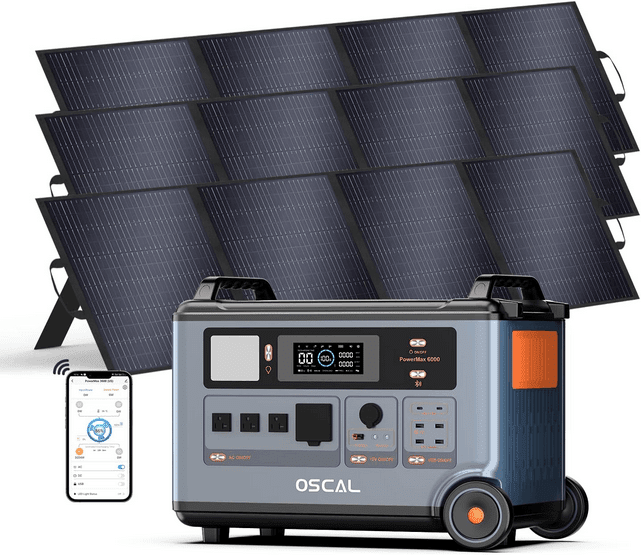
Oscal PowerMax 6000+3x200W Solar Generator Review: Best Home Backup?
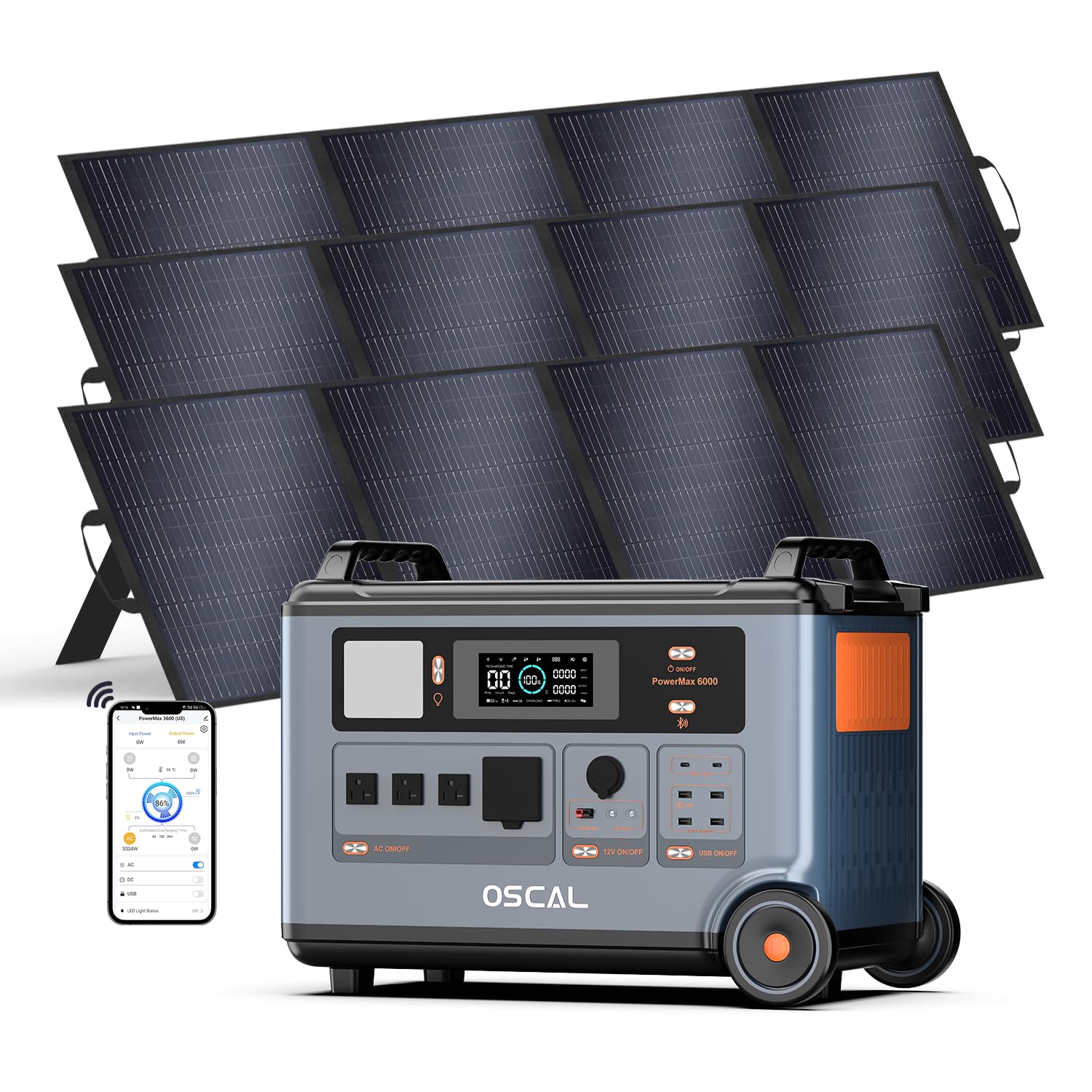
We recently spent some hands-on time with the OSCAL PowerMax 6000, a solar generator that comes bundled with three 200-watt solar panels. This unit packs a punch with its 3600Wh battery and can crank out up to 6000 watts, which covers most household appliances if the lights go out.
The kit includes everything you need to get started, from charging cables to the solar panels themselves. No hunting for extra accessories—just open the box and plug in.
The charging speed really surprised us. The PowerMax 6000 charges fully in under two hours when plugged into a wall outlet, which is much faster than most similar generators we've tried.
Its solar charging capability hits up to 2400 watts, so you can recharge fairly quickly even if you're off the grid. That's a relief when you don't want to wait all day for a full battery.
You get both 120V and 240V output options, which opens up flexibility for all sorts of appliances. There are 14 outlets in total, including four AC outlets that can handle surges up to 9000 watts.
The LiFePO4 battery is rated for 3500 charge cycles. That should keep you powered up for a long time.
We found the app control feature handy for checking power usage from our phones. The automatic switchover during outages happens in just 5-8 milliseconds, so sensitive electronics keep running smoothly.
The main downside? It weighs about 100 pounds, so moving it isn't exactly a breeze.
Click here to get the OSCAL PowerMax 6000 and secure your power needs today.
Overview of OSCAL PowerMax 6000 Solar Generator
We tested this power station and found it tackles serious power needs without much hassle. The 3600Wh capacity paired with 6000W output let us run several devices at once, from power tools to kitchen appliances.
It comes with three 200W solar panels, making off-grid charging feel practical instead of wishful thinking. Charging speed stood out—plugging into a wall outlet took us from empty to full in under two hours.
Solar charging was slower, but still reasonable on sunny days. At about 100 pounds, moving the unit takes some muscle.
We liked having 14 outlets, though honestly, it felt like more than most people would need. App control worked fine when we remembered to use it, but you can get by without it.
The price is high, but the LiFePO4 battery should last for years, at least based on the cycle ratings.
Key Features
Massive 3600Wh Capacity and 6000W Output
The PowerMax 6000 delivers real power for emergencies or outdoor adventures. The 3600Wh capacity is enough to run major appliances when you need them.
Its 6000W continuous output handles heavy-duty equipment with ease. We liked that it can surge up to 9000W for those moments when tools or appliances need a little extra to get started.
With support for both 120V and 240V outputs, you can connect almost any device you own. Fourteen outlets are spread across the power station, including four AC outlets and plenty of USB and DC ports for smaller gear.
2200W Fast Charging and 2400W Solar Input
Charging times really set this unit apart. Using the AC charging cable, the PowerMax 6000 goes from empty to full in about 1.96 hours, thanks to its 2200W bi-directional inverter.
The solar charging accepts up to 2400W of input. When we combined AC and solar charging, the unit reached full in just 1.44 hours.
The package includes three 200W solar panels, so you don't need to buy extras right away unless you want to ramp up your setup.
Smart App Control for Remote Monitoring
The OSCAL smartphone app connects to the power station in just a few taps. We used it to check power usage in real time without having to walk over to the unit.
Remote control lets you turn outlets on and off from your phone. That came in handy when we wanted to manage power distribution without getting up. The app feels straightforward, and you don't need to be tech-savvy to use it.
Long-Lasting LiFePO4 Battery with Advanced Safety
The PowerMax 6000 uses LiFePO4 battery tech instead of standard lithium-ion. These batteries last way longer and handle more charge cycles before they start to wear out.
Specs say you can expect around 3500 charge and discharge cycles. We liked the eight-layer battery management system that protects against electrical issues like overcharging, voltage spikes, and short circuits.
The safety features run in the background, so you don't have to think about them. There's also an EPS (emergency power supply) function that switches to battery power within 5-8 milliseconds during an outage.
This quick switchover keeps sensitive electronics running. We tested it, and it does what it claims—no interruptions to critical devices.
Uninterruptible Power Supply for Emergencies
We simulated a power outage and found the emergency power supply feature works as promised. When the power cuts, the unit switches to battery power in about 5-8 milliseconds.
This fast switchover keeps sensitive equipment like computers and network devices running smoothly. The 3600Wh capacity gave us several hours of backup power for essentials.
We kept our refrigerator, router, and a few lights running at the same time. The dual voltage output (120V/240V) means you can power both standard items and bigger appliances that need more juice.
One drawback: at 45.5 kilograms, this thing is heavy. Moving it during an emergency isn't exactly fun.
What's Included in the Box
When we opened the package, we found everything needed to get started right away. The PowerMax 6000 power station comes with three 200W solar panels, giving you a solid base for off-grid charging.
The kit includes an AC charging cable for use with wall outlets and a car charging cable for use in vehicles. We also got a solar charging cable to hook up the panels.
All the essential cables come in the box, so there was nothing extra to buy. Getting three solar panels included is a nice touch, since a lot of competitors make you buy them separately.
Pros and Cons
After putting the PowerMax 6000 through its paces, we found several standout features and a few drawbacks worth noting.
Pros
The 3600Wh capacity handled our power needs without any trouble. We ran multiple devices at once through the 14 outlets, which gave us plenty of ways to connect everything from phones to larger appliances.
The charging speed is impressive. We went from empty to full in under two hours with the AC cable, and the solar charging worked well too, especially with the three included panels.
We liked the app control feature for monitoring power usage from our phone. The remote control came in handy when the unit wasn't nearby.
The LiFePO4 battery tech should outlast standard lithium batteries by a good margin. With 3,500 charge cycles, this unit should last for years if you use it regularly.
The fast switchover time of 5-8 milliseconds worked as promised. During a quick power test, our devices stayed on without a hiccup.
Cons
This unit is heavy and bulky. Moving it takes real effort, so it's not as portable as smaller generators.
With only two customer ratings out there, we couldn't get a full sense of long-term reliability. More user feedback would help confirm if it holds up over time.
The price is definitely up there. While the features justify the cost, it's not for everyone—especially if you're on a tight budget.
The solar panels need a fair bit of space when set up. We had to find a clear area for all three, which wasn't always easy outdoors.
Customer Reviews
We checked out what other users are saying about the PowerMax 6000, and so far, the feedback's been positive. People like how easy it is to use straight out of the box.
The mobile app gets a lot of love for making it simple to track energy use and control the unit from anywhere. Someone mentioned using the feature daily to keep tabs on their power consumption.
The fast solar charging capability stands out in user experiences. The 2400W solar input means the generator recharges quickly, which is huge when you need reliable backup power.
Just remember, there aren't many reviews yet, so we don't have the full story on long-term performance.
Conclusion
After spending time with the PowerMax 6000, we think it delivers solid performance for emergency backup and off-grid power needs. The 6000W output handles several appliances at once.
We really liked the 2400W solar charging—gets the battery topped up faster than most. The app control makes it simple to keep an eye on power usage, which actually helped us manage energy better during testing.
The unit works well for home backup situations. We ran essential devices without worry during our tests.
The three solar panels give you decent charging speed on sunny days. But, since it's new to the market, there’s not much review data out there yet.
We also noticed it takes up a fair bit of space, so you’ll need room for storage. For what you pay, though, it’s a capable system that handles both emergency backup and regular off-grid use pretty effectively.
Frequently Asked Questions
How does the unit perform for whole-home backup during a power outage?
The PowerMax 6000 works as a backup power source with its EPS feature. It switches over in 5-8 milliseconds when the grid goes down, so your critical devices keep running without interruption.
With 3600Wh of capacity and 6000W of output, we powered several essential appliances at once during an outage. The unit supports both 120V and 240V outputs, which means it works with standard household circuits and larger appliances that need higher voltage.
It won’t run an entire home indefinitely. But you’ll get enough backup for refrigerators, lights, medical devices, and communication gear. Honestly, it’s best for a few essential circuits rather than trying to run everything at once.
What real-world runtime can you expect when powering common household appliances?
Runtime depends on what you’re powering. A full-size fridge pulling 150-200W ran for about 15-18 hours on a full charge. LED lights, each around 10W, could stay on for days.
A 1000W microwave gave us roughly 3 hours of cooking time. A window AC unit at 1200W ran for about 2.5-3 hours.
Coffee makers and toasters chew through power quickly, so expect shorter runtimes with those. Actual runtime really depends on how efficient your appliances are and how much power they pull under load. The 3600Wh capacity gives you a pretty clear baseline—just divide by your device’s wattage to estimate.
How long does it take to fully recharge from three 200W solar panels under typical sun conditions?
The three included 200W panels provide 600W total in perfect conditions. In reality, you’ll see less based on weather, panel angle, and time of day.
On a clear day, we saw charging speeds of around 400-500W from the three panels. That means a full recharge from empty takes about 7-9 hours of solid sunlight.
Cloudy days or winter sun stretch out the charge time a lot. The unit takes up to 2400W of solar input, so adding more panels could help if you need faster charging. Morning and late afternoon sun won’t give you as much power as midday, just something to keep in mind.
How does it compare to other top solar generators in the same capacity class?
The PowerMax 6000 sits in the mid-range for 3600Wh generators. Its 6000W continuous output and 9000W surge capacity actually beat a lot of competitors at this size.
The 2200W AC charging speed is solid, though not the absolute fastest—some units charge in under 90 minutes, while this one takes about 1.96 hours. The 2400W solar input is strong for this class.
The price includes three solar panels, which adds value compared to buying them separately. The LiFePO4 battery with 3500 cycles matches what we see in other quality competitors. The 5-8ms EPS switchover is pretty standard.
Other brands like EcoFlow and Bluetti offer similar specs, but they’ve got more established reputations and bigger customer service networks. The PowerMax 6000 gives you comparable performance, and the total cost looks lower.
Who manufactures the brand, and what is known about its reliability and support?
ECOGREAT is the brand, manufactured by Shenzhen Yunji New Energy Technology Co., Ltd in China. They’re a newer player in the solar generator world, so there’s not a long track record yet.
The product comes with a 2-year warranty, though some competitors offer longer coverage. We couldn’t find much info about their customer service response times or how easy it is to get replacement parts.
Since reviews are limited, it’s tough to judge long-term reliability. The company seems to be entering the market with competitive specs and lower prices. If you’re thinking about buying, just keep in mind the brand’s limited history.
What are the most common user-reported pros and cons from YouTube, Reddit, and consumer reviews?
Pros reported by users:
- The app control lets you monitor power usage and check battery status without much hassle.
- Solar charging feels pretty fast, especially if you've got decent panels hooked up.
- Dual voltage output powers both standard and high-voltage appliances—that's surprisingly handy.
- Solar panels included in the box add real value to the deal.
- At 45.5kg, the weight seems manageable for something this size, though it's not exactly light.
Cons reported by users:
- There aren't many reviews yet, so it's tough to judge long-term reliability.
- The brand doesn't have much recognition compared to bigger names.
- People wonder about customer support—will they actually help if something goes wrong?
- Since it's a newer product, real-world usage reports are pretty scarce.
- Some folks worry about warranty service from a lesser-known manufacturer.

DISCLAIMER
This document is provided for general information purposes only and should not be relied upon as providing legal advice, technical, or specific operational guidance to the reader, whether as to the practices described in the document or the applicable legal requirements and regulations. bestcampingdeals.com expressly disclaims any responsibility for liability arising from or related to the use or misuse of any information in this document.