Best RV Surge Protectors for 2026 - 2027: Top Models to Protect Your Motorhome
RV electrical systems can be pretty vulnerable to power fluctuations and voltage issues at campgrounds. A surge protector stands between your RV and the power pedestal, blocking damage to expensive appliances and electronics.
Without this protection, things like your air conditioner, fridge, microwave, or entertainment gear could get fried by power surges, low voltage, or bad wiring. That’s not a risk I’d want to take, honestly.
The two main types of RV surge protectors are portable units that plug right into the campground pedestal and hardwired models that install inside your RV. Portable models give you flexibility to use them with different RVs, while hardwired ones look cleaner and you can't leave them behind by accident.
Both styles come in 30-amp and 50-amp versions, so you can match them to your RV’s electrical setup. Some surge protectors just block surges, but others (called electrical management systems) monitor voltage and will actually shut off power if things get sketchy.
When you’re shopping, check the joule rating—it shows how much energy the protector can handle before giving out. Higher joules mean more protection, and solid models usually offer 4,000 joules or more.
Other things to look for: response time, weatherproofing, and diagnostic features like LED lights that show power status and wiring faults. We spent a lot of time researching and testing different RV surge protectors to find the ones that actually deliver on protection and convenience.
Best RV Surge Protectors
We dug into and tested the top RV surge protectors for 2026, hoping to help you keep your RV’s electrical system safe from power surges and voltage headaches. There are picks here for both 30-amp and 50-amp RVs, and most have weatherproof builds and diagnostic displays.
GEARGO 30 Amp RV Surge Protector

This surge protector gives you solid protection and easy-to-read diagnostics, all at a price that won’t empty your wallet.
Pros
- Three green indicator lights make it super simple to check wiring before plugging in
- Waterproof cover keeps it safe from rain and dust outside
- Ergonomic handles and right-angle plug make connecting and disconnecting way less annoying than usual
Cons
- Some campground pedestals are cramped, so the right-angle plug doesn’t always fit easily
We’ve used the GEARGO 30 Amp surge protector at several campgrounds and it’s worked well every time. The three LED lights show right away if the power source is wired correctly, so there’s no guessing or stressing about damaging your RV’s system.
The 8000-joule protection gives us some real peace of mind when we’re dealing with questionable power hookups. Setup? It’s quick—plug it into the pedestal, check the lights, then connect your RV cord.
We’ve had it out in some pretty heavy rain and the waterproof design hasn’t let us down. The bright orange color is actually a plus—it’s easy to spot when you’re packing up. The right-angle plug helps reduce strain on the outlet, though it can be a pain in tight electrical boxes.
The three-year warranty is a nice reassurance. There’s a diagnostic chart right on the unit, so you don’t have to dig through the manual when you’re trying to figure out what the lights mean.

EPLCSE 30 Amp RV Surge Protector
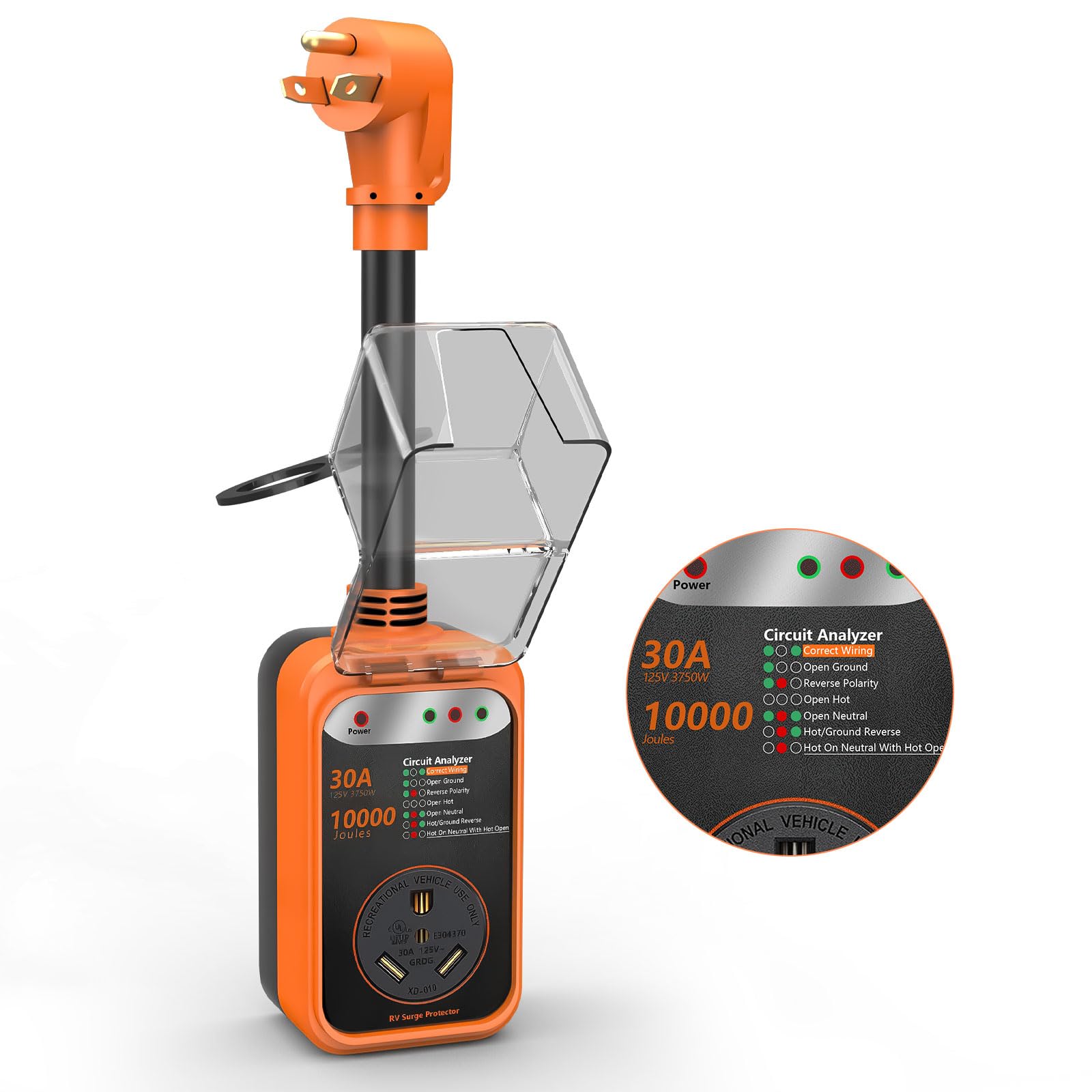
This one gives you solid power monitoring and surge protection in a single unit. The price is reasonable too.
Pros
- Built-in circuit analyzer checks for wiring issues before you plug in
- Waterproof cover keeps everything dry, even in storms
- Clear LED lights make it obvious when the power source is safe
Cons
- The plastic cover feels thinner than I’d like, though it still does the job
We tested this surge protector at several campgrounds and liked how it checked the pedestal before we plugged in. The LED lights gave instant feedback, which saved us from using a faulty outlet at one park.
The circuit analyzer actually caught a reverse polarity issue we’d have missed otherwise. During a heavy rainstorm, the waterproof cover kept everything dry inside, and water just beaded off the outside.
The 10,000 joule rating is solid for most RVs. The ergonomic handle made plugging and unplugging easier, and the flame-retardant materials are a good safety touch.
It worked well across different campgrounds, even when power quality varied. Setup is dead simple—just plug it between the pedestal and your RV cord. If you want surge protection and circuit testing in one, this is a good pick.

GEARGO 50 Amp RV Surge Protector

This surge protector brings solid protection and easy fault detection for 50 amp RVs, and it won’t empty your wallet.
Pros
- Delivers strong 15000 joule protection against surges and voltage spikes
- Shows clear indicators for six different wiring problems before you plug in
- Weatherproof build stands up to rain and the elements
Cons
- It’s bulkier than expected, especially with the weather cover
We took this unit on a few camping trips and it really gave us peace of mind when plugging into unfamiliar pedestals. Four green lights show up clearly if everything’s wired right at the campground.
If there’s a problem, the indicator lights let you know exactly what’s wrong before you connect your rig. The right-angle plug design makes hooking up a lot easier, especially when the outlet is low to the ground.
The flame-retardant casing feels sturdy and has handled rain and dew just fine. Our main gripe is the size—it’s bigger than some other models and the cover adds even more bulk.
It takes up a good chunk of space in the RV’s exterior compartment, and you’ll notice the weight when carrying your gear to the pedestal. The 15000 joules of protection can handle voltage spikes that might otherwise wreck your electronics or appliances.
We’ve plugged into some pretty questionable power sources and this surge protector caught low voltage issues a couple of times. The three-year warranty is a nice bonus, especially if you plan to camp for several seasons.

GEARGO 5th-Gen 30 Amp RV Surge Protector

This surge protector offers solid protection and easy-to-read diagnostics at a fair price. If you’re a 30-amp RV owner who wants reliable power monitoring, it’s a strong pick.
Pros
- The bright LED display makes it easy to check power status even in low light.
- Weather-sealed design holds up well in rain and keeps connections dry during storms.
- Right-angle plug design makes connecting and disconnecting way easier than straight plugs.
Cons
- Some campers might find the bright lights distracting at night, depending on your setup.
We’ve used this GEARGO surge protector on several trips, and it handles the basics well. The LED indicators light up clearly and show if the power’s wired right before we plug in the RV.
On one trip, we caught a reverse polarity issue at a campground—definitely saved us some hassle. The 12,000 joules of protection helps us relax during storms.
After a brief outage, our RV systems stayed safe when the power snapped back on. The flame-retardant housing feels sturdy, not cheap or flimsy.
The right-angle plug is a real improvement. Instead of wrestling with awkward pedestal angles, we can grip the handle comfortably and get a solid connection.
Even when it’s chilly out, the thick cord doesn’t stiffen up, which is something we appreciate in spring and fall. The indicator lights do stay pretty bright, so if the unit’s near your sleeping area, that could be a downside.
We’ve left it plugged in during rain, and the IP68 rating seems legit—no moisture sneaking inside so far.

Toujreo 50 Amp RV Surge Protector
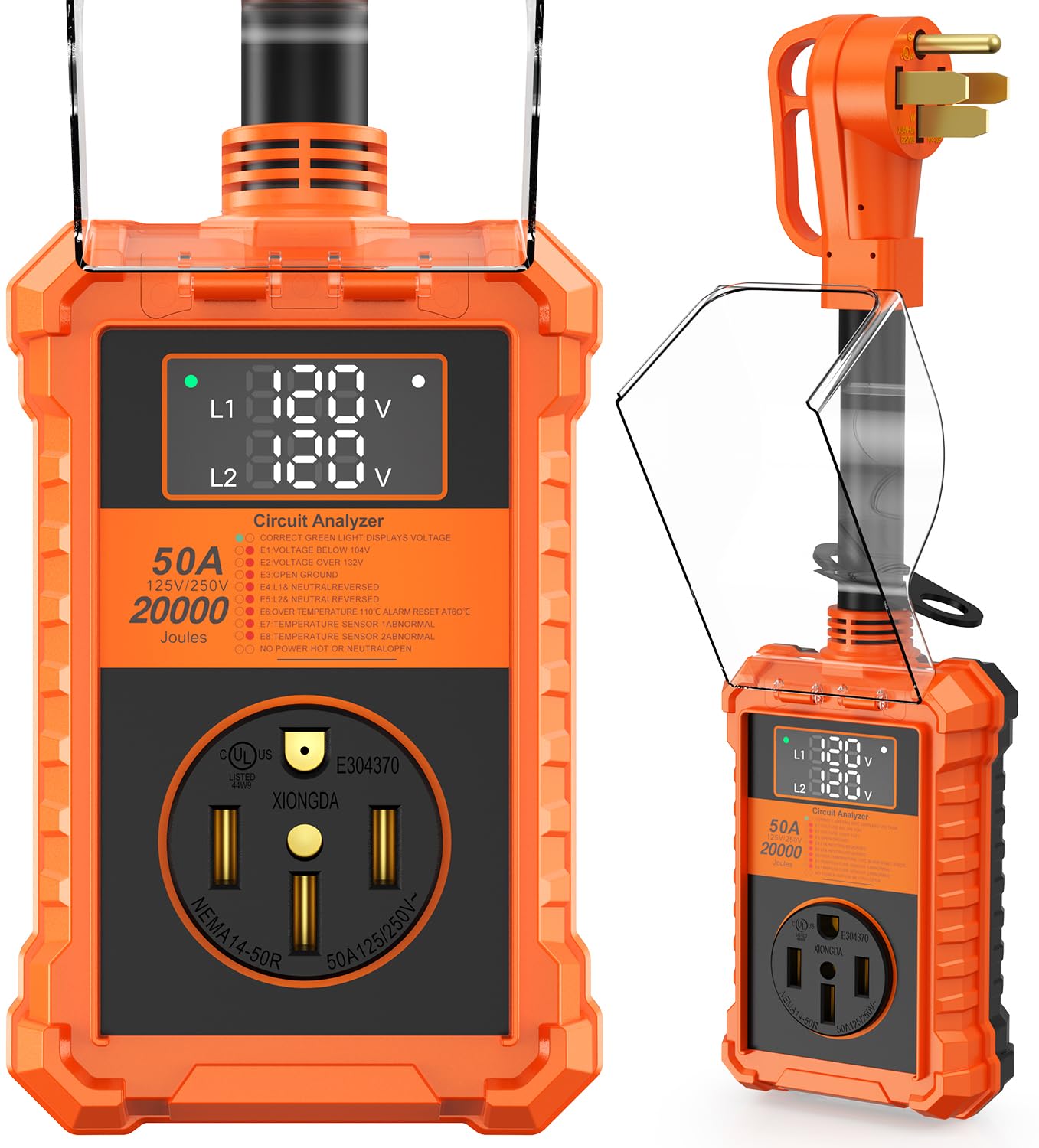
If you want solid protection and helpful error codes at a reasonable price, this surge protector is worth a look.
Pros
- LED display shows voltage and actual error codes, not just vague indicator lights.
- Weatherproof cover keeps rain and dust out of the connections.
- Plug-and-play setup—no tools, no fuss.
Cons
- Display can be tough to read in bright sunlight.
- Lighter build might not feel as rugged as some alternatives.
We’ve taken this Toujreo unit on several RV trips, and the 20,000 joules of protection helps us relax at unfamiliar campgrounds. The LED screen is a standout feature since it shows real error codes, so we’re not left guessing what’s up with the power.
Once, we plugged into a pedestal with reverse polarity, and the screen told us exactly what was wrong. The weatherproof cover holds up well in the rain—no issues so far, and the IP68 rating checks out in our experience.
The cover fits snugly and doesn’t budge even when it’s windy. Setup is as simple as plugging it between the pedestal and our power cord—no instructions needed.
The housing is a bit larger than some models we’ve tried, so it sticks out more at the power post. The unit feels lighter than expected, but it’s held up fine on our trips.
Our circuit analyzer caught a wiring problem at an older campground before we powered up, which alone made it worth buying. The bright orange color also stands out, so we don’t forget it during walk-arounds.

Progressive Industries EMS-PT50X
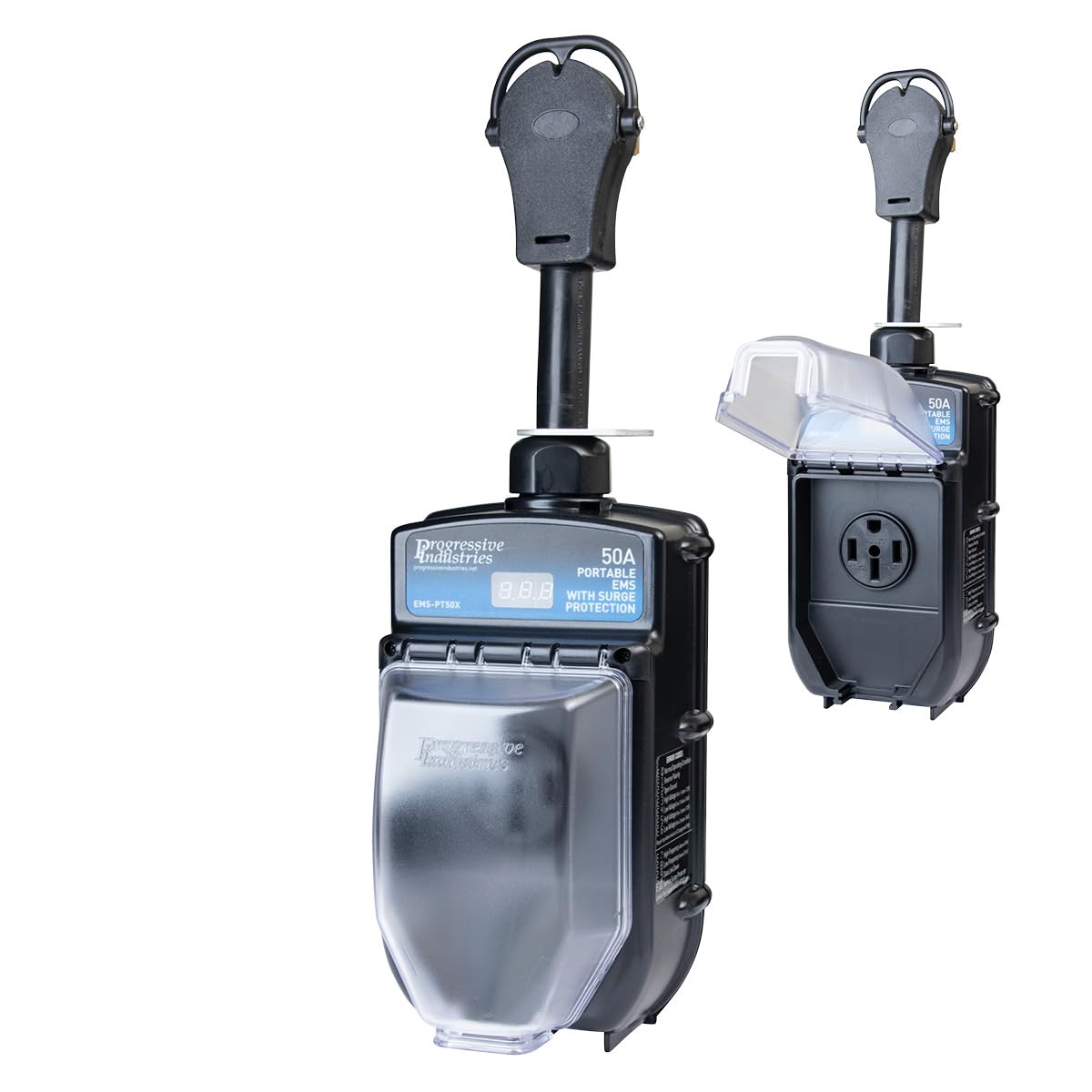
If you own a 50 amp RV and want serious electrical protection, this is the surge protector we’d suggest. It catches issues before they fry your gear.
Pros
- The display screen tells you exactly what’s wrong, so you know if it’s safe to stay plugged in.
- Handles extreme temperatures—hot or freezing—without missing a beat.
- Finds dangerous electrical problems like reverse polarity and voltage drops that cheaper models might miss.
Cons
- It’s bigger than basic surge protectors, so it takes up more space.
We’ve used this protector at a bunch of campgrounds, and it’s flagged several electrical problems that could have fried our RV systems. You plug it into the pedestal, then connect your RV cord, and within seconds, the display tells you if the power’s safe or not.
The error code system is pretty straightforward once you get the hang of it. It flagged low voltage a couple times and an open ground once, so we unplugged and talked to campground staff instead of risking our appliances.
The build quality stands out right away—it feels solid, and the pull handle makes disconnecting easy, even with wet or dirty hands. We’ve used it in both freezing winter and hot summer weather without any trouble.
The 3,580 joules of protection is reassuring when storms roll in. We’ve weathered a few power surges at different parks, and the unit took them in stride. The lifetime warranty covers the basics, though not the weather shield.

WLLNEE 50 Amp RV Surge Protector
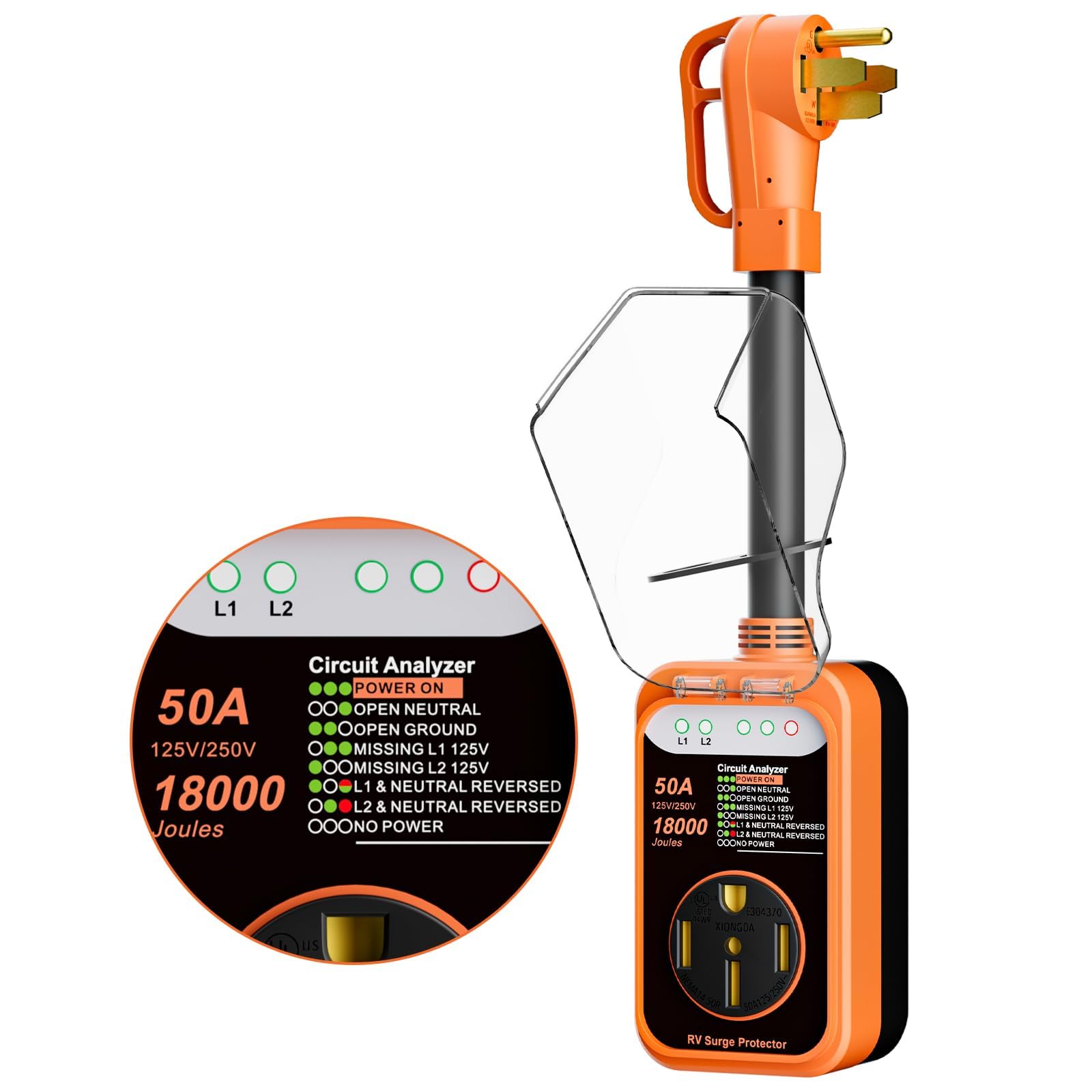
This surge protector brings solid protection and helpful diagnostic features at a fair price. There’s a bit of confusion about the actual joule rating, though.
Pros
- Built-in circuit analyzer spots wiring problems before you plug in your RV.
- Waterproof cover with IP67 rating keeps it safe during storms and rain.
- Right-angle plug design helps with connections in tight spaces.
Cons
- The actual joule rating might be lower than the 18,000 listed in the product name.
- Weighs nearly 3 pounds, so it’s heavier than some other models.
We tried this surge protector on a handful of camping trips, and it worked great out of the box. The LED lights made it obvious what was happening with the campground’s power every time we plugged in.
The circuit analyzer caught a reversed polarity issue at an older campground that could’ve messed up our RV’s system. The waterproof cover stayed put, even through a heavy rainstorm—no need to disconnect when the weather turned ugly.
The flame-retardant build feels sturdy. The ergonomic handle made plugging and unplugging comfortable, and the right-angle design helped since our pedestal was right next to a tree.
One user pointed out the actual joule rating might be 16,000 instead of 18,000, so keep that in mind if you need the highest protection. For us, the unit delivered good performance for everyday RV use and gave us peace of mind about voltage spikes and wiring issues.
If you want both surge protection and diagnostic features in one, this model covers both bases pretty well.
]
CRTBETLIF 30 Amp RV Surge Protector
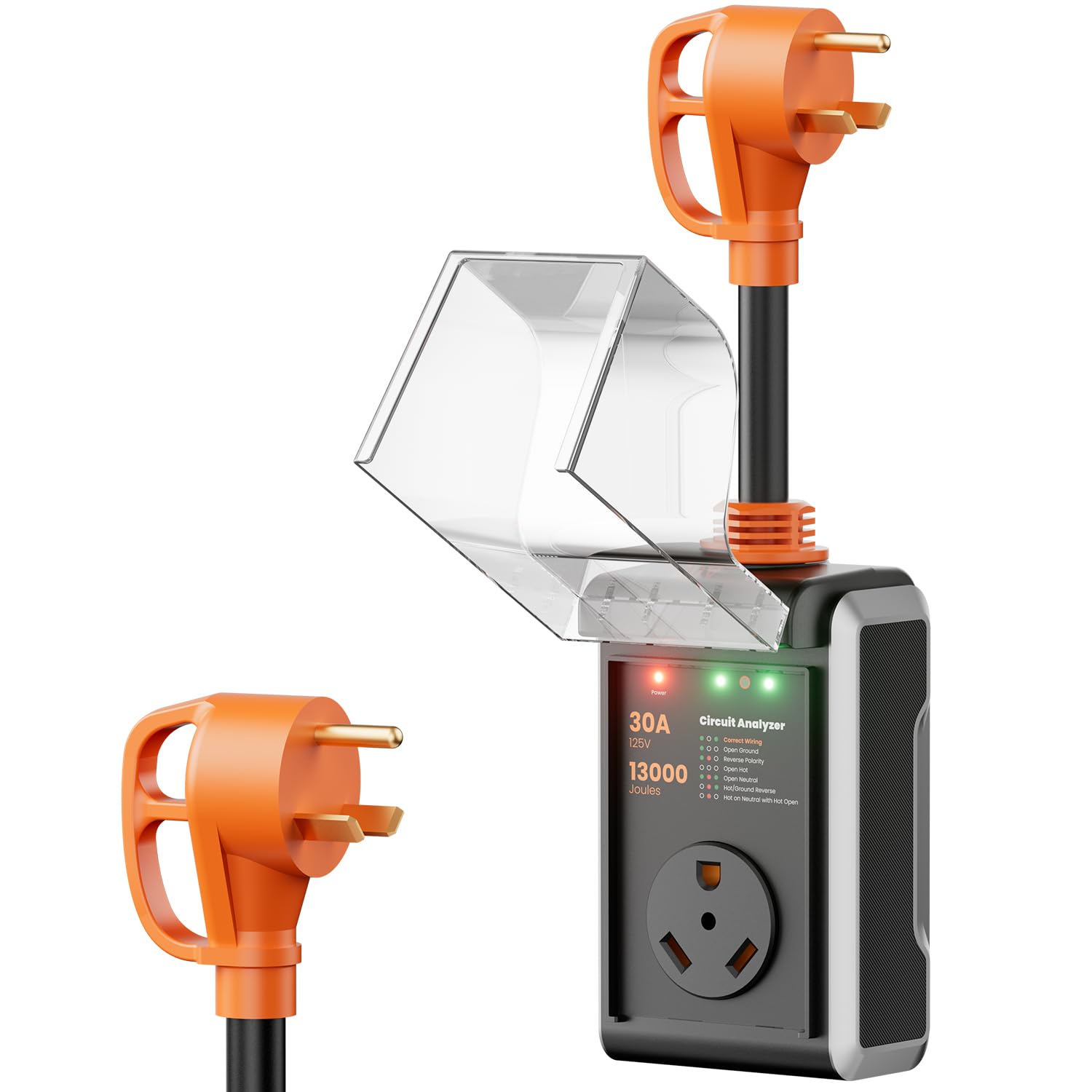
This surge protector gives RV owners some real peace of mind. It offers strong electrical protection and built-in power testing, all at a fair price.
Pros
- 13,000 joules of protection and tests power quality before you connect
- Weatherproof cover keeps it safe from rain and outdoor conditions
- Right-angle plug with handle makes connecting and disconnecting easy
Cons
- Diagnostic lights aren't super intuitive for beginners
We've used this surge protector at different campgrounds, and it just does its job. The unit feels sturdy in your hand, and the black and silver design looks pretty sharp.
The 8-mode diagnostic chart helps us check if the power hookup is safe before plugging in. We actually use the weatherproof cover every single time—it snaps on tight and keeps rain off the connections.
The angled plug design makes sense once you try it. It takes up less space and puts less strain on the outlet.
We like that this unit tests the electrical connection before power reaches our RV. The lights warn us if the campground's wiring is off, and it even caught a reversed polarity issue at one park that could've fried our electronics.
The ergonomic handle makes unplugging easier, especially when the connection feels tight. After a few weeks of use, we trust it to protect our RV's electrical system.
The four-year support from the company adds a bit of extra confidence to the purchase, which is nice.

Docusvect Smart RV Surge Protector

This 30-amp surge protector stands out because it actually cuts power when problems arise, rather than just absorbing excess current like most others.
Pros
- Automatically shuts off and resets when it detects power issues, protecting both your RV and the device
- LED screen shows real-time voltage readings you can read even in bright daylight
- Oversized waterproof cover fits most RV plug sizes and keeps everything dry in bad weather
Cons
- The bright LED display can get annoying at night if you can see it from inside your RV
We've taken this surge protector on a handful of camping trips, and the LED display has honestly become one of our favorite features. You can walk up to the power pedestal and instantly see if the voltage is where it should be.
The numbers are big enough to read without squinting. The auto shutoff feature gives us real peace of mind.
When we plugged into a questionable campground outlet last month, the unit detected low voltage and cut power before anything could damage our RV systems. Once the voltage stabilized, it reconnected automatically—we didn't have to do a thing.
The waterproof cover is genuinely oversized, so it fits over the connections even when our RV plug is on the bulky side. We've left it plugged in through rain and wind with no moisture sneaking in. The bright orange color makes it easy to spot when you're unhooking in the dark.
At this price, the 10,000-joule protection rating offers solid value. Some units fail early according to other users, but the lifetime warranty and 30-day return policy mean you’re covered if you get a dud.

Power Watchdog Smart 30 Amp Surge Protector

This surge protector delivers excellent protection and smart monitoring features. It's definitely worth it for serious RV owners.
Pros
- Bluetooth app lets you check your power usage and voltage in real time from inside your RV
- Automatically shuts off power when voltage gets too high or low, then waits 90 seconds before turning back on
- You can replace just the surge module after a big spike instead of buying a whole new unit
Cons
- The front indicator light is very bright at night ,and you can't dim it
We've used the Power Watchdog Smart 30 Amp for several months now at different campgrounds. Setup takes just seconds when we arrive at a new site.
We plug it into the pedestal first, wait for the quick diagnostic check, then connect our RV cable. The smartphone app has become one of our favorite features.
We can see exactly how many amps we're drawing at any moment. This helped us figure out which appliances were pulling too much power when we kept tripping the system.
The app also shows our total kilowatt hour usage, which helps us understand our power consumption patterns. The automatic shutoff feature saved us twice already.
At one park, the voltage dropped way too low in the evening when everyone turned on their air conditioners. The unit cut power to our RV immediately and sent an alert to our phones.
Once the voltage stabilized, it waited 90 seconds and then turned everything back on. We didn't have to go outside or reset anything ourselves.
The weather-resistant housing feels solid and well-built. Rain and morning dew haven't affected its performance.
The pull handles make it easy to disconnect, even when the connection is tight. We do wish the LED light on the front had a dimmer option since it lights up our storage bay at night.
The replaceable surge module is a smart design choice. If we take a major hit, we can order just that part instead of replacing the entire unit. That feature alone could save us hundreds of dollars down the road.

Buying Guide
When we shop for an RV surge protector, it's important to figure out what separates a good model from a great one. The right pick really depends on our specific RV setup and how we plan to use it.
Power Rating
The first thing to check is the amp rating. Most RVs use either 30-amp or 50-amp service.
We need to match our surge protector to our RV's electrical system. Using the wrong amp rating can damage our equipment or leave us unprotected.
Protection Features
Look for models that offer more than just basic surge protection. Good units also monitor for low voltage, high voltage, open ground, and reverse polarity.
Some models even include protection against lightning-caused surges. Honestly, the more types of protection, the better.
Response Time
The speed a surge protector reacts actually matters. We want a unit that responds in nanoseconds, not milliseconds.
Faster response times mean better protection for our electronics. If you care about your gadgets, don't overlook this.
Joule Rating
This number tells us how much energy the protector can absorb before it fails. We usually look for at least 2,000 joules for 30-amp systems and 4,000 joules for 50-amp setups.
Display and Alerts
Models with LED displays or indicator lights help us spot power issues at a glance. Some even include audible alarms to alert us to electrical problems before we plug in.
Portability vs Hardwired
We can pick between portable units that plug into the pedestal or hardwired models that mount directly to our RV. Portable units give us flexibility, while hardwired options offer a cleaner installation (and fewer things to forget).
Frequently Asked Questions
RV surge protectors need specific features to handle modern electrical systems. Choosing between 30A and 50A models depends on your RV's power requirements.
Protection devices vary in capabilities, from basic surge protection to full electrical management systems that monitor for a wide range of faults.
What features should a reliable RV surge protector include for modern campground electrical systems?
A reliable RV surge protector needs a digital or LED display showing incoming voltage, current draw, and detected electrical faults. We recommend models with automatic reset, so power comes back once the issue is fixed.
The device should monitor power continuously and react to problems within milliseconds. Weather-resistant enclosures with locking mechanisms help prevent theft and keep rain and dust out.
Some models even send alerts to your smartphone when electrical problems pop up. That feature can be a real lifesaver if you're away from your RV.
How do I choose the correct amp rating and plug type (30A vs 50A) for my RV setup?
We figure out the correct amp rating by checking the power cord and inlet on your RV. A 30-amp setup uses a three-prong plug with one 120-volt hot wire, delivering up to 3,600 watts.
A 50-amp setup has a four-prong plug with two 120-volt hot wires, which can provide up to 12,000 watts. Most travel trailers and smaller motorhomes use 30-amp service.
Larger motorhomes and fifth wheels usually need 50-amp service to run multiple air conditioners and appliances at once. We never recommend using an adapter to connect a 50-amp RV to a 30-amp surge protector—it just creates a weak spot in your protection system.
What is the difference between a surge protector, an EMS (Electrical Management System), and a voltage regulator for RV use?
Basic surge protectors defend against voltage spikes from lightning and power surges, but don't monitor for other electrical problems. They usually cost between $50 and $150 and offer the minimum level of protection.
An EMS monitors voltage levels, checks for wiring faults, and shuts off power if it detects dangerous conditions like low voltage, high voltage, or incorrect wiring. These units cost between $200 and $400 and provide comprehensive protection for most RV electrical systems.
Voltage regulators actively adjust incoming power to keep voltage levels consistent. This protects sensitive electronics from brownouts and voltage swings. We find these most useful in areas with unstable power grids, though they run $800 or more.
Which fault conditions should an RV surge protector detect and shut down for (low/high voltage, open neutral, reverse polarity, miswired pedestal)?
Low voltage protection really matters. A power drop below 104 volts can wreck air conditioner compressors or even kill your refrigerator.
High voltage—anything above 132 volts—can just fry your electronics, appliances, and all those delicate control boards in a split second.
Open neutral conditions? Those happen when the neutral wire disconnects or breaks. Suddenly, voltage can swing wildly between 0 and 240 volts, which is honestly terrifying.
Reverse polarity is when the hot and neutral wires get swapped at the pedestal. That’s a big shock hazard running through your whole RV.
Then there are open ground faults. If the safety ground wire goes missing or disconnects, circuit breakers and GFCI outlets just won’t work right.
It’s also important to catch miswired pedestals, especially when several wiring errors pile up at once.
Are hardwired RV surge protectors better than portable units for long-term use and theft prevention?
Hardwired surge protectors go right inside your RV’s electrical compartment. They hook directly to the main power line before anything reaches your breaker panel.
Honestly, these units feel a lot more secure. Thieves can’t just walk off with them from the campground pedestal.
Portable units plug in at the pedestal instead. You can move them between campsites or swap them between RVs if you want.
They’re cheaper to replace if something happens, and you get to check the power quality before plugging in your RV. That’s handy.
For full-timers who care about security and don’t want to risk leaving gear behind, hardwired units are the way to go. But if you camp now and then and want flexibility—or just prefer easier troubleshooting—portable units make more sense.
How much joule rating and surge current capacity is considered sufficient to protect common RV appliances and electronics?
When we're shopping for surge protectors, we usually aim for models with at least 3,000 to 4,000 joules. That's enough to cover most standard RV appliances and electronics.
If you've got pricier gear—think computers, TVs, or those fancy smart home gadgets—it's worth stepping up to something in the 4,200 to 5,000 joule range. Honestly, a little extra peace of mind never hurts, especially if you don't want to worry every time the power flickers.
Surge current capacity tells you how much instant current the protector can handle. You'll see numbers from 21,000 up to 50,000 amps, but we usually recommend at least 30,000 amps of surge current capacity for reliable protection—especially if you park somewhere with frequent storms or unpredictable weather.
Clamping voltage decides when your surge protector jumps into action. We lean toward units rated at 130 volts or lower because they kick in faster when something goes wrong.
Just a heads up, though: lower clamping voltages might trip more often if your campground power isn't super stable. It's a bit of a tradeoff, but most folks would rather be safe than sorry.
DISCLAIMER
This document is provided for general information purposes only and should not be relied upon as providing legal advice, technical, or specific operational guidance to the reader, whether as to the practices described in the document or the applicable legal requirements and regulations. bestcampingdeals.com expressly disclaims any responsibility for liability arising from or related to the use or misuse of any information in this document.