How to Stay Warm Camping on Cold Nights: Proven Tips and Gear
Cold nights don’t have to end your camping trip or leave you shivering. Pack the right layers, pick a sheltered spot, and set up a warm sleep system so your body keeps most of its heat all night. Use insulated ground protection, a high-R-value sleeping pad, and a season-appropriate sleeping bag plus layers to stay warm through the coldest hours.
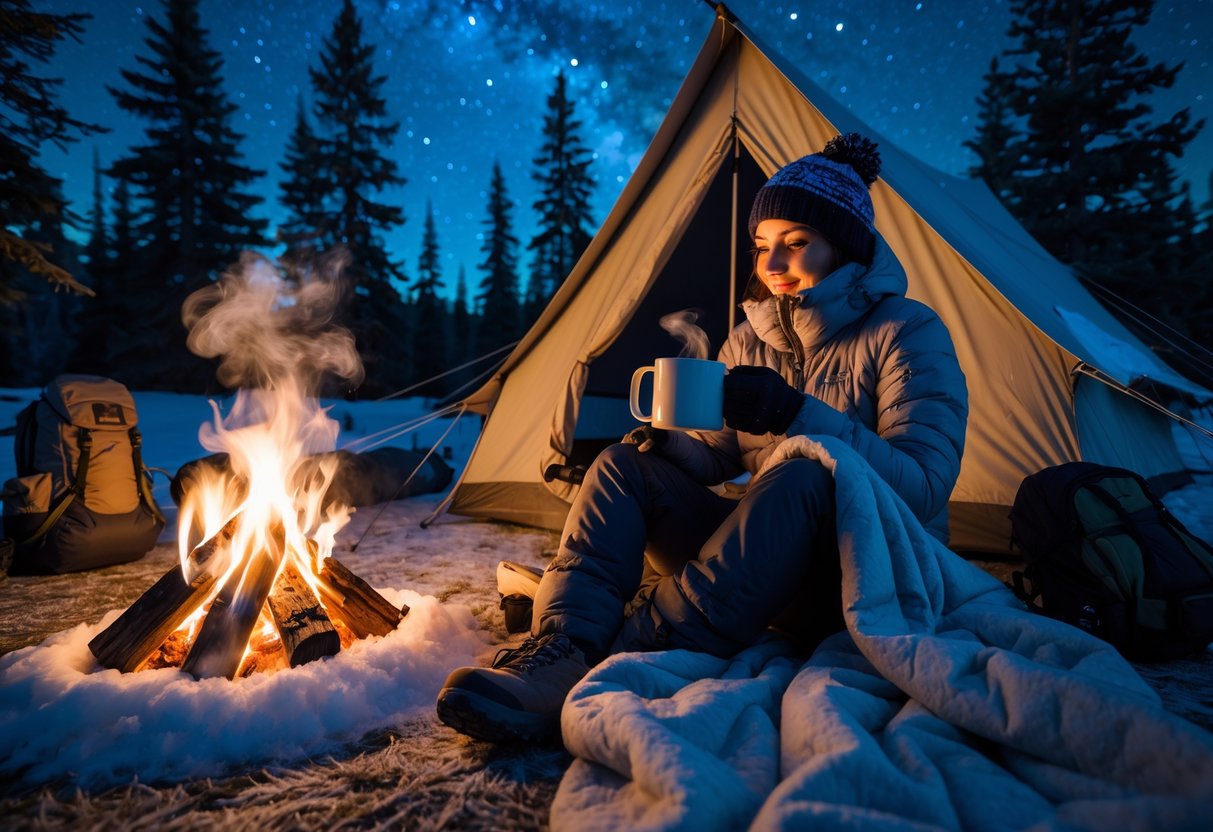
You’ll also learn simple campsite choices and habits that multiply warmth—where to pitch, how to use a fire safely, and small tricks like hand warmers and liners that make a big difference. Follow the clear steps in this post and you’ll sleep warmer, stay safer, and enjoy more time outside.
Key Takeaways
- Choose shelter and site setup to reduce wind and cold exposure.
- Build a layered sleep system with insulation from the ground to your head.
- Wear moisture-wicking layers and use small heat sources safely.
Fundamentals of Staying Warm While Camping
You will control most heat loss by layering clothing, insulating the ground, and managing moisture. Focus on trapping dry air close to your body, protecting extremities, and planning gear and food to keep your core warm.
Understanding Heat Loss in Cold Weather
Heat leaves your body through four main ways: conduction, convection, radiation, and evaporation. Conduction happens when you touch cold surfaces — so keep a good insulated sleeping pad under you and avoid direct contact with snow or wet ground. Convection means cold air moving past you; reduce it with a well-sealed tent, windproof outer layers, and by closing vents when wind picks up.
Radiation is heat you lose to the air and sky. A snug sleeping bag and hat cut that loss. Evaporation from sweat drains heat fast, so avoid cotton and stay dry with moisture-wicking base layers. Check your clothing often and change into dry sleep clothes before bed to stop overnight heat loss.
Cold Weather Camping Risks and Safety
Hypothermia and frostbite are the most serious risks. Hypothermia begins when your core drops below normal; watch for shivering, slurred speech, and slow breathing. Frostbite targets fingers, toes, ears, and nose; look for numb, pale, or waxy skin and act fast. Carry a first-aid kit, hand warmers, and a mylar blanket for emergencies.
Cold also drains batteries and impairs stoves. Keep electronics in an inner jacket pocket and warm fuel canisters in your sleeping bag before use. Never cook inside your tent; carbon monoxide and fire risk are real. Tell someone your route and expected return time, and bring a reliable way to call for help.
Winter Camping Preparation Essentials
Pick gear rated for the temperatures you expect. Use a sleeping bag rated at least 10–20°F colder than the overnight low and pair it with an insulated sleeping pad (R-value ≥4 for cold conditions). Pack a sleeping bag liner and an extra set of dry clothes for sleeping.
Plan food and fluids that boost heat: high-calorie snacks, warm meals, and hot drinks. Bring a stove suited for cold — liquid-fuel or cold-rated canister stoves work best — and carry spare fuel. Layer clothing: a moisture-wicking base, insulating mid layers (down or synthetic), and a waterproof windproof shell. Keep a warm hat, mittens, and dry socks only for sleeping.
Choosing the Best Gear for Cold Nights
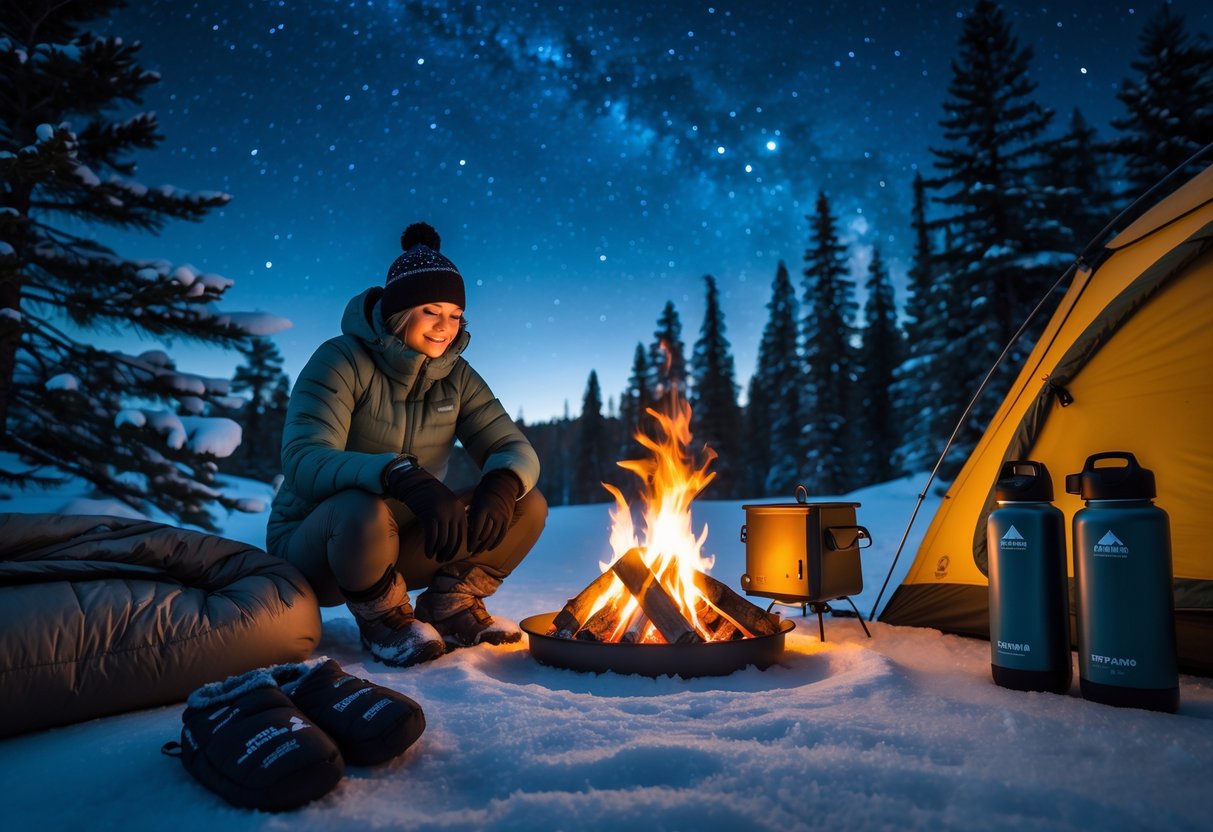
Pack gear that targets trapped air and body heat loss: a cold-rated sleeping bag, a liner that adds warmth and blocks drafts, and an insulated sleeping pad that stops conductive heat loss to the ground.
Selecting the Right Sleeping Bag
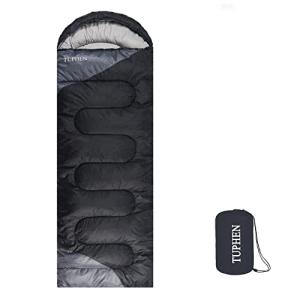
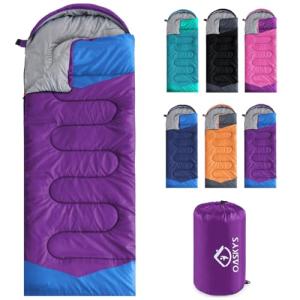
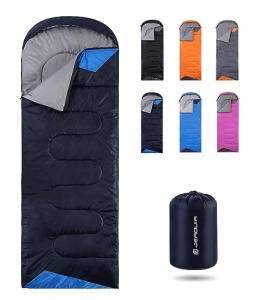
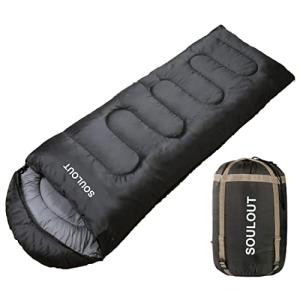
Pick a sleeping bag rated for temperatures below the coldest you expect. Look for a bag with a comfort rating at or slightly below your lowest night temperature. Mummy shapes fit close to your body and reduce dead air space, which keeps you warmer than wide rectangular bags.
Choose down if you want the best warmth-to-weight ratio and can keep it dry. Choose synthetic if you expect wet conditions or need lower cost and faster drying. Check loft (fluff) for down and insulation weight for synthetic; more loft or higher grams mean more warmth.
Inspect features: a snug hood, draft collar, and zipper baffle prevent heat loss. Make sure the size fits you; an oversized bag wastes warmth. Use a zipper draft tube and close the hood partially to conserve heat.
Benefits of a Sleeping Bag Liner
A liner adds 5–15°F (3–8°C) of warmth depending on material and fit, letting you use a lighter bag in mild cold. Silk liners are light and add small warmth; fleece or thermal liners add more insulation and dry quickly.
Liners keep your sleeping bag clean, reducing the need to wash it and preserving loft and insulation over time. They also give flexibility: use the liner alone on warm nights, or inside your bag for extra warmth on cold nights.
Choose a liner that fits inside your bag without bunching. If you sleep cold, pick a high-loft fleece or a thermal synthetic liner. For compact comfort and weight savings, use a lightweight down or synthetic liner rated for a few degrees of added warmth.
Using an Insulated Sleeping Pad
Your pad stops conductive heat loss to the ground, which can sap most of your body heat if uninsulated. Use a pad with an R-value of at least 3 for cool three-season trips; choose R 4–6 for true cold or near-freezing nights.
Inflatable pads with integrated foam or air chambers offer high R-values and pack small. Closed-cell foam pads are cheap, durable, and add consistent insulation but are bulkier. Consider a combination: foam under an inflatable pad for added warmth and redundancy.
Check pad dimensions so it covers under your torso and hips, where you lose most heat. Use a pad sleeve or strap to keep it from sliding. Inflate only to a comfortable firmness; over-inflating can compress insulation and reduce R-value.
Creating an Effective Sleep System
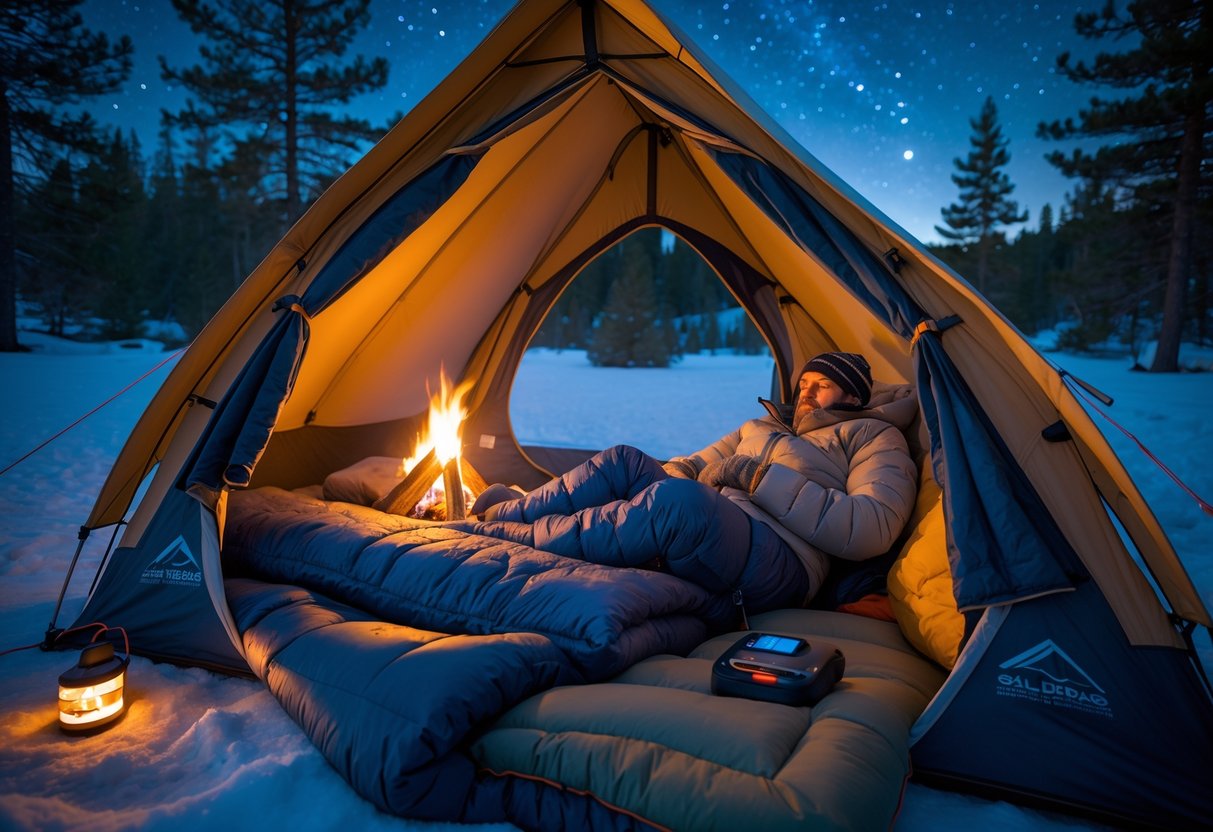
Build a sleep system that traps heat, reduces heat loss to the ground, and keeps moisture off your skin. Focus on insulation under and around you, dry clothing, and items that warm extremities.
Layering Your Sleep Accessories
Start with a sleeping pad rated for the temperature you expect. Aim for an R-value that matches or exceeds the forecasted low. If you need extra insulation, stack a closed-cell foam pad under an inflatable pad. This adds warmth and prevents heat loss through compression.
Add a sleeping bag or quilt with a comfort rating at least as low as the expected night temp. Use a sleeping bag liner for small extra warmth and to keep the bag clean. If you feel cold, add a fleece blanket or down liner inside the bag rather than tightening zippers, which can trap moisture.
Keep gear modular so you can add or remove layers. Pack items in compression sacks so you can adjust loft quickly. Place a reflective emergency blanket under the pad only if you also have insulating layers above it to avoid creating condensation.
Sleep Clothing Strategies for Warmth
Change into dry clothes right before bed. Damp clothing chills you fast; always carry a fresh set for sleeping. Choose long-sleeve base layers and thermal leggings made of wool or synthetic fabrics—not cotton.
Wear a lightweight fleece or insulated jacket over your base layer if temps drop. Keep clothing slightly loose to retain warm air; tight clothes compress insulation and reduce warmth. Use a dry bag or plastic sack to store your spare clothes so they stay moisture-free.
Avoid overdressing inside the bag. You should be warm but not sweaty. If you sweat, cool dampness will rob heat overnight. Layer so you can vent or add pieces without getting out of the bag fully.
Targeting Extremities: Hats, Socks, and Hand Warmers
Your head, feet, and hands lose heat fast. Wear a thin wool or fleece hat to bed; a hat can add several degrees of perceived warmth. Use thick wool or synthetic socks, and carry an extra pair in a dry bag to change into if needed.
Hand warmers can make a big difference. Activate chemical hand warmers and slip them into a pocket inside your sleeping bag or place them near your feet. Reusable gel warmers work too, but keep them in a cloth pouch to avoid direct skin contact.
If your feet get cold, stuff dry socks or a hat at the foot of the sleeping bag to trap warm air. Don’t put hot hand warmers directly next to skin for long periods; check temperature to avoid burns.
Building a Cold-Resistant Campsite
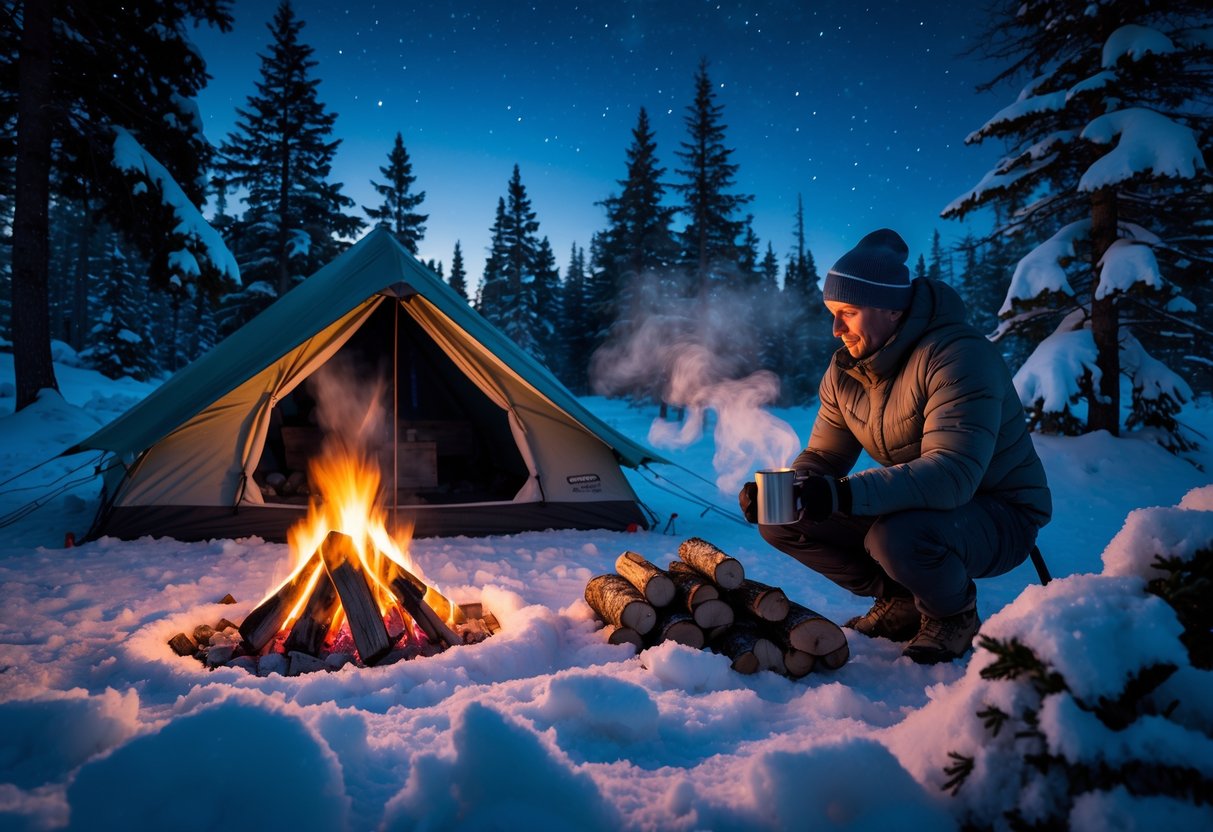
You will focus on choosing a sheltered spot, pitching a cold-weather tent correctly, and creating windbreaks that cut wind and trap heat. These steps reduce heat loss, keep snow out, and make your sleeping system work better.
Selecting an Ideal Campsite Location
Pick a site that blocks prevailing wind. Look for leeward sides of tree lines, boulder fields, or terrain hollows that are higher than cold-air pooling zones. Avoid valley bottoms where cold air settles overnight.
Clear snow or loose debris and compact the surface if you camp on snow. Firm ground stops your tent from sinking as the night cools and gives a stable base for staking. Lay a footprint or tarp under the tent to add insulation and protect the floor from moisture.
Keep your tent 10–15 feet from any campfire and uphill from water sources. That reduces wind exposure and lowers the chance of melting snow under your tent. Also position the door facing away from prevailing winds to limit drafts when you open it.
Choosing and Setting Up a Four-Season Tent
Use a four-season tent or a cold-weather tent rated for strong wind and snow loads. These tents have stronger poles, lower profiles, and fewer mesh panels to retain heat and resist collapse in storms.
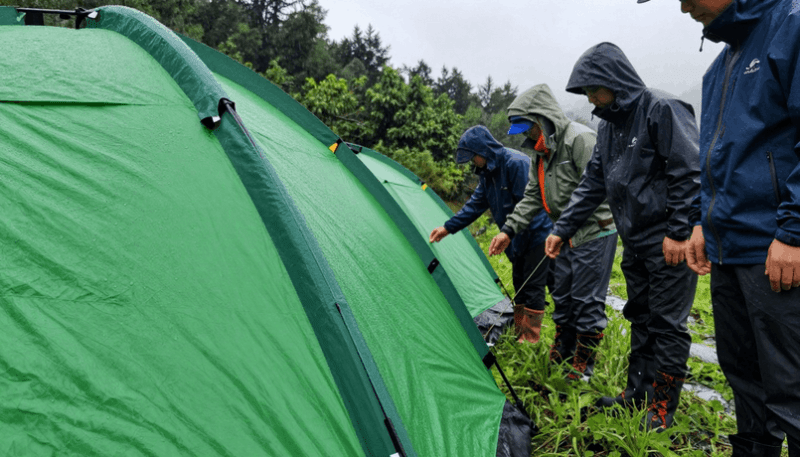
Pitch the tent taut and stake or deadman-anchor every guyline. Tight fabric sheds snow and reduces flapping that steals heat. Lower the rainfly vestibule slightly to form a small insulated air pocket without sealing vents; proper ventilation limits condensation and frozen wetness.
Add a high-R-value sleeping pad and an insulating ground layer under the tent floor. If you camp on snow, pack the snow down first to create a stable platform. Keep wet gear in the vestibule or outside wrapped to prevent interior moisture from condensing on your sleeping gear.
Using Natural and Artificial Windbreaks
Natural windbreaks include tree stands, rock outcrops, and terrain ridges. Place your tent on the leeward side of these features to block gusts and reduce convective heat loss. Use distance and elevation to avoid areas where wind funnels between gaps.
Build artificial windbreaks with packed snow walls, logs, or a row of backpacks. Snow walls work well: pack snow into a low berm 1–2 feet high on the windward side to break strong gusts. Make sure walls sit at least a few feet from the tent to avoid snow drifting onto the fabric.
Use guyline tension and extra stakes to anchor a wind-facing tarp if needed. Keep the tarp angled to deflect wind upward, not toward the tent. Always leave ventilation gaps to prevent condensation and watch for shifting wind patterns overnight so you can adjust barriers if needed.
Dressing for Maximum Warmth and Comfort
Wear layers that trap heat, move sweat away from your skin, and let you change damp items fast. Focus on a moisture-wicking base, insulating mid layers, and a weatherproof outer shell. Keep spare dry clothes reachable.
Importance of a Moisture-Wicking Base Layer
Your base layer sits next to skin and must move sweat away so you don’t chill as you cool down. Choose synthetic fabrics (polyester, capilene) or merino wool; both dry faster than cotton and cut heat loss from evaporation. Look for a snug fit that still lets you move; loose base layers let cold air circulate.
For sleeping, wear a clean, dry base layer. If you sweat during activity, change the base layer before settling into your sleeping bag. Pack one or two spare base layers in a waterproof bag so you can swap into dry clothes quickly.
Choosing Mid and Outer Layers
Use mid layers to trap warm air. Fleece, down, or synthetic insulated jackets work well. Down gives the best warmth-to-weight ratio but loses loft when wet. Synthetic fills still insulate when damp and dry faster after exposure.
Pick an outer shell that blocks wind and rain. A breathable waterproof jacket and pants stop weather without trapping too much moisture. For very cold nights, add a windproof layer over your insulation. Keep a hat and gloves in your outer pockets for quick access.
Tips for Staying Dry and Changing Clothes
Dry clothes keep you warm; wet clothes make you cold fast. Change out of sweaty gear as soon as you stop moving. Use a waterproof bag or dry sack to store spare clothes inside your tent or vehicle.
When changing, shield yourself from wind and chill by stepping inside the tent or behind the vehicle. Put on base layer first, then mid layer, then outer shell. Keep socks and gloves in a warm pocket overnight so they don’t freeze and you can put them on warm.
Smart Staying Warm Strategies and Habits
Focus on fuel, movement, safe heat, and keeping gear dry. Small changes before bed and simple habits during the night make the biggest difference in staying warm while camping.
Warming Up with High-Calorie Foods and Hot Drinks
Eating adds fuel for your body to make heat. Before you turn in, eat a meal with protein, fat, and carbs — for example, a tuna pouch with instant rice and olive oil, or peanut butter on whole-grain crackers. Aim for 400–700 calories in the two hours before sleeping to top up energy stores.
Drink something warm but not alcoholic. A 12–16 oz cup of hot tea, broth, or instant soup raises core temperature and helps you feel warmer fast. Avoid excessive caffeine close to bedtime if it keeps you awake. Pack calorie-dense snacks for the night like nuts, energy bars, or chocolate in a zip bag so you can add more fuel if you wake cold.
Staying Active for Heat Generation
Move several times before bed to raise circulation and warm muscles. Do light exercise for 5–10 minutes: brisk walking, calf raises, or dynamic stretches. Focus on big muscle groups (legs and core) because they produce the most heat.
Keep a short activity routine if you wake up cold. Even a minute of stepping in place or doing squats will boost warmth. Avoid sweating heavily; damp clothes cool you once you stop moving. Change into dry clothes after activity and then get into your sleeping system quickly to trap the heat you just generated.
Efficient Use of Campfires and Heat Sources
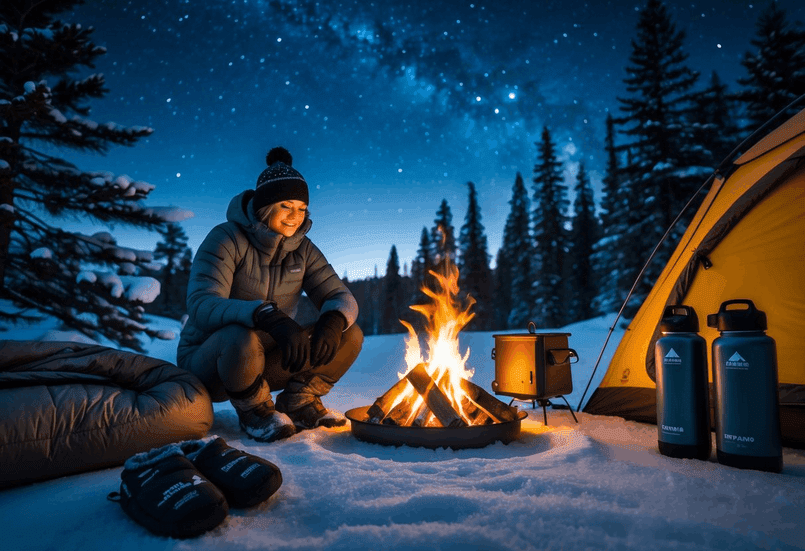
Use campfires and portable heaters cautiously and smartly. Build the fire early to warm your shelter area, and keep it small and controlled. Sit close to the fire for 10–15 minutes before bed to heat your outer layers and dry damp gear, then step back to avoid inhaling smoke.
Never use open flames inside a tent. If you use a stove or tent-safe heater, follow the manufacturer’s ventilation and carbon monoxide rules. Use hot water bottles safely: fill a leak-proof bottle with very hot (not boiling) water, wrap it in a sock, and place it in your sleeping bag near your feet. Put the bottle on top of a ground pad or towel to avoid contact burns and protect insulation.
Maintaining Dry Gear and Clothing
Wet clothing and gear destroy insulation. Keep a dry set of sleeping clothes in a sealed dry bag. Before bed, change into dry socks, base layer, and a hat to lock in warmth. Store damp items away from sleeping gear; hang them near the fire or use a waterproof line.
Use layers that wick moisture and dry quickly. Avoid cotton for sleeping because it retains moisture. Place a closed-cell foam pad or high R-value inflatable pad under you to block ground cold. Check boots and gloves in the morning and dry them promptly to prevent nighttime chill the next day.
Frequently Asked Questions
You can use several gear and habit changes to stay warm: choose high-R-value insulation for the ground, use layered clothing and hot food, and adapt shelter methods when you don’t have a tent.
What are effective sleeping bag alternatives for staying warm while camping?
A four-season sleeping bag is best, but alternatives work well. Use a sleeping bag liner plus an insulated blanket or military-style down bag for added warmth.
Combine an insulated sleeping pad under a closed-cell foam mat to cut heat loss to the ground. If space allows, use two pads—one air pad over a foam pad—for higher R-value.
Wear a dry base layer and a warm hat inside the bag. Avoid cotton; pick wool or synthetic fabrics that keep heat when damp.
What are some strategies to maintain warmth when camping without a tent?
Use a bivy sack or tarp shelter to break wind and trap heat. Set the shelter low to the ground and orient the opening away from prevailing wind.
Create a windbreak with a wall of logs, rocks, or gear. Raise a small fire a safe distance from your sleeping spot and use it to warm stones that you can move closer after dark.
Sleep on the warmest ground surface available and add multiple insulation layers under you. Keep clothes and gear stored inside a dry sack to reduce heat loss.
Which materials are best for insulating a campsite during cold conditions?
Closed-cell foam pads, foam boards, and reflective emergency blankets work well on the ground. These provide reliable R-value and stay effective if damp.
Use wool blankets, down quilts, and high-loft synthetic fill for body insulation. Wool stays warm when wet; down has higher warmth-to-weight but loses value if soaked.
For shelter walls, natural materials like brush or packed snow add wind protection. Tarps and extra tent flys offer fast, portable insulation.
How can I insulate my tent for winter camping to prevent heat loss?
Add an insulated ground layer under your sleeping pad; use a closed-cell foam layer first, then an air pad. Seal tent vents only enough to reduce drafts while avoiding condensation buildup.
Hang a reflective blanket or tarp over the tent fly to reflect radiant heat back inside. Use a four-season tent or add an extra rainfly for better wind and snow protection.
Keep gear inside the tent to block drafts and reduce empty air volume. Use a small hot-water bottle or heat packs safely inside a sleeping bag for localized warmth.
What techniques can be used to stay warm while camping without access to electricity?
Rely on body heat and passive insulation: layers of clothing, high-R-value sleeping pads, and snug sleeping bags. Conserve heat by keeping dry and changing out of sweaty clothes before sleep.
Use hot food, hot water bottles, or chemical hand warmers for localized heat. Build and manage a safe campfire to warm your shelter area and heat rocks for short-term radiant warmth.
Keep extra clothes in a dry, insulated bag and sleep with your boots and heated items close to your body. Avoid alcohol; it lowers core body temperature.
Are there any specific foods or drinks that help maintain body heat during cold-weather camping?
Eat hot, high-calorie meals like stews, chili, or pasta to produce metabolic heat. Include fats and carbohydrates; they digest slower and provide steady energy.
Drink warm beverages such as tea, broth, or hot chocolate to raise skin and core temperature temporarily. Stay hydrated with warm fluids, and avoid excessive caffeine or alcohol before sleep.