Tent Camping vs RV Camping: Which One Is Right for You?
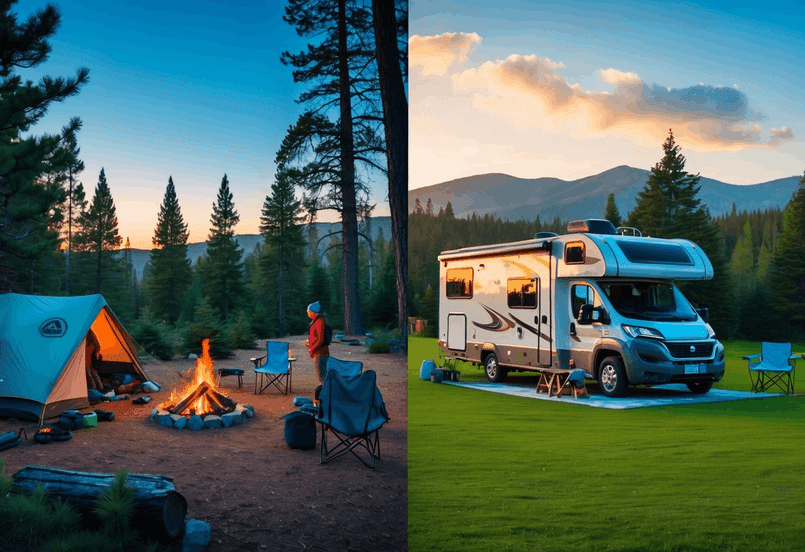
Choosing between tent camping and RV camping shapes every part of your outdoor experience. Both options offer unique ways to enjoy nature, but they differ in cost, comfort, setup, and how closely you connect with the outdoors. We've spent time exploring both camping styles to help you understand what each one brings to the table.
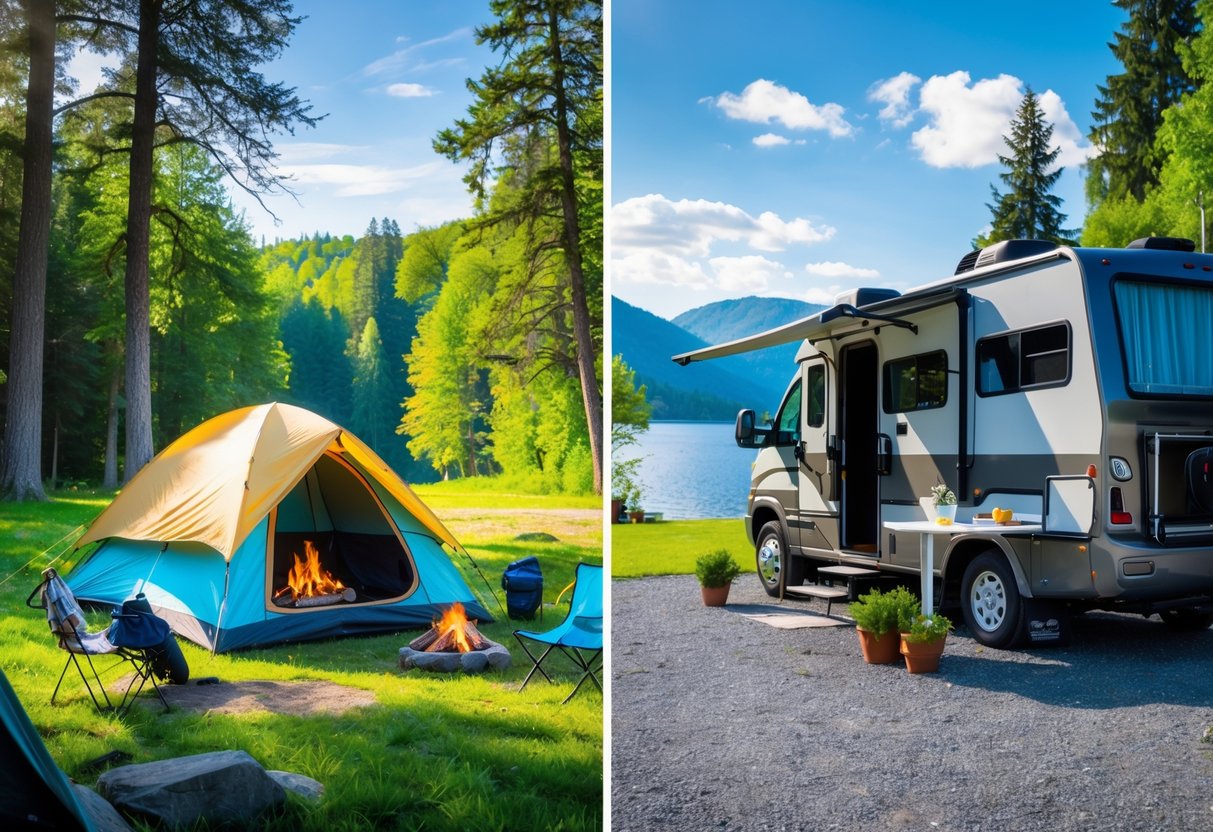
The right choice depends on your budget, comfort preferences, and how you want to experience the outdoors. Tent camping offers a simple, budget-friendly way to immerse yourself in nature with minimal barriers between you and the environment. RV camping provides more comfort and convenience with amenities like beds, kitchens, and climate control, though it costs more and requires planning for larger vehicles.
We'll break down the practical differences between these camping styles so you can make an informed decision. From setup and costs to comfort levels and accessibility, you'll get a clear picture of what to expect from each option.
Key Takeaways
-
Tent camping is more affordable and offers closer immersion in nature but provides less comfort and weather protection
-
RV camping delivers greater comfort with amenities like beds, kitchens, and bathrooms but costs more and requires handling larger vehicles
-
Your best choice depends on your budget, desired comfort level, and whether you prioritize outdoor immersion or convenience
Understanding Tent Camping and RV Camping
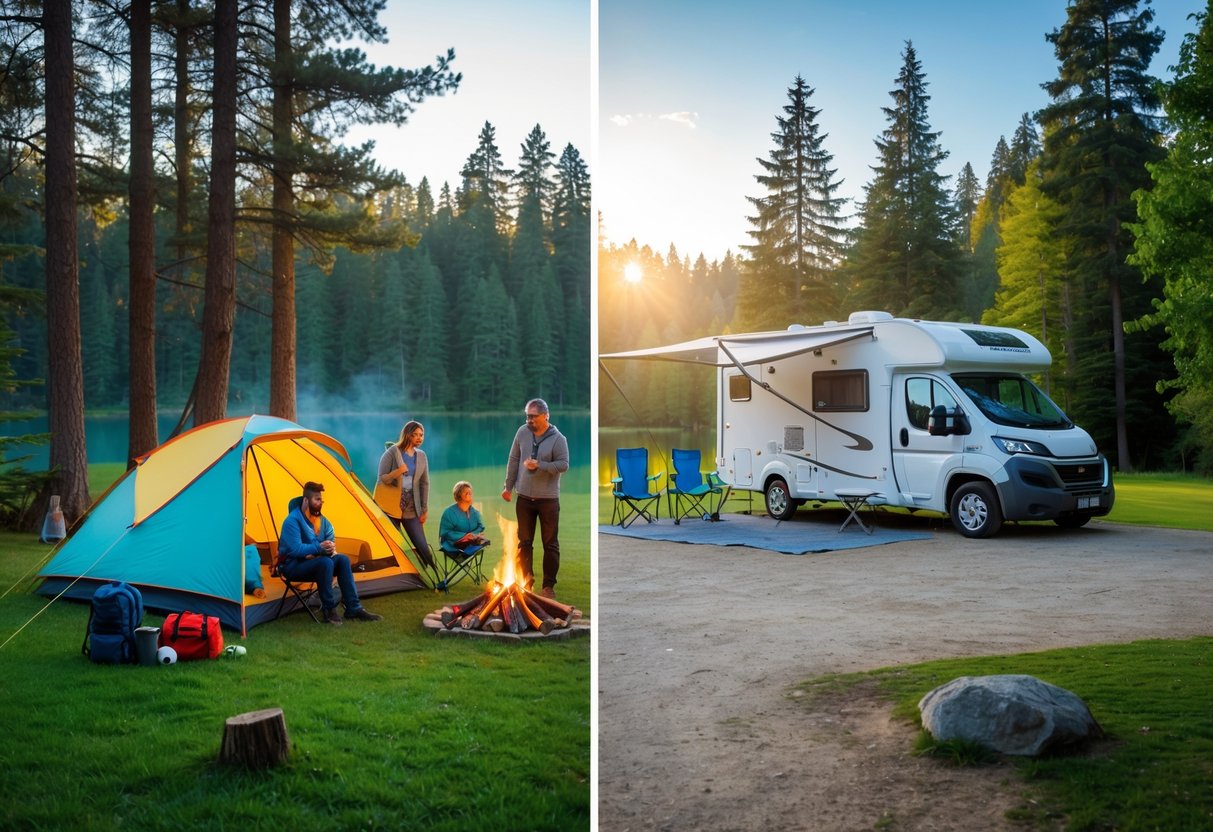
Tent camping puts you directly in nature with basic shelter, while RV camping offers a mobile home with built-in amenities. Each type uses different gear and provides a distinct outdoor experience.
What Is Tent Camping?
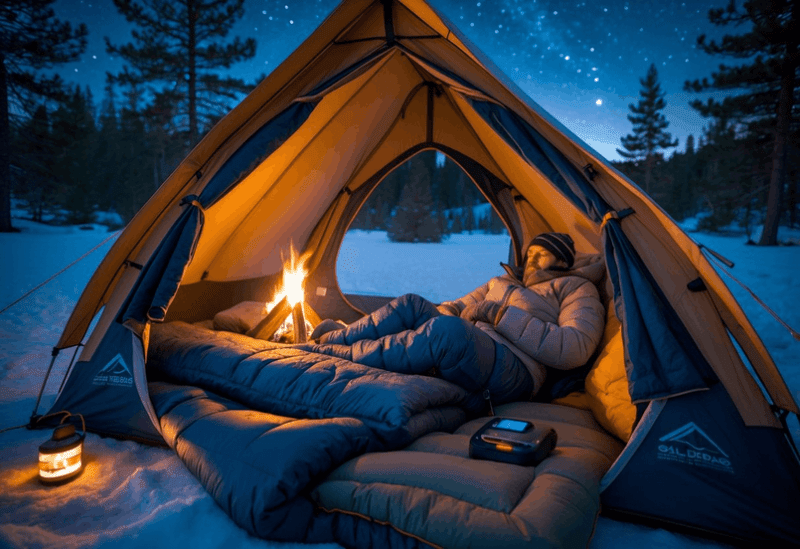
Tent camping means sleeping outdoors in a portable fabric shelter. We set up a tent at a campsite and use sleeping bags or air mattresses for bedding. Most tents have one or two rooms and no electricity or plumbing.
This style of camping connects us directly with the outdoors. We hear every sound, feel temperature changes, and experience nature up close. The setup is simple but requires us to bring all our own gear.
We cook meals over a campfire or portable stove. We use campground bathrooms and showers instead of having our own. Storage is limited to what fits in the tent and our vehicle.
What Is RV Camping?
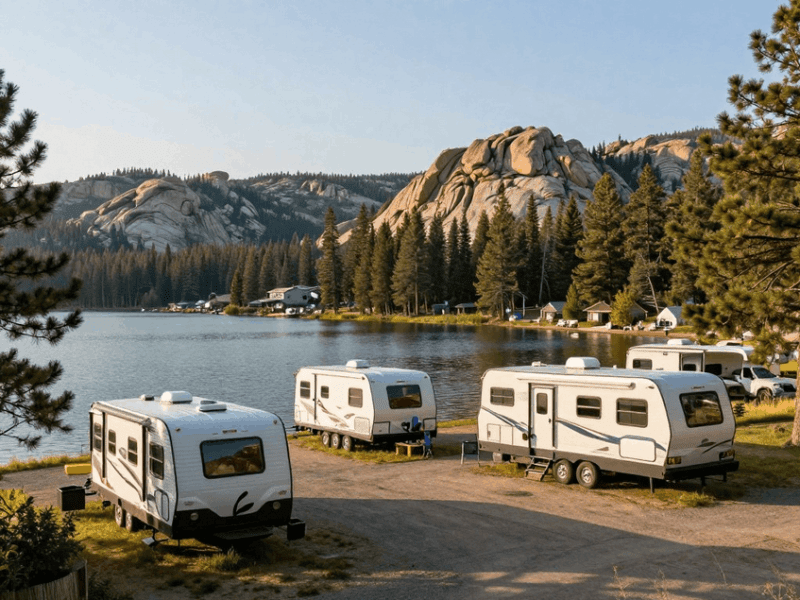
RV camping involves traveling and sleeping in a recreational vehicle. An RV is a motorized or towable home on wheels with sleeping areas, a kitchen, and a bathroom. We get amenities like mattresses, running water, heating, and air conditioning.
A motorhome is a drivable RV with the living space and cab combined. A travel trailer attaches to a vehicle and gets towed to the campsite. A campervan is a smaller, converted van that's easier to drive and park.
We can cook full meals in the RV kitchen using a stovetop, oven, and microwave. We store food in a refrigerator and freezer. The bathroom includes a toilet and shower that we use whenever needed.
Types of RVs and Tents
Common tent types include:
-
Dome tents - Easy to set up, good for 2-4 people
-
Cabin tents - Stand-up height, fits families of 6-10
-
Backpacking tents - Lightweight, designed for hiking trips
-
Pop-up tents - Quick setup, compact storage
Common RV types include:
-
Class A motorhomes - Largest, most amenities, bus-like
-
Class B campervans - Smallest, easier to drive, van-sized
-
Class C motorhomes - Mid-size, cab-over bed design
-
Travel trailers - Towable, range from small to large
-
Fifth wheels - Large trailers, require truck to tow
-
Pop-up campers - Fold down for towing, expand at site
Key Differences Between Tent Camping and RV Camping
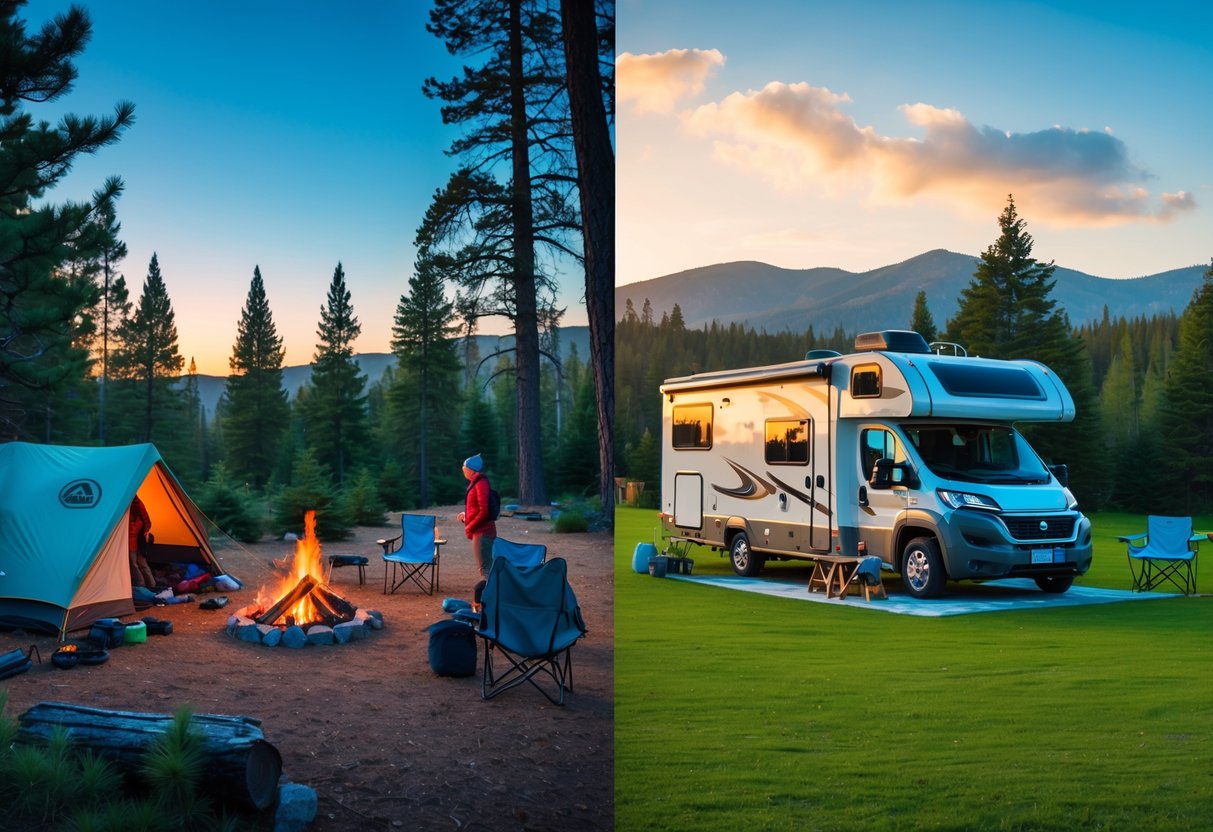
Tent camping and RV camping offer completely different experiences on the road. The way you sleep, set up camp, handle weather, and connect with nature changes based on which option you choose.
Comfort and Sleeping Arrangements
The biggest difference between tent camping and RV life is where and how you sleep. With tent camping, you'll sleep in a sleeping bag on the ground or on an air mattress. An air mattress makes things more comfortable, but you still need to inflate it each time you set up camp.
Getting up from an air mattress can be hard on your back and knees. The tent floor doesn't provide much cushioning or support.
RV camping gives you a real bed with a mattress. Most RVs have queen-size beds that feel like sleeping at home. You don't need to set up your bed each night or pack it away each morning.
Comfort features in RVs include:
-
Real mattresses with box springs
-
Climate control (heating and air conditioning)
-
Private bathroom with shower
-
Kitchen with refrigerator and stove
-
Seating areas with cushioned furniture
Tent campers rely on campground facilities for bathrooms and showers. If you need to use the restroom at night, you'll walk to the bathhouse in the dark.
Setup and Mobility
Tent camping offers quick setup and easy mobility. A small tent takes 5-10 minutes to set up. A larger tent might take 20-30 minutes. You can pack up your tent and leave a campground in under 30 minutes.
You can easily stop at different sites during the day while tent camping. Your vehicle stays nimble and fits in regular parking spots. This makes it simple to visit multiple attractions on your way to your campground.
RV setup takes much longer. You need to back up your trailer, level it, connect water and electric hookups, and extend any slide-outs. This process usually takes 30-60 minutes. Taking down camp takes just as long because you must dump sewer tanks, disconnect utilities, and secure everything inside.
Driving with an RV limits where you can go. Your home on wheels doesn't fit through drive-thrus or into small parking lots. You'll need to plan stops at truck stops and larger facilities. Many attractions become overnight stays instead of quick stops because you can't easily park your RV.
Weather Protection and Shelter
Tents provide basic shelter from rain and wind. A good rain fly keeps water out during storms. However, tents don't protect you from heat or cold. Finding shaded campsites can be hard, especially in states with open campgrounds.
Summer heat makes tents uncomfortable during the day. Winter cold seeps through tent walls at night. Your sleeping bag handles the cold, but getting dressed in freezing temperatures inside a tent is rough.
RVs give you complete weather protection. You have air conditioning for hot days and heating for cold nights. The solid walls and insulation keep you comfortable in any weather. You can extend an awning to create shade outside. If the weather turns bad, you can cook inside and stay dry.
Connection with Nature
Tent camping puts you right in the middle of nature. You hear every bird, cricket, and rustling leaf. The camping life in a tent means smelling campfire smoke and fresh air constantly. You feel morning dew and evening breezes directly.
Most tents use mesh walls that let you see outside while keeping bugs out. You fall asleep looking at stars through the mesh ceiling. This close connection appeals to tent campers who want an authentic outdoor experience.
RV camping creates a barrier between you and nature. Solid walls and windows separate you from the sounds and smells outside. You can open windows and sit under your awning, but it's not the same as tent camping. Some people prefer this separation because it keeps bugs, dirt, and weather at a distance while still letting them enjoy campground settings.
Cost and Budget Considerations
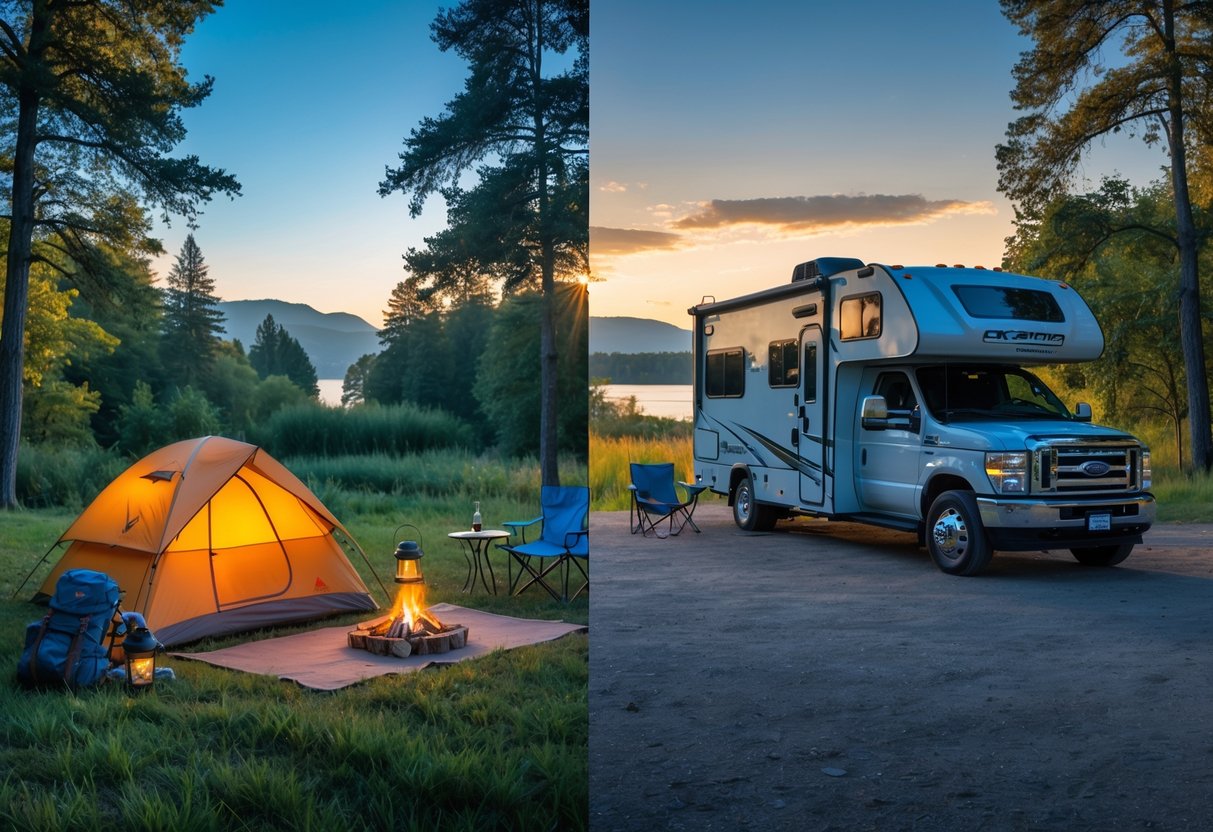
Your camping budget breaks down into two main areas: what you pay upfront for gear or vehicles, and what you spend each time you camp. Tent camping typically costs less in both categories, while RV camping requires larger initial and ongoing investments.
Initial Investment and Equipment
Tent camping gear is affordable and can be purchased gradually. A quality tent costs $100-$400, sleeping bags run $30-$150 each, and sleeping pads add another $20-$100 per person. We can build a complete setup for a family of four for $300-$800.
RV costs are significantly higher. Used travel trailers start around $10,000-$25,000, while new models range from $20,000-$50,000. Class B and C motorhomes cost $30,000-$120,000 or more.
If we're not ready to buy, we can rent an RV for $100-$300 per day. This works well for occasional trips, but rental fees add up quickly on longer vacations. A week-long rental typically costs $700-$2,100 plus mileage fees.
Campground Fees and Ongoing Costs
Campground fees vary by site type and amenities. Primitive tent sites cost $20-$40 per night, while standard tent sites with better facilities run $30-$50. RV sites with full hookups (electricity, water, sewer) typically charge $55-$95 per night.
Beyond nightly fees, RV ownership brings recurring costs. Annual RV insurance runs $600-$2,000, maintenance and repairs average $800-$3,000 yearly, and off-season storage adds $300-$1,200. Camping gear for tents needs occasional replacement—maybe $20-$200 annually for worn items.
Fuel costs differ too. RVs average 8-12 mpg compared to 25-35 mpg for cars, tripling our fuel expenses on the same trip.
Comfort, Amenities, and Convenience
RVs provide built-in comforts like real beds, kitchens, and bathrooms, while tent camping offers a more basic experience with gear you bring yourself. The gap between these two styles is most noticeable in daily activities like sleeping, cooking, and staying clean.
Sleeping Comfort and Space
RV camping gives us actual mattresses and climate control. We can adjust the temperature with heating or air conditioning to stay comfortable no matter the weather outside. The beds are similar to what we sleep on at home.
Tent camping requires a sleeping bag and possibly an air mattress. Even with an air mattress, we're still sleeping on the ground. There's no temperature control inside a tent. We stay warm or cool based on our gear choices and the outside weather.
Space is another big difference. RVs have defined living areas where we can stand up and move around freely. We can store our belongings in cabinets and closets. Tents give us limited headroom and floor space. Everything we bring must fit in our tent or stay outside.
Cooking and Food Storage
An RV kitchen includes a stovetop, oven, microwave, and sink. We can cook the same meals we make at home. The refrigerator and freezer keep our food fresh for days or weeks. Washing dishes happens right at the sink with running water.
Tent camping means cooking on a portable stove or over a campfire. Both methods work but take more effort and time. We need to pack food in coolers with ice, which melts and needs replacing. Washing dishes requires heating water and finding a suitable spot. Many campground facilities have dish washing stations, but we need to walk there with all our dirty items.
Bathroom and Hygiene Facilities
RVs come with private bathrooms. We can shower anytime without waiting in line or paying extra fees. Going to the bathroom at night means walking a few steps inside our camper instead of trekking to a distant building in the dark.
Tent campers rely on campground facilities. We share bathrooms and showers with other campers. Some campgrounds charge by the minute for hot showers. The walk to the bathroom can be long, especially at night or in bad weather.
Flexibility, Accessibility, and Mobility
The type of camping you choose affects where you can go and how easily you can get there. RVs and tents each offer different levels of freedom when it comes to exploring new places and setting up camp.
Where You Can Camp
Tent camping gives us access to spots that RVs simply can't reach. We can hike into backcountry areas, set up at walk-in campsites, and explore remote locations where road access is limited or nonexistent. Small campgrounds with tight turns and low-hanging trees welcome tent campers without issue.
RVs and travel trailers need developed campgrounds with proper roads and hookups. A camper van offers more flexibility than a full-sized RV, but it still can't access hiking trails or primitive sites. We're also limited by campground size restrictions—many parks have length limits that exclude larger rigs. However, RV parks typically offer full amenities like water, electricity, and sewage hookups that make longer stays comfortable.
Ease of Travel and Setup
RVs excel at road trips because everything stays packed and ready. We can drive all day, pull into a campground, and have our bed ready in minutes. A travel trailer or camper van means we don't need to unpack between destinations.
Tent camping requires more setup time at each stop. We need to pitch the tent, arrange sleeping gear, and set up our camp kitchen every time we move. This takes 30 minutes to an hour depending on our system. For road trips with multiple stops, this extra work adds up quickly. But the trade-off is easier parking and better fuel economy during travel.
Deciding Which Camping Style Is Right for You
The choice between tent and RV camping depends on your budget, comfort needs, and what kind of outdoor experience you want. Your lifestyle, travel companions, and how often you plan to camp all play important roles in making this decision.
Who Should Choose Tent Camping?
Tent camping works best for people who want a close connection with nature and don't mind basic conditions. If you have a limited budget, tent camping is the clear winner since you can get started for a few hundred dollars instead of thousands.
Tent campers typically include:
-
Backpackers and hikers who want to access remote trails
-
Budget-conscious families looking for affordable vacations
-
Solo adventurers seeking immersive nature experiences
-
People with limited storage space at home
We recommend tent camping if you value simplicity and flexibility over comfort. You can set up camp in places RVs can't reach, from backcountry sites to small state park campgrounds. The lower environmental impact also appeals to eco-conscious campers.
Physical fitness matters here. Tent camping requires more physical work for setup, cooking, and daily tasks. If you have mobility issues or chronic pain, sleeping on the ground might not work well for you.
Who Should Choose RV Camping?
RV camping suits people who want outdoor adventures without giving up home comforts. Families with young children often prefer the convenience of having a kitchen, bathroom, and climate control right at their campsite.
RV life appeals to:
-
Retirees planning extended road trips
-
Families with toddlers or babies
-
People with physical limitations or health concerns
-
Full-time travelers and remote workers
-
Anyone who camps frequently throughout the year
We find that rv travel makes sense when you plan longer trips or visit multiple locations. The ability to bring bikes, kayaks, and other gear without cramming everything into a car trunk is a major advantage.
The upfront cost is significant, but if you camp more than a few times per year, an RV can offer better value than hotels. Just factor in storage costs, maintenance, fuel, and higher campsite fees when calculating your total expenses.
Personal Preferences and Adventure Goals
Your camping style should match what you actually enjoy doing outdoors. Think about whether you want to spend most of your time hiking and exploring or relaxing at a comfortable home base.
Consider these questions when deciding:
-
How many nights per year will you realistically camp?
-
Do you prefer spontaneous trips or planned itineraries?
-
What weather conditions will you camp in?
-
Do you need internet access for work or prefer total disconnection?
We've seen many people find middle ground options like glamping or van camping. Glamping offers tent-style immersion with added amenities like real beds and electricity. Van life provides more mobility than a large RV while still offering basic shelter and cooking facilities.
Your travel companions matter too. Solo campers might enjoy the meditation of tent camping, while groups often appreciate the shared living space of an RV. Some families start with tent camping when kids are older and switch to RVs as their needs change.
Test both styles before investing heavily. Rent an RV for a weekend or borrow a friend's tent to see what feels right for your personality and goals.
Frequently Asked Questions
Tent camping and RV camping each come with their own costs, setup requirements, comfort levels, and environmental considerations. These questions address the practical details you need to know when choosing between the two options.
What are the key differences in cost between tent camping and RV camping?
Tent camping requires much less money upfront. A decent tent costs between $100 and $400, plus another $100 to $200 for sleeping bags, pads, and basic gear.
RV camping involves a bigger financial commitment. Renting an RV runs from $100 to $300 per night. Buying one costs anywhere from $10,000 for a used pop-up camper to over $100,000 for a new motorhome.
Campsite fees differ too. Tent sites typically cost $15 to $40 per night. RV sites with full hookups run $40 to $80 per night at most campgrounds.
We also need to factor in ongoing costs. RVs require insurance, maintenance, fuel, and storage fees when not in use. Tents just need occasional replacement and minimal upkeep.
How do tent camping and RV camping vary in terms of set-up and convenience?
Setting up a tent takes about 15 to 30 minutes for most models. We just need to stake it down, insert poles, and arrange our sleeping gear inside.
RV setup involves leveling the vehicle, connecting to water and electrical hookups, and extending slide-outs if applicable. This process takes 20 to 45 minutes depending on the RV type and our experience level.
Breaking camp shows similar patterns. Tents pack up quickly, though everything needs to be dry first to prevent mold. RVs require disconnecting utilities, securing loose items, and retracting awnings.
Moving between locations is easier with a tent since we can pack everything in a regular car. RVs need special considerations for driving, parking, and maneuvering through campgrounds.
What are the pros and cons of the space and comfort provided by tent camping versus RV camping?
Tents offer minimal protection from the ground and weather. We sleep on sleeping pads or air mattresses, which provide basic cushioning but not the comfort of real beds.
RVs come with actual mattresses, climate control, and solid walls. We get protection from rain, wind, and temperature extremes with heating and air conditioning systems.
Storage space differs dramatically. In a tent, we keep our gear in bags and organize items in our vehicle. RVs have cabinets, closets, and external storage compartments for all our supplies.
Tents limit our living space to what we can fit under fabric. RVs provide separate areas for sleeping, cooking, and relaxing. Some models even include bathrooms and showers.
What should be considered when comparing the environmental impact of tent camping and RV camping?
Tent camping leaves a smaller footprint on campgrounds. We use less space, consume no electricity at the site, and generate minimal waste.
RVs consume fuel for travel and propane for cooking and heating. A typical motorhome gets 8 to 14 miles per gallon, while towing a trailer reduces a vehicle's fuel efficiency by 20 to 40 percent.
Water usage varies between the two options. Tent campers typically use campground facilities, sharing resources with others. RV owners use their own freshwater tanks and create grey water that needs proper disposal.
Manufacturing impact matters too. Tents require far fewer materials and energy to produce than RVs. However, a well-maintained RV lasts decades, while tents need replacement every few years with regular use.
How does the camping experience differ between using a tent and an RV in terms of immersion in nature?
Tent camping puts us directly in the outdoor environment. We hear every bird call, feel temperature changes, and experience weather conditions firsthand.
The thin fabric walls of a tent mean we wake with natural light. We smell the campfire smoke, fresh pine, and morning dew. Every sound from wildlife to rustling leaves reaches our ears.
RV camping creates a buffer between us and nature. Solid walls, windows, and doors reduce noise and block smells. We control our environment with lights, fans, and temperature settings.
We can still enjoy nature from an RV by spending time outside. The difference lies in our sleeping and living space. Tents force us to adapt to nature, while RVs let us bring home comforts along.
What are the maintenance and storage considerations for tent campers compared to RV owners?
Tents need basic care after each trip. We must dry them completely before storage to prevent mildew. Seams require occasional waterproofing treatment, and small tears need patching.
Storing a tent takes minimal space. Most fit in a closet, garage shelf, or under a bed. We can keep all our camping gear in a few plastic bins.
RVs demand regular maintenance schedules. Engines need oil changes, tires require rotation and replacement, and systems like plumbing and electrical need inspections. Winterizing an RV involves draining water systems and adding antifreeze.
Storage for an RV presents a real challenge. We need a driveway, storage facility, or dedicated parking space. Storage facilities charge $50 to $200 monthly depending on location and whether the spot is covered.