How to Dump RV Tanks (Step by Step Guide): Safely & Easily
Dumping RV tanks is just part of RV life. Every owner needs to figure it out eventually.
The job involves draining waste from your black water tank (toilet waste) and gray water tank (sink and shower water) at the right dump stations or approved spots. Sure, it sounds gross at first, but honestly, it gets routine pretty quickly once you know the drill.
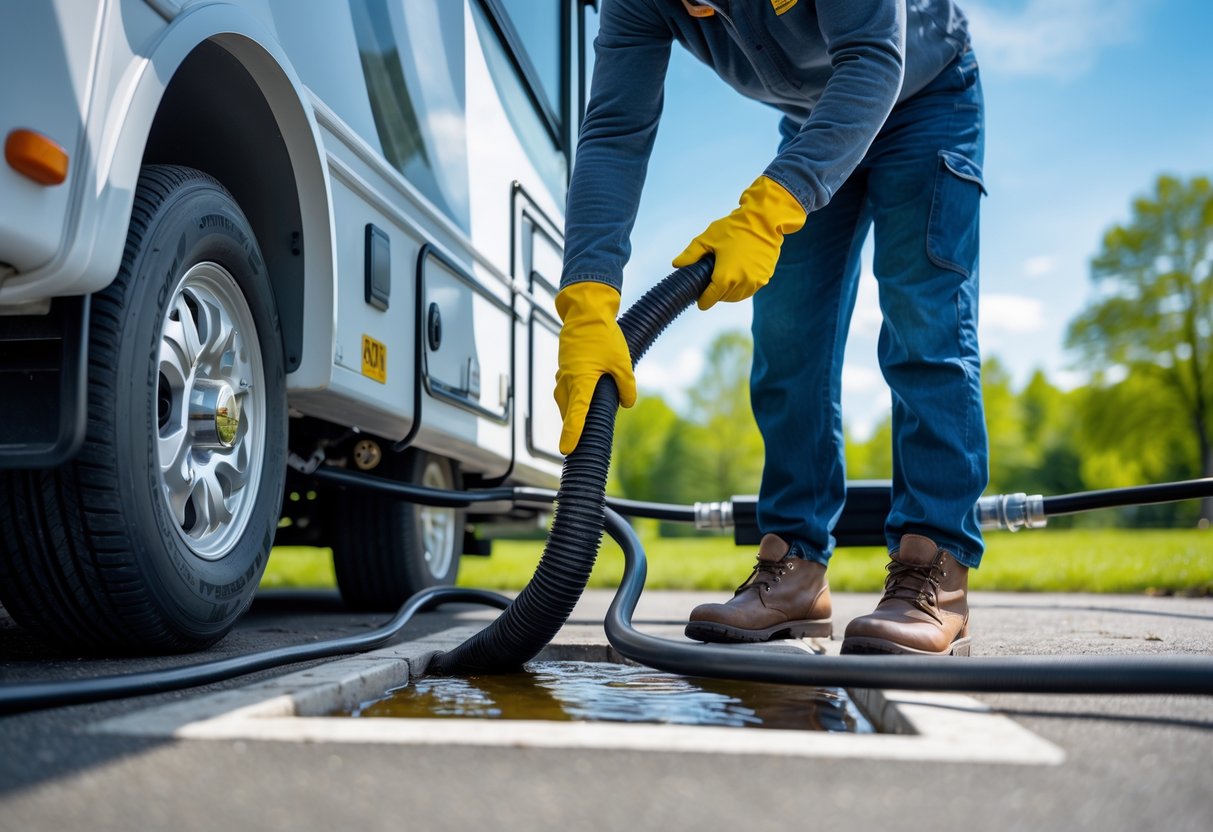
Basically, you hook up a sewer hose from your RV to the dump station, drain your black tank first (flush it with water too), then dump the gray tank to rinse out the hose, and finally add water and treatment back into the black tank. Having the right gear and following this order keeps things tidy and your system working like it should.
The black tank holds toilet waste and stays shut until you're ready to dump. The gray tank is for water from sinks and showers—nothing too gnarly, but still not something you want leaking everywhere.
This guide covers what to bring, how to dodge rookie mistakes, and the right sequence for a clean dump every time. Nobody wants a disaster at the dump station, right?
Key Takeaways
- Always dump your black tank before the gray tank so gray water can flush out the sewer hose
- Use a clear elbow connector to see when your black tank is draining clear water
- Close and refill your black tank 2-3 times during dumping for the best cleaning results
Understanding RV Holding Tanks
Every RV has three different holding tanks to manage water and waste. The black water tank handles toilet waste, the gray water tank collects sink and shower water, and the fresh water tank stores clean water for drinking and washing.
Black Water Tank Basics
The black water tank connects straight to your RV toilet and just holds all your toilet waste. Most black tanks are somewhere between 30 and 50 gallons—depends on your RV's size.
Dump your black tank when it hits about two-thirds full. If you wait until this point, solids break down better and you avoid nasty clogs.
Your tank sensors should show the fill level, but honestly, they get unreliable as gunk builds up. It's just one of those RV quirks.
Wait until your black tank is at least two-thirds full before dumping. A fuller tank means more pressure and a better flush through your sewer hose. Dumping too early leaves solids behind, and that's how you get that dreaded "pyramid plug" blockage.
Keep the black tank valve closed while camping. Only open it when you're actually dumping at a station.
Gray Water Tank Overview
Your gray water tank grabs everything from the kitchen sink, bathroom sink, and shower. It's got soap, food bits, grease, and dirt but—thankfully—no toilet waste. These tanks are usually 40 to 60 gallons.
Even though gray water isn't as nasty as black water, you can't just dump it anywhere. Most states say you have to use a dump station. Some boondocking spots are cool with dumping gray water on the ground, but you should always check local rules first.
It's fine to let your gray tank fill up more than the black tank. Most RVers wait until it's nearly full, since you'll use this water to rinse your sewer hose after dumping the black tank. That gray water flush really helps clean out residue and keeps the hose from stinking up your storage.
Fresh Water Tank Role
The freshwater tank holds clean, drinkable water for your RV plumbing. It supplies water to the faucets, shower, toilet, and water heater. Tank sizes can be as small as 20 gallons or well over 100 in big rigs.
This tank is totally separate from your waste tanks. It's got its own fill spot, drain valve, and pump. You fill it up at home or at a campground before hitting the road.
The freshwater tank never connects to waste disposal. But knowing how much fresh water you have helps you plan when to dump. Everything you use from the fresh tank eventually becomes gray or black water that fills up your holding tanks.
Essential Equipment for Dumping RV Tanks
You need a sewer hose with the right fittings, some protective gear, and a few extras to dump your RV tanks without making a mess. Having decent gear makes everything easier and less stressful.
Sewer Hose and Fittings
The sewer hose is a flexible, three-inch-diameter tube that runs from your RV's waste outlet to the dump station. Most are 10 to 20 feet long, which is usually enough.
The bayonet fitting locks your hose onto the RV's waste outlet. Just line up the tabs and twist it a quarter turn until it clicks. Give it a tug to make sure it's secure.
Some RVs come with a basic sewer hose, but not all. If you need one, starter kits run $30 to $50 at most RV stores.
Don't forget a termination cap for the waste outlet when you're not dumping. It blocks odors and keeps out debris. Losing this cap is a headache you don't want.
Sewer Hose Supports and Elbow Connector
Sewer hose supports keep your hose from sagging and creating low spots where gross stuff can collect. They set up a nice slope from your RV to the dump station. Supports are usually $20 to $35 and fold up small for storage.
An elbow connector is a 90-degree fitting that goes between your sewer hose and the dump station inlet. If it's clear, you can see when the tank is empty—no more guessing. These cost $12 to $18 and honestly, they're worth it.
You don't absolutely need these, but both make the job cleaner and less annoying.
Required Safety Gear
Disposable nitrile gloves are a must. You want gloves that can handle sewage—latex breaks down, so go for nitrile. A box of 100 usually runs $8 to $12 at hardware stores.
Paper towels come in handy for cleaning up drips, wiping hoses, and drying your hands before you wash up.
Bring hand soap and water for after you're done. Hand sanitizer isn't enough; you need real soap and running water to get rid of bacteria from sewage.
Recommended Tank Accessories
A hose rinse attachment connects to a water spigot and flushes out your sewer hose. This helps knock out residue and keeps odors down. They run $15 to $25 and can extend your hose's life.
Tank flush wands let you spray water inside the black tank to break up solids. Just connect to a garden hose and stick it through the toilet. These go for $25 to $40 and help keep sensors working right.
A sewer hose storage bag locks in odors and keeps your gross hose away from your other gear. Basic bags are $12 to $20 ,and you can just toss them in the wash when needed.
Step-by-Step Guide to Dumping RV Tanks at Dump Stations
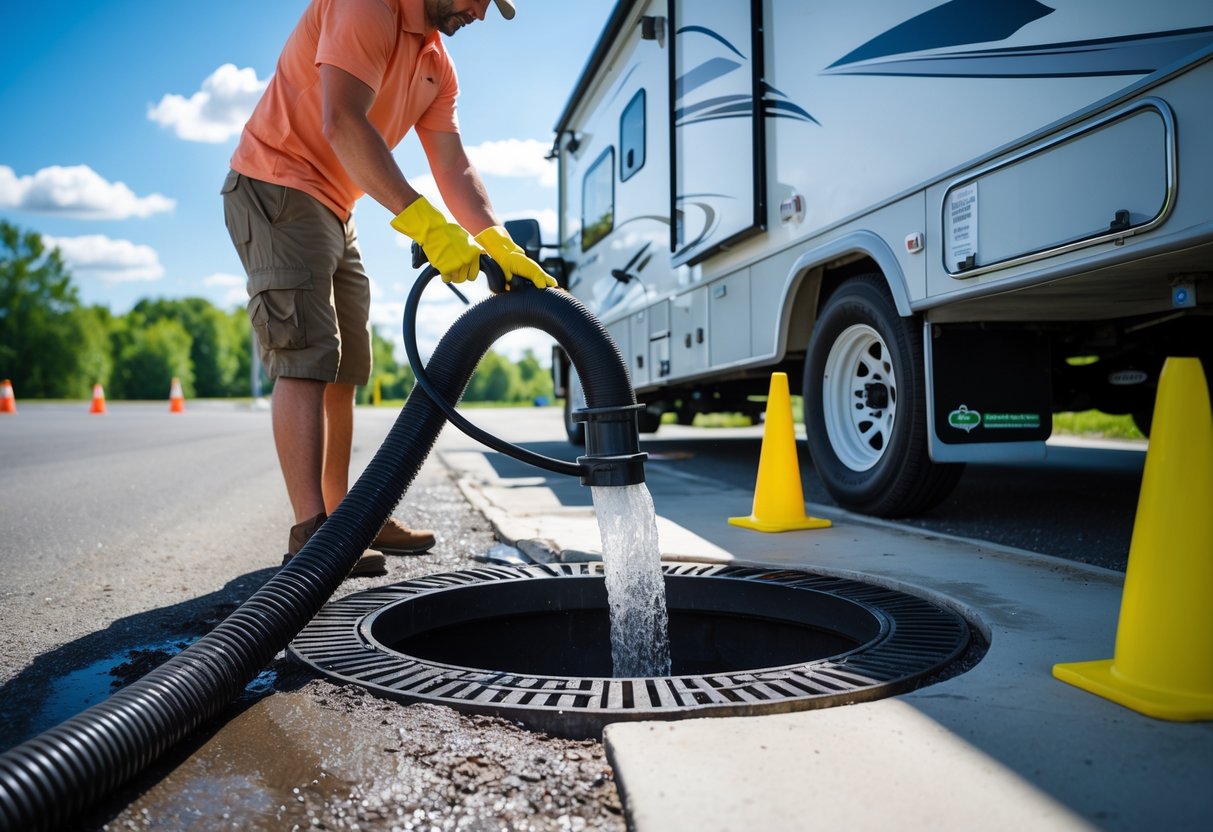
Dumping RV tanks always follows the same order for good reason. Black tank goes first, then the gray tank flushes out the hose.
Finding and Positioning at a Dump Station
Apps like Sanidumps or sites like rvdumps.com make finding a dump station a breeze. They list locations, fees, hours, and even user reviews.
Common dump station spots:
- RV parks and campgrounds (usually free for guests, $10-20 otherwise)
- Truck stops like Pilot Flying J ($10-15 per dump)
- City or county public facilities ($5-15)
- Highway rest areas (sometimes free, sometimes $5-10)
When you get there, park so your waste outlet is 10-15 feet from the dump hole. Try to get level and don't forget the parking brake. Usually, the waste outlet sits on the driver's side rear, marked with a symbol or label.
Make sure you can reach both the dump hole and a water supply if you plan to rinse. The hose should reach easily, not stretched tight or drooping too much.
Connecting the Sewer Hose
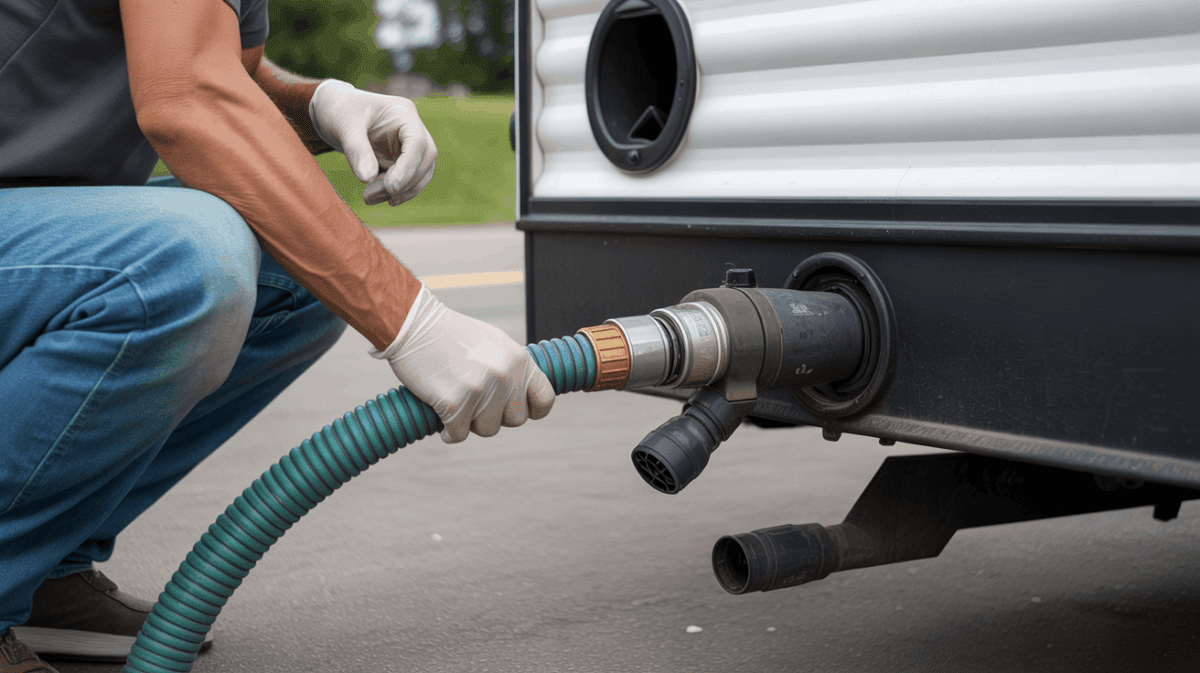
Slip on your nitrile gloves before touching anything. Open your RV waste outlet panel and twist off the termination cap.
Hook the bayonet fitting on your sewer hose to the RV outlet. Line up the tabs and twist until it locks. Give it a little pull to make sure it's really on there.
Lay out your hose to the dump hole with a gentle downward slope. Stick the hose end 6-12 inches into the dump hole—not too far, since you want air flow to avoid splash-back.
Keep all valves closed until you're ready to dump. Opening early only causes messes.
Dumping the Black Water Tank First
Find the black water tank valve—it's labeled "BLACK" or has a toilet icon. This one controls the toilet waste. Pull the handle all the way out.
You should hear water rushing as the tank empties. Wait a few minutes until the flow stops. If you have a clear elbow fitting, you'll see when it's just air.
Push the handle all the way back in to close the valve. Double check that it's really closed.
Always dump the black tank before the gray tank. The gray water will rinse out the hose in the next step.
Dumping the Gray Water Tank
Find the gray water tank valve, usually marked "GRAY" or with a sink icon. Pull that handle out to let the water flow.
Gray water rinses out the hose and clears away any black tank residue. This step makes storage a lot less gross.
Wait until the gray tank is empty. If you have a second gray tank, open that valve too for a final rinse.
Push the gray valve handle in to close it up. Pull the hose out of the dump hole, then disconnect it from the RV by twisting the bayonet fitting. Put the termination cap back on and stash your hose in its bag or compartment.
Peel off your gloves inside out and toss them. Wash up with soap and water at the dump station if you can—don't just use sanitizer.
Proper Flushing and Cleaning After Dumping
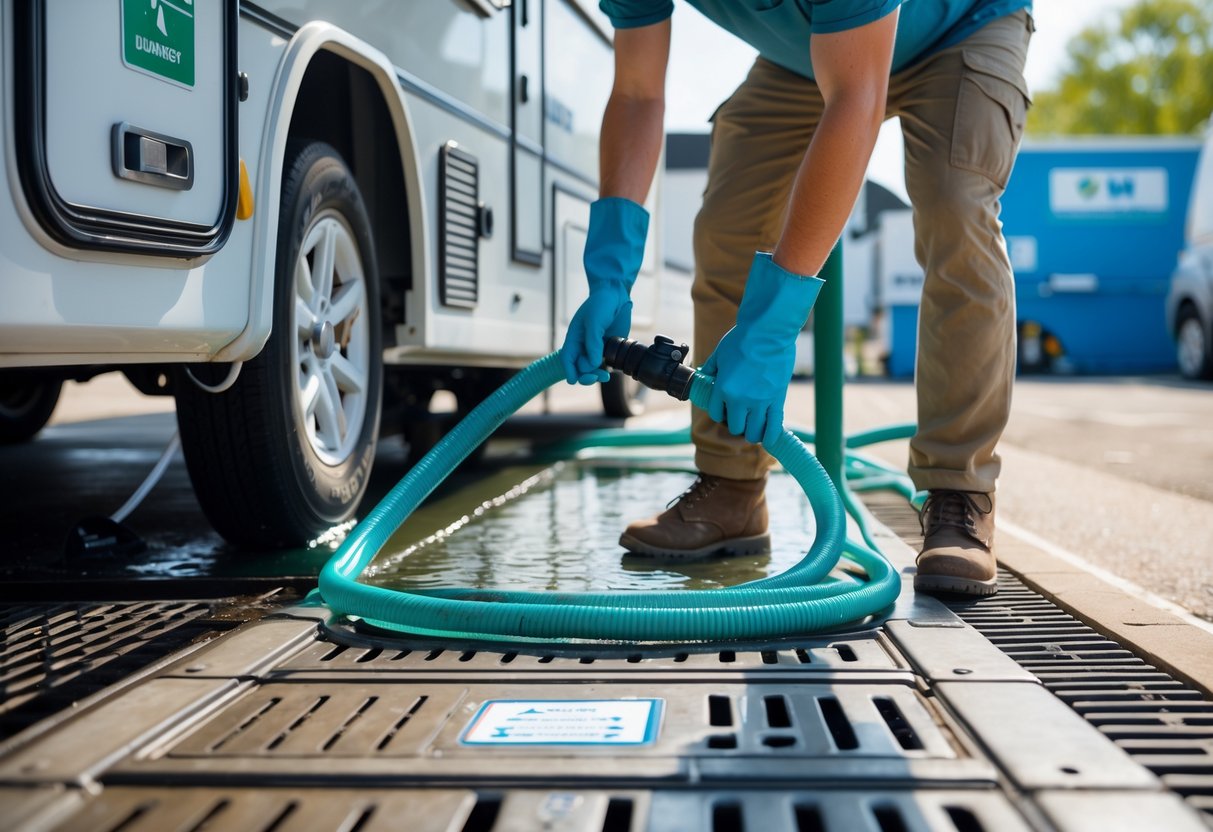
Flushing your black tank after dumping gets leftover waste off the walls and sensors. Cleaning your equipment right away keeps odors and contamination at bay.
Give the tank a good rinse, then toss in a fresh tank treatment. That way, you’re all set for trouble-free use until next time.
Using Black Tank Flush Systems
A black tank flush system uses a built-in inlet on your RV to spray water inside the tank. Just connect a dedicated hose to the flush inlet after you’ve emptied the tank.
Run the water for about 30 to 60 seconds, then close the black tank valve. Let the tank fill up to about a quarter full, then open the valve and drain again.
Check the output through a clear elbow fitting so you can actually see what’s coming out. Repeat this cycle until the water runs clear in the elbow, usually three to five times.
Never use your white drinking water hose for this. Keep a separate hose labeled for waste jobs only.
If the rinse water stays brown after a few cycles, you probably have some stubborn buildup that’s going to need a deeper cleaning.
Manual Tank Rinsing Techniques
No built-in flush inlet? Use a tank rinser wand. Stick the wand through your toilet and spray all the sides inside the tank.
Move the wand in a circular pattern to hit the walls and sensors. Run it for about a minute, close the valve, let water build up a bit, then open the valve and check the clear elbow for debris.
Keep rinsing in short bursts until the discharge runs clear. This way, you get more control over where the water hits inside the tank.
After flushing, add one or two gallons of fresh water and your favorite holding tank treatment before closing everything up.
Cleaning and Storing Equipment
Rinse your sewer hose thoroughly every time you use it. Spray the outside with a disinfectant and let it dry before you put it away.
Take off any clear elbow fittings and rinse those separately. Store hoses in their own compartment or bag, away from your fresh water gear.
Wipe down valve handles and connection points with sanitizing wipes. Check o-rings and seals for cracks or wear, and replace damaged parts before your next trip.
Wash reusable gloves with soap and hot water, or just toss disposable gloves in the trash after use.
Using Holding Tank Treatments and Odor Control
Tank treatments help break down waste and control odors in your RV holding tanks. Picking the right product and using it correctly really makes the difference between a fresh-smelling RV and one that, well, doesn’t.
When and How to Add Tank Treatments
Always add holding tank treatment right after dumping your tanks, not before. Pour the recommended amount down your toilet, then follow up with two or three gallons of fresh water to help spread the treatment around.
Most treatments work best when you add them every time you dump, which for full-timers is usually every four or five days. If it’s hotter than 85°F, double the dose since heat kills off bacteria in biological products faster.
For best results, take a short drive after adding the treatment. The movement helps slosh everything around, coating the tank walls and breaking up gunk. This step matters even more if you haven’t cleaned your tanks in a while.
Biodegradable versus Chemical Products
Biodegradable treatments use natural bacteria and enzymes to digest waste and toilet paper. These are safe for septic systems and the environment, so they’re great if you dump at home or at campgrounds with septic hookups.
Chemical treatments rely on formaldehyde or other harsh chemicals to mask odors and break down solids. They work faster than biological options, but they can damage septic systems and harm good bacteria in treatment plants. Some states even restrict or ban certain chemical products.
Temperature changes how well treatments work. Biological products stop working well above 85°F, while chemical treatments keep going in the heat. You might want to switch to chemical products for summer camping, but make sure your dump location allows them.
Best Practices for Odor Prevention
Keep your black tank valve closed until you’re ready to dump. Leaving it open lets water drain out and leaves solids behind, which just builds up and stinks.
Use plenty of water with every flush. Toss at least a cup or two of water in the bowl before and after each use to keep waste submerged and help the tank treatment do its job.
Clean your toilet flapper regularly with a brush and mild cleaner. Sometimes, the smell you think is coming from the tank is actually just right under the toilet seat. Rinse your tanks with fresh water after dumping until the water runs clear, then add your tank treatment and start the cycle again.
How to Dump RV Tanks at Home
Dumping your RV tanks at home requires knowing the local laws and having the right gear for a safe connection to your home’s waste system. You can use a direct sewer hookup or portable equipment, depending on your setup.
Checking Local Regulations and Legal Considerations
Before dumping at home, check your local rules. Some cities and counties have strict rules about dumping RV waste on residential property, and a few ban it entirely.
Call your local health department or building code office to ask about permits, connection types, and approved disposal methods. You don’t want a fine or some other headache.
Your homeowner’s association might have its own restrictions, too. Double-check your HOA agreement or ask the board if you’re not sure.
Safe Methods to Dump at Home
Wear rubber gloves and protective eyewear any time you handle RV waste. Make sure your sewer hose is in good shape and store it properly to avoid contamination.
Set up on a level spot near your home’s sewer connection. Use a clear elbow attachment so you can see when the tanks are empty—makes it easier to avoid overflows.
Dump your black tank first, then your gray tank. The gray water helps flush out any leftover waste from your sewer hose. Never dump on the ground or into storm drains—it’s dangerous and illegal.
Using a Septic or Municipal Sewer System
Your home’s cleanout port usually sits outside near ground level and gives you direct access to the sewer line. You’ll need a sewer hose adapter that fits your cleanout port.
Connect your RV sewer hose tightly to the cleanout port. Open the black tank valve slowly to control the flow.
If you’ve got a septic system, don’t dump too often. RV waste can mess with the bacteria in your septic tank, so stick to once or twice a month and avoid harsh chemicals.
Municipal sewer systems can handle RV waste more often. Still, watch the flow so you don’t back up your home’s plumbing.
Portable Waste Tank and Macerator Pump Options
A portable waste tank lets you move waste from your RV to a toilet or cleanout port. These tanks usually hold 15 to 35 gallons and have wheels for easy hauling.
Connect your RV’s dump valve to the portable tank with a short hose. Once it’s full, disconnect and wheel the tank to your disposal spot.
Most portable tanks come with their own hose for emptying into toilets or cleanout ports. A macerator pump grinds up solid waste, so you can use a standard garden hose instead of a big sewer hose.
This pump attaches to your RV’s dump valve and can push waste uphill or over long distances. You can even run the hose through a basement window if needed.
Macerator pumps need power, usually 12-volt DC from your RV battery. The waste gets turned into a slurry and flows through a 1-inch hose, which is way easier to handle and store.
Frequently Asked Questions
Always dump your black tank before your gray tank so the soapy water rinses the sewer hose clean. Use the right equipment and gloves at dump stations, and follow your local rules if dumping at home. Additives like Dawn soap can help, but good tank maintenance matters more than any product.
Which tank should you empty first on an RV, and why does the order matter?
Empty your black tank first, then your gray tank. The black tank has toilet waste that leaves residue in your sewer hose, and the gray tank’s soapy water rinses that out.
If you dump gray first, black tank waste just sits in the hose with nothing to rinse it away. That creates stubborn odors you’ll never really get out of your hose or storage compartment.
The gray tank usually holds more water than the black, so it does a better job flushing everything through the hose and out to the dump station.
How do you properly use an RV dump station to empty your tanks safely?
Put on nitrile gloves before touching anything. Park your RV so the waste outlet is about 10-15 feet from the dump hole.
Remove the termination cap from your RV’s waste outlet. Attach your sewer hose by turning the bayonet fitting clockwise until it locks, then stick the other end 6-12 inches into the dump hole.
Pull the black tank valve handle all the way out and wait a couple of minutes for it to empty. Close the valve, then open the gray tank valve to rinse the hose. Close the gray valve, disconnect the hose, and replace your termination cap.
If there’s water available, rinse the outside of your hose. Store the hose in a sealed bag, throw away your gloves, and wash your hands well.
What are the steps to empty an RV black water tank at home legally and hygienically?
Check your local regulations first—many cities don’t allow dumping RV waste into residential sewer systems, or only allow it with a cleanout valve and proper permits.
If it’s allowed, find your home’s sewer cleanout valve. It’s usually a capped pipe in your yard, 3-4 inches wide. Remove the cap and attach your RV sewer hose securely.
Connect the other end to your RV waste outlet, then open the black tank valve and let it drain. Follow with the gray tank to flush the hose. Close both valves, disconnect the hose, and replace the cleanout cap.
Never dump into storm drains, septic systems without permits, or straight onto the ground. Those options are illegal and can cause big environmental problems—and you might get hit with a hefty fine.
How do you transfer black tank waste into a portable waste tank without spills?
Start by connecting your sewer hose to your RV waste outlet. Then, attach the other end firmly to the portable waste tank inlet—most tanks use screw-on adapters or quick-connect fittings, so it's not usually tricky.
Open your black tank valve a little at first to control the flow. Keep the hose sloping downward so gravity does the work and moves the waste into the portable tank.
Keep an eye on the portable tank's level indicator. Overfilling is the last thing you want to deal with.
When you're done, close the black tank valve. Next, open your gray tank valve to rinse the hose into the portable tank—this step helps keep things cleaner.
Once you've closed the gray valve, disconnect your hose. Now you're ready to move the portable tank to a dump station, ideally using a vehicle if it's heavy.
Position the tank's outlet over the dump hole and open the valve to empty it. If the dump station has a rinse connection, go ahead and rinse the tank—it's worth the extra minute.
What should you do to flush and rinse RV tanks after dumping to reduce odors and buildup?
After dumping, fill your black tank with about 5-10 gallons of fresh water. If you like, toss in some black tank treatment chemicals.
Driving your RV helps slosh the water around, which can loosen any stuck waste. Dump the tank again the next time you get a chance.
For a deeper clean, try using a tank rinse wand. Stick the wand through your toilet and spray the tank walls for five or ten minutes.
This breaks up waste pyramids and knocks buildup off the sensor probes. Dump the tank again after rinsing.
Some RVs come with built-in tank flush systems. Just hook up a garden hose to the flush inlet, turn on the water, and let it run for 10-15 minutes while the valve's open.
The sprayer inside does a surprisingly good job cleaning the tank walls. It's kind of satisfying, honestly.
Try to repeat this process every month, or whenever you notice odors. Regular rinsing keeps solids from piling up and causing problems later.
Is it safe or effective to put Dawn dish soap or other additives in the black tank?
Dawn dish soap is generally safe for your black tank. It helps break down waste and toilet paper a bit more easily.
Try adding 1-2 cups to your tank, then follow up with water. The soap can lubricate your tank sensors and might reduce odors.
Still, commercial RV tank treatments usually outperform dish soap for odor control and breaking down waste. Enzyme-based treatments actually digest solid waste in a natural way.
Chemical treatments mostly handle odor, but honestly, they don't break down solids as well as enzymes do.
Skip the bleach, antifreeze, or any harsh chemicals in your black tank. Those will kill the good bacteria you want working in there.
Harsh chemicals can also mess up tank seals and sensors, which sounds like a headache nobody wants.
Honestly, water is the real MVP here. Always use plenty when you flush.
Add 1-2 gallons of water to your tank before each trip. That helps keep waste from drying into hard deposits that no chemical can fix later.
DISCLAIMER
This document is provided for general information purposes only and should not be relied upon as providing legal advice, technical, or specific operational guidance to the reader, whether as to the practices described in the document or the applicable legal requirements and regulations. bestcampingdeals.com expressly disclaims any responsibility for liability arising from or related to the use or misuse of any information in this document.