10 Best Inflatable Tents for Camping in 2026 for Easy Setup and Comfort
Camping tents have been a staple of outdoor adventures for generations. They keep you sheltered from wind, rain, and bugs.
Traditional tents need poles that you have to thread through sleeves or snap with clips. That can get pretty frustrating, especially if it’s raining or you’re setting up in the dark.
Inflatable tents ditch the rigid poles for air beams, so setup is much faster and honestly, a lot less stressful for campers of any skill level.
An inflatable tent inflates in minutes using a pump. The air beams give you stable support that actually holds up well in different weather.
These tents come in all sorts of sizes—solo campers, couples, families, you name it. The air beam design also means you’ve got fewer parts to lose or break compared to those old-school pole systems.
Lots of campers say inflatable tents are worth it because you skip the setup headaches and get to start relaxing sooner.
When you’re choosing an inflatable tent, pay attention to the fabric quality and how the beams are built.
Look for puncture-resistant materials and a tent with more than one air chamber—so if one beam gets punctured, the whole thing won’t collapse on you. Pump type matters too; some tents come with manual pumps, while others really need an electric one.
We spent a ton of time researching and hands-on testing ten inflatable tents to find the best blend of easy setup, durability, and solid weather protection.
Best Inflatable Tents for Camping
We checked out a bunch of inflatable tents to see which ones set up fast and actually hold up in real weather. Our favorites offer easy inflation, good durability, and a comfortable space for your camping adventures.
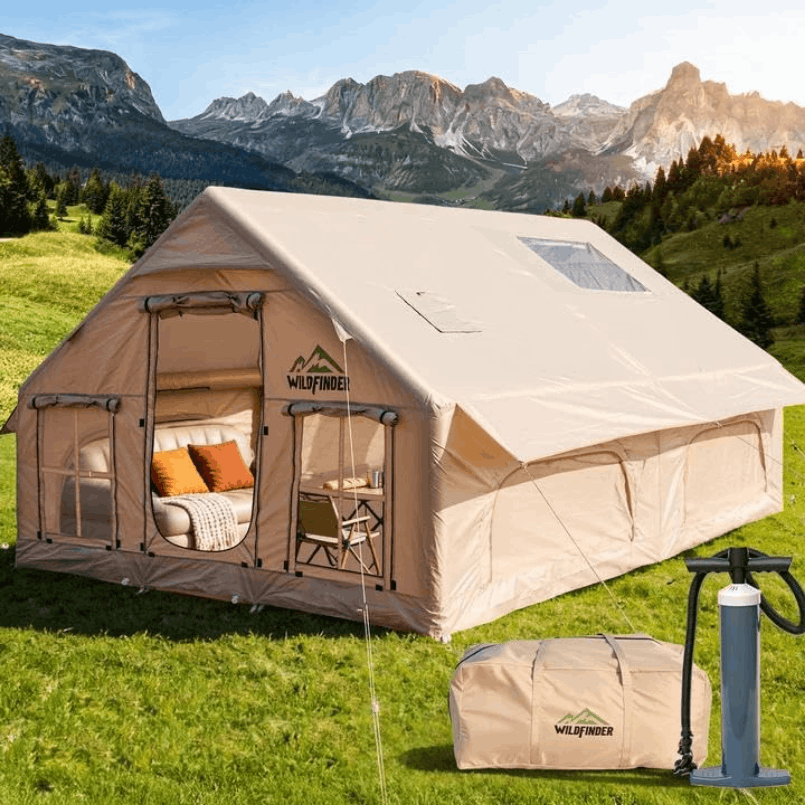
WildFinder Inflatable Tent with Skylight
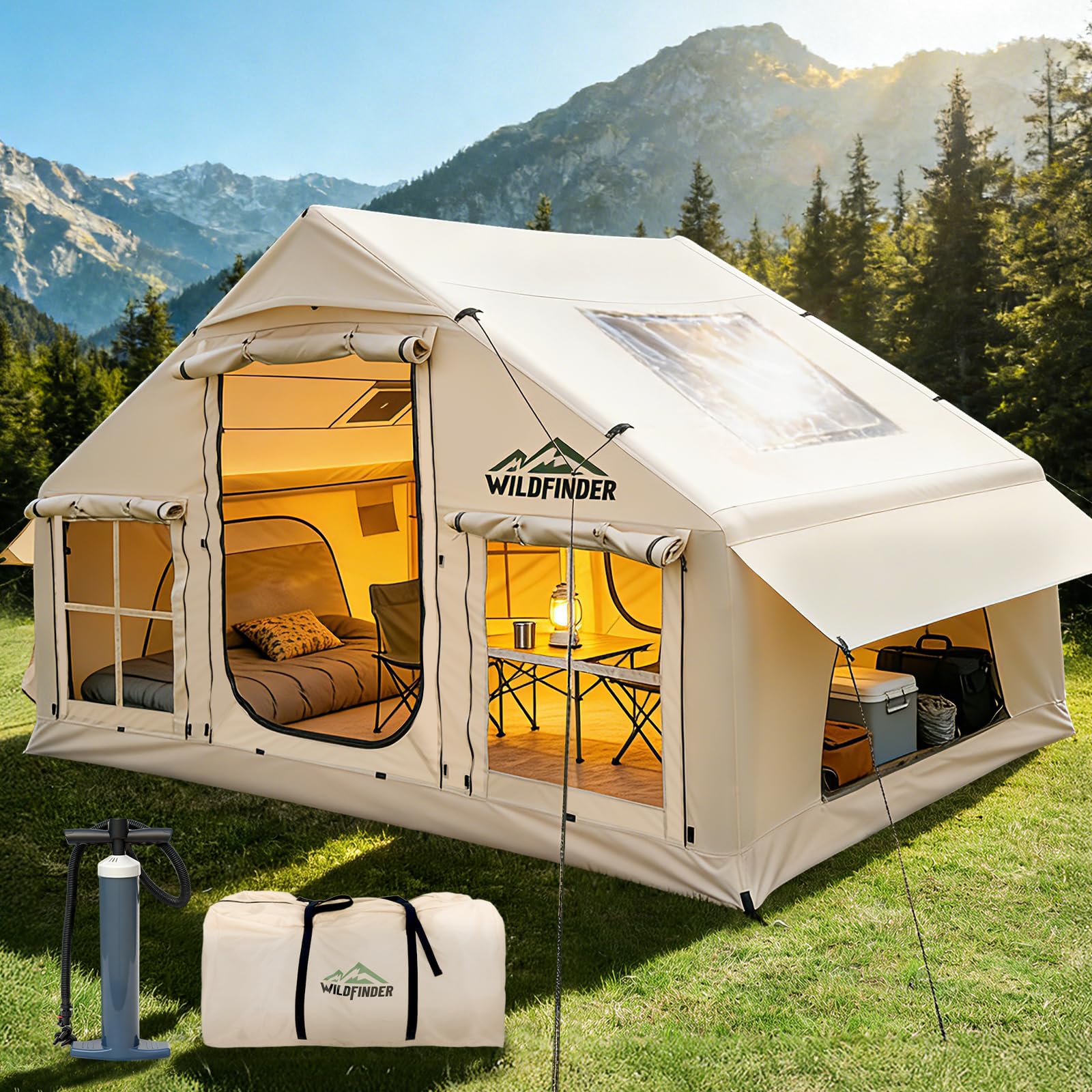
This spacious tent is great for families who want a quick setup and the option to use a wood stove when it gets cold.
Pros
- Sets up in about five minutes with the included pump—no poles needed
- The skylight lets you check out the stars at night and has a privacy cover when you want it
- Built-in stove jack so you can safely use a wood-burning stove for warmth or cooking
Cons
- At 31 pounds, it’s heavier than most standard camping tents
- Some folks report minor leaks during heavy rain
- The big size makes it better for car camping than backpacking
We just took this tent out for a weekend trip and the setup blew us away. The air beams inflated quickly with the high-pressure pump—no fighting with poles or puzzling over instructions.
The skylight was the star feature at night. We left the privacy cover off and watched the stars from our sleeping bags. During the day, it brought in a ton of natural light.
The mesh windows kept bugs out and let air flow through. Standing height inside made a huge difference compared to our old tent. At 6.5 feet tall, even tall adults could move around without crouching.
The 68 square feet of floor space fit four adults comfortably with room for all our gear. We tried out the stove jack on a chilly morning and it fit our small wood stove perfectly. The smoke vented out just fine and it turned the tent into a cozy breakfast spot.
The 420D Oxford fabric held up well against wind and light rain. The material feels sturdy and the waterproof coating did its job. The air beams stayed firm all night—no need to top off the air.
Just keep in mind this tent is heavy. It’s best if you can drive right up to your campsite. Carrying 31 pounds on a long hike? That’s not happening.
WildFinder Inflatable Tent with Skylight

This tent is awesome for big groups who want quick setup and don’t mind hauling a bit of extra weight.
Pros
- Setup takes just a few minutes with the included pump—no poles, no hassle
- The panoramic skylight is perfect for stargazing
- Built-in stove jack makes winter camping way more comfortable
Cons
- At 43 pounds, it’s way too heavy for backpacking
- The big size means you need a large, flat spot to pitch it
- If an air beam gets damaged, replacing it could get pricey
We tried this tent on a group camping trip and loved the space right away. Eight adults slept comfortably—no one felt squished. The 6.5-foot ceiling height meant we could actually stand up and move around inside.
Inflating it was easy. We hooked up the pump to the dual valves and watched the tent pop up in about five minutes. The air beams stayed solid through our three-day trip, even with some gusty wind.
The skylight was a hit at night. We just lay back and watched the stars. If you want privacy, the curtain snaps on and blocks the view.
The stove jack worked great with our little wood stove on chilly nights. Mesh windows on all sides meant good airflow, and the 420D Oxford fabric kept out light rain without any leaks.
This tent really shines for car camping or base camps where you park close. Carrying it far isn’t realistic. We liked the dual doors—made it easy for a group to get in and out without stepping on each other.
Aoxun Inflatable Family Tent

This tent actually delivers on its promise of quick setup and lots of space for families who don’t want to mess with pole systems.
Pros
- Sets up in minutes with the included pump—no wrestling with poles
- Waterproof construction held up great during rainy weather
- Huge interior easily fits a family of six plus gear
Cons
- Weighs almost 40 pounds, so don’t even think about backpacking with it
- Takes up a lot of trunk space, even packed down
- You have to dry it thoroughly before storing to avoid mold
We tried this tent over a weekend and had it fully inflated five minutes after pulling up. The pump worked fast and we didn’t have to decode any complicated instructions.
Our family of four had plenty of space to move around—no bumping into each other. The waterproof fabric really shined when a surprise rainstorm hit. We stayed totally dry inside while some neighbors fought with leaks.
The thick floor kept out moisture from below. What stood out most? The storage and setup space. We could stand up inside, which made changing clothes a breeze. The beige color kept everything bright enough during the day without opening all the windows.
The chimney port seemed odd at first, but we appreciated the extra ventilation. We wouldn’t use it for a stove (not our thing), but it’s nice to have options. The weight makes this a car camping tent—definitely not for hiking.
Catnaoa Inflatable Camping Tent
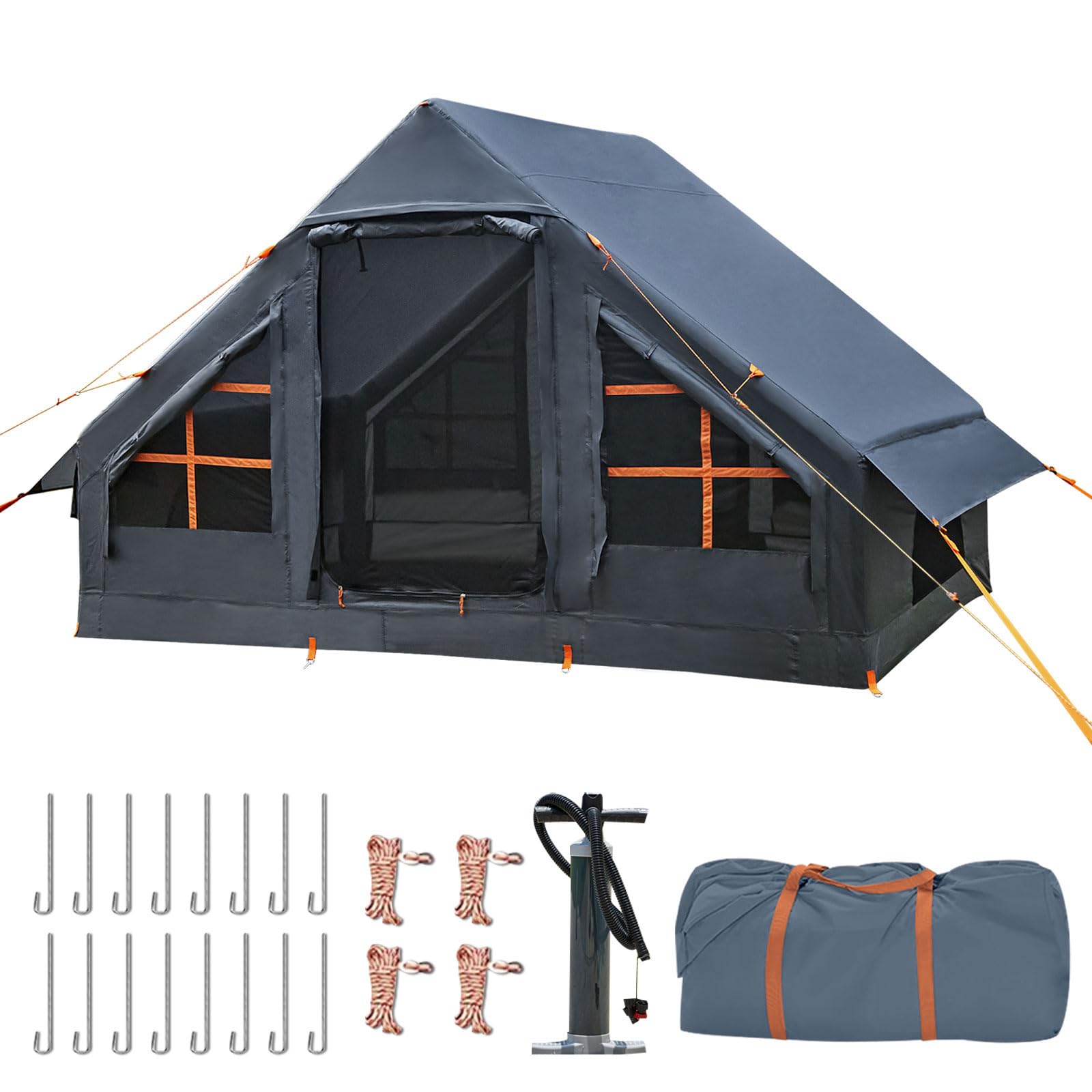
This tent is a smart pick if you want to skip fighting with poles and get your campsite ready in minutes.
Pros
- Sets up in about five minutes with the included hand pump
- Keeps you dry in heavy rain with solid waterproofing
- Fits up to six people with plenty of room to move around
Cons
- Weighs over 20 pounds packed
- If you forget the pump, you’re out of luck
- Takes up more storage space than some compact tents
We just finished testing this tent on a weekend trip and loved how fast it went up. The hand pump worked smoothly and filled the PVC poles fast—no wrestling with metal poles or confusing diagrams.
The waterproofing was solid during a rainstorm. Water just rolled right off the Oxford fabric and we stayed dry inside.
Mesh windows and doors let air move through on warm nights but kept bugs out. Inside, there’s enough space for our family of five without feeling cramped. We could stand up and had room for sleeping bags and some gear.
The two-room design gave us a bit of privacy, too. Packing it away took a little more effort than setting up. You need to deflate everything and fold it carefully to fit back in the bag. The weight makes this one for car campers, not backpackers.
GENERIC Large Inflatable Camping Tent
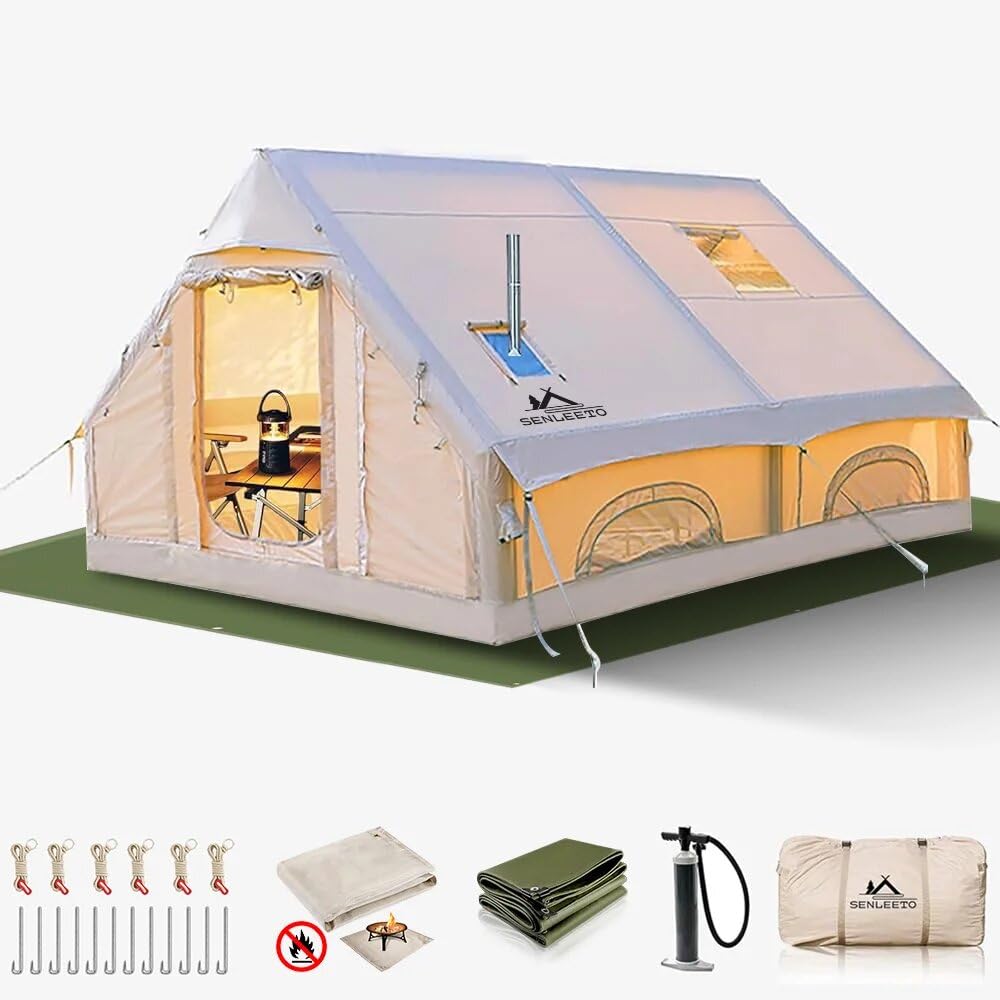
This tent is a solid pick for groups who want quick setup and plenty of space. But you’ve gotta accept it’s heavy and takes up a lot of storage room.
Pros
- Sets up in about five minutes with an air pump—no poles to mess with
- Holds air pressure for days without needing refills
- Gives real space for eight to ten people, with 129 square feet of floor
Cons
- Weighs 64 pounds, so forget about backpacking or long hikes
- Still pretty bulky even when deflated and packed
- The beige and white fabric gets dirty fast after just one trip
We spent a few nights in this inflatable tent and found the setup refreshingly easy. Just roll it out, connect the pump, and watch it stand up in minutes.
The thick air beams held firm through cool nights in the low 60s. We never had to top off the air.
The stove jack window stood out as a handy feature. We used it for cooking outside and vented smoke properly.
The dual-layer windows and doors let you switch between mesh for airflow and closed panels for privacy or warmth.
Storage pockets inside helped us keep gear together, though honestly, two pockets felt stingy. The Oxford fabric handled rain just fine—everything inside stayed dry.
The floor mat adds nice cushioning on rocky ground and keeps moisture out.
This tent shines for car camping or base camps where you can park right at your spot. The weight makes it a pain for anything involving a hike.
The fabric seems to attract dirt, so plan on wiping it down if you get into mud.
QUYUAN Inflatable Camping Tent
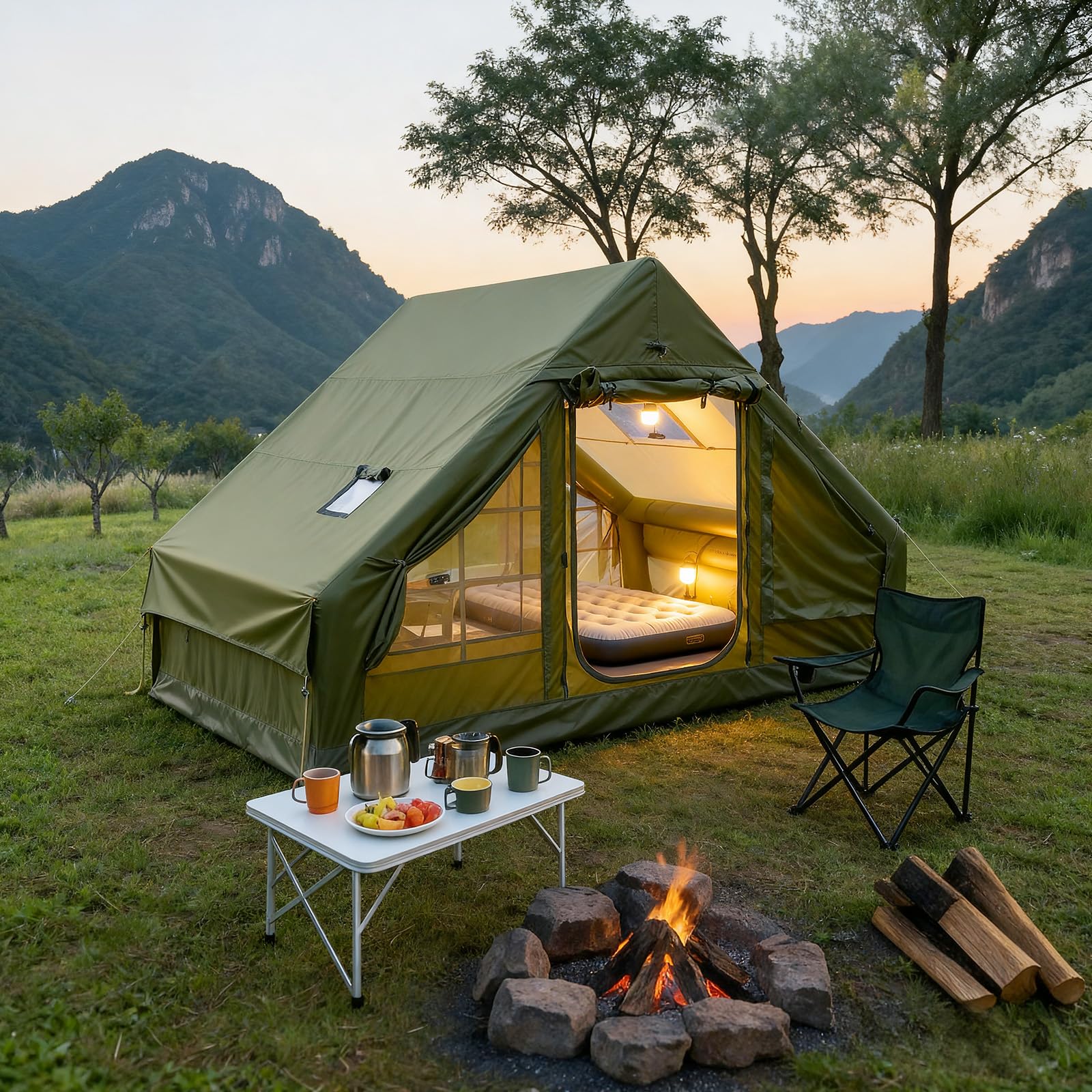
This tent is a good fit for families who want quick setup and lots of space, but don’t want to mess with poles.
Pros
- Sets up in about three minutes using the included hand pump
- Fits four adults with extra space for gear or kids
- Stays dry inside even during heavy rain, thanks to the waterproof coating
Cons
- Weighs 33 pounds, so carrying it far gets old fast
- Takes up more room in your pack than standard tents, even deflated
- Pump needs some elbow grease, which can be tiring before you even start camping
We just used this tent for a weekend trip and the setup wowed us. The air pump filled the tubes quickly—our kids thought it was pretty cool to watch.
No poles, no confusing instructions. Camp was ready in no time.
The inside gave us room to move around without bumping into each other. We fit a queen air mattress and still had space for bags and a dog bed.
The height let us stand up straight, which beats stooping in a dome tent.
Rain hit the second night, but we stayed dry. The PU-coated fabric shrugged off hours of steady downpour.
Wind pushed at the tent, but the inflatable beams held steady—better than we expected, honestly.
The weight is noticeable when hauling it from the car to the site. Short walks are fine, but backpacking with this tent? Not happening.
Packed size fits in the trunk, but it eats up more space than a pole tent would.
GENERIC Inflatable Camping Tent for 8-10 People
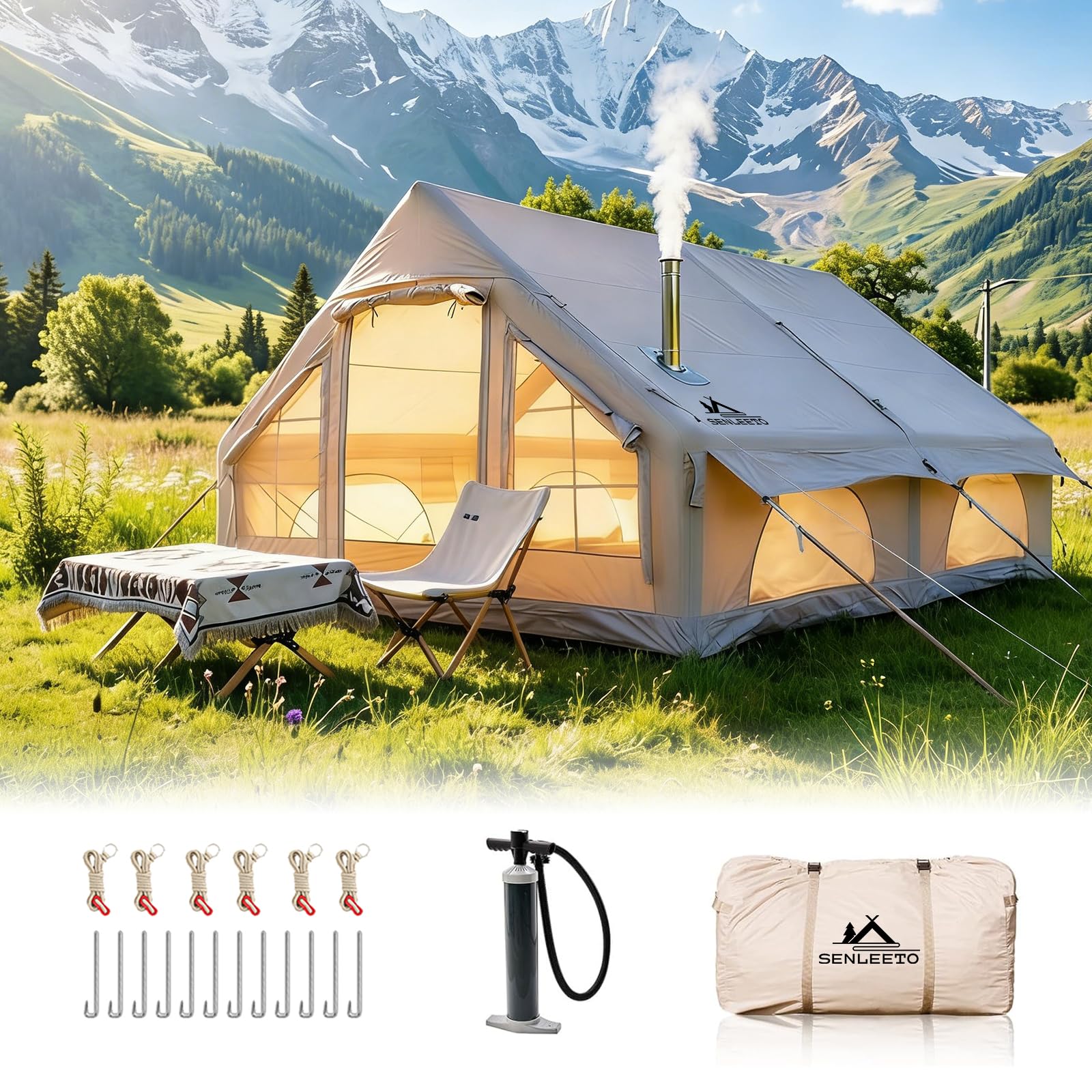
This tent works for big groups who want quick setup and no poles, but you’ll need to live with the weight.
Pros
- Sets up in about 10 minutes with the included pump and keeps air pressure for days
- Two doors and six windows offer tons of ventilation with both solid and mesh layers
- 129 square feet of space fits 8 people and their gear comfortably
Cons
- Weighs 64 pounds—way too heavy for backpacking or long carries
- The beige fabric shows dirt and needs hand washing to stay clean
- At this price, the generic brand doesn’t have the reputation of big-name tents
We tried this tent on a weekend camping trip and the inflation process was pretty straightforward. The included hand pump took about 5 minutes to fill the beams.
Once inflated, the tent felt solid—no tricky pole assembly required.
The space inside surprised us. Eight adults slept comfortably, and we still had room for bags and chairs when the weather turned bad.
The rectangular shape uses the floor space better than a dome tent, honestly.
We liked having two entry points. With a big group, it’s nice not having to climb over each other to get in or out.
The windows gave us plenty of airflow, and we switched between mesh and solid panels depending on bugs or temperature.
The tent held air pressure all weekend—no need for top-offs. We checked morning and night, but the beams stayed firm.
The Oxford cloth blocked wind well, and light rain just beaded off the outside.
The stove jack opens up options for cooking or heating inside. We used it with a small camp stove for meal prep when it got chilly. Just be smart about ventilation and safety.
Packing up, the downside was obvious. This tent is heavy and pretty bulky. The storage bag fits everything, but you’ll want help hauling it from the car to camp.
It’s great for car camping, but not for hiking in.
SPECRAFT Inflatable Canvas Bell Tent
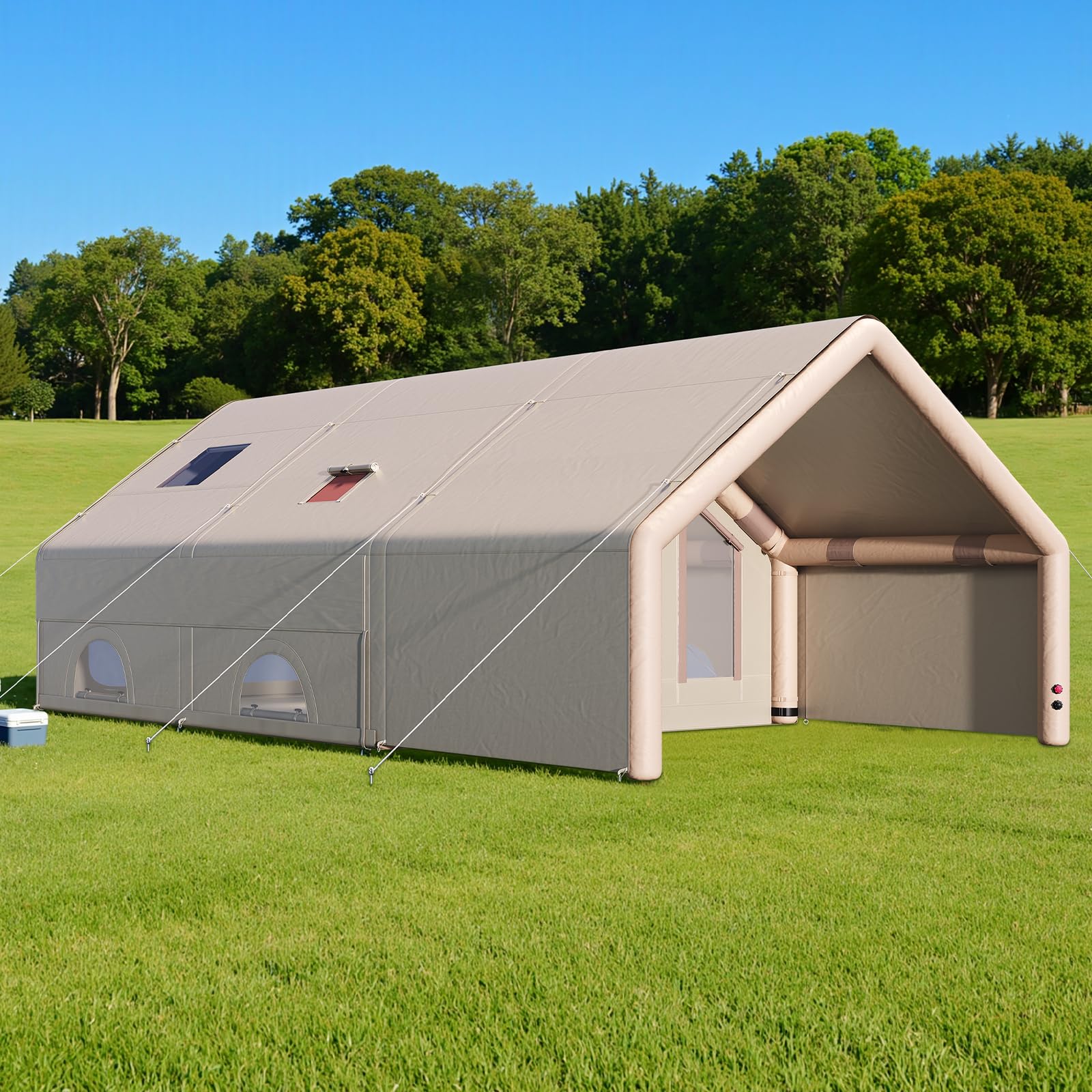
This huge inflatable tent is great for big groups who need a ton of space. Just watch out for high shipping costs if you need to send it back.
Pros
- Sets up in about 5 minutes—even solo
- Loads of room inside, with separate living and sleeping areas
- Made with tough materials that handle rain and sun well
Cons
- Returns can cost over $100 in shipping fees
- Weighs 64 pounds, so carrying it far is rough
- Takes up a lot of storage space, even packed
This tent really does set up fast. The air columns inflate quickly and create a stable shelter—no poles or assembly headaches.
One person can do the whole thing in five minutes, which is way better than wrestling with poles in the dark or rain.
The interior space is impressive. The tent stands almost 7 feet tall at the peak, so most folks can walk around without ducking.
We liked having separate spots for sleeping and hanging out. It gave our group some privacy during the trip.
The Oxford fabric feels tough and handled a rainy night just fine. Water beaded right off, and we stayed dry inside.
The mesh windows gave us good airflow on warm days and kept the bugs out.
The weight is the biggest issue. At 64 pounds, you don’t want to carry this far. It’s best if you can park close to your site.
Packed up, it fills most of a car trunk—so keep that in mind when loading up.
One customer said they spent $104 to return their tent. That’s a big cost, so check the dimensions before you buy.
This tent measures almost 20 feet long set up, so you’ll need a large campsite.
WaldZimmer Inflatable Camping Tent
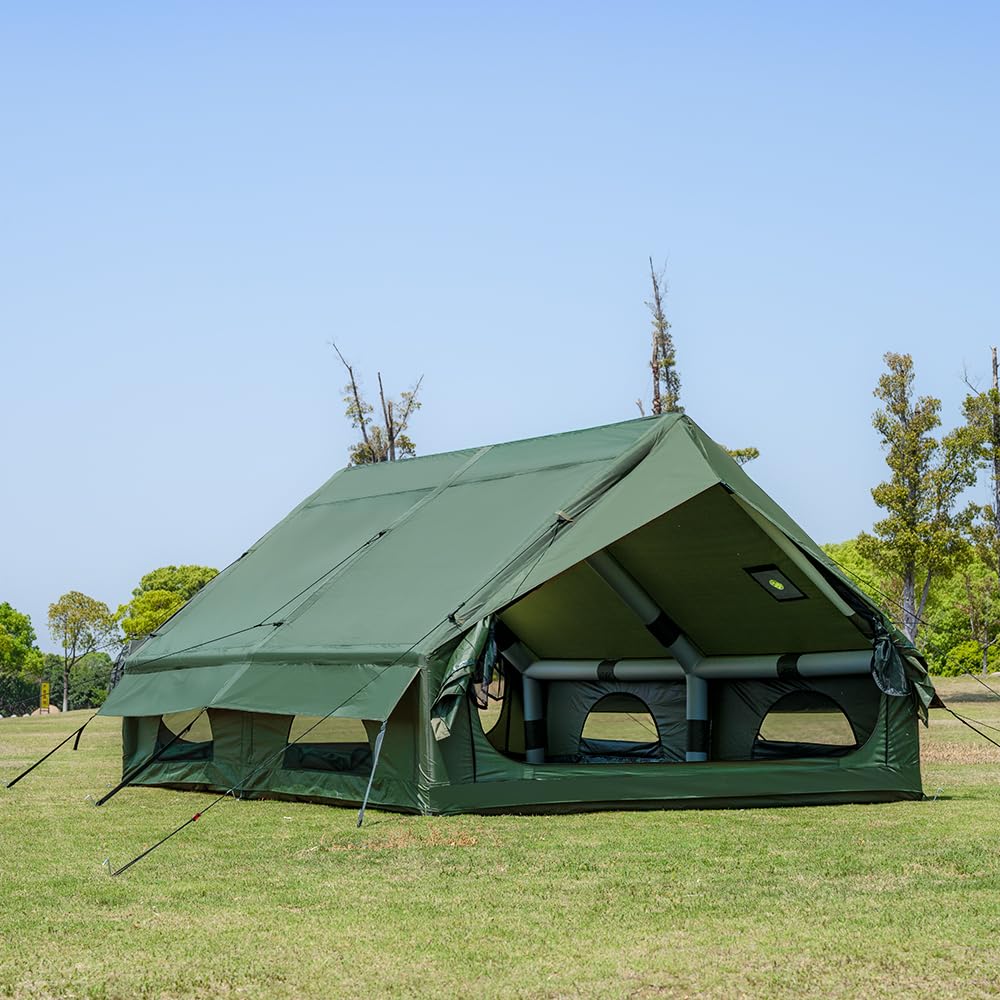
This tent really suits campers who want a fast setup and a ton of space. Just be ready to double-check for quality issues right out of the box.
Pros
- Goes up in around five minutes with the included hand pump and air columns
- Plenty of space for big groups, cots, tables, and all your gear
- Handles moderate rain and wind without needing a backup tarp or fly
Cons
- Some folks get tents with holes or defects when they first open them
- The stove jack doesn't have any protective material for a hot stove pipe
- Pretty heavy—definitely more for car camping than backpacking
When we tried this tent, it felt huge. We squeezed in two full-size cots, a table, coolers, and still had room for our bags.
The storage bags sewn into the walls turned out handy for keeping track of little stuff. No more digging through piles for a flashlight.
Setup was quicker than we thought. We pumped air into the columns, and the tent popped up on its own in just a few minutes.
The valve system looked confusing at first but made sense after a try or two. Not rocket science, but don’t skip the instructions the first time.
The dual-layer doors and windows helped a lot. We kept the mesh closed to keep bugs out and let the breeze in during the day.
When it rained, we zipped up the waterproof layer and stayed dry. No leaks, thankfully.
The oxford fabric felt tough. Rain just rolled right off, and the tent didn’t budge when the wind picked up.
Ropes and stakes came in the box, and they actually kept the tent steady. Not all tents deliver on that promise.
But the stove jack is a problem. There’s no heat-resistant patch, so we had to find our own solution before using a stove inside.
TOMOUNT Inflatable Camping Tent

This tent is a solid pick for families who want a quick setup and lots of room. You might need to top off the air if you’re camping for more than a night or two.
Pros
- Inflates in about five minutes with the included pump—no poles to wrangle
- 6.5 feet of headroom means you can stand and walk around without ducking
- Oxford cloth and guy ropes help it handle wind and rain pretty well
Cons
- Some tents get slow leaks in the air bladders, so you’ll want to check pressure now and then
- No chimney port—so not great for winter camping with a stove
- Strong wind gusts can push the sides in, even when staked out
We just wrapped up a weekend trip with this tent and honestly, setup was a breeze. The air pump inflated everything in minutes, which is way better than fighting with poles.
Everyone had space to move around without stepping on each other. Always a win with a group.
The tent held up all night in the rain. No water sneaking through the fabric.
We loved having two doors. Made it way easier to get in and out, especially with people sleeping on both sides.
The mesh windows let a ton of air in but kept the bugs out during the day. Good airflow makes a difference.
One tip—check the air pressure before bed. Ours needed a quick pump in the morning on day two.
The automatic relief valve keeps you from over-inflating, but air escapes a bit over time. Not a dealbreaker, just something to know.
Definitely use all the guy lines if it’s windy. The walls can bow in if you skip them.
The space inside fits about six adults plus camping gear, or up to eight people if you pack light.
Standing up without hitting your head is such a relief. We fit several sleeping pads, bags, and still had a corner for backpacks.
Buying Guide
When we’re shopping for an inflatable tent, there’s a handful of things to think about. The best pick really just depends on how and where you camp.
Size and Capacity
Pick a tent that fits your group comfortably. Honestly, sizing up is usually smart if you want extra space for gear or just to stretch out.
If a tent says it’s for four people, that’s often tight with all your stuff inside. Go bigger if you can.
Material Quality
Fabric quality matters for durability and weather protection. Look for rip-resistant materials and a high denier rating.
Bigger numbers mean tougher fabric. Taped seams and a solid waterproof rating (in millimeters) are a must.
Inflation System
Decide if you want a manual or electric pump. Some tents include a pump; others don’t.
Electric pumps are faster and easier, but manual pumps work anywhere—just more work for your arms.
Pole Structure
The air beam design affects how stable and easy to set up the tent is. Multiple air chambers are better because if one leaks, the whole tent doesn’t collapse.
Weather Resistance
Check the wind and seasonal rating. Three-season tents cover spring to fall, while four-season ones can handle winter.
Look for strong guy lines and good ventilation. That’ll keep condensation down and help the tent stay put in wind.
Weight and Pack Size
Think about how you’ll get your tent to camp. Car campers can handle heavy tents, but backpackers need something lighter and more compact.
Frequently Asked Questions
Inflatable tents come with a few things to think about—materials, weather performance, and ventilation are biggies. Brand reputation and setup methods matter too.
What are the top features to consider when choosing an inflatable tent for camping?
We always check air beam quality first. The best inflatable tents use TPU-coated beams that don’t puncture easily and keep their shape, even if the temperature swings.
Fabric durability is just as important as the inflation system. We like tents with ripstop polyester or polycotton, and at least a 3000mm rating for waterproofing.
Check what kind of pump you get. Double-action pumps fill tents up way faster than single-action ones, which saves time at camp.
How do inflatable tents perform in winter conditions?
Inflatable tents actually do better in cold weather than most people expect. The air beams stay firm even when it’s freezing since most brands use cold-resistant TPU.
Snow load is all about the tent’s shape. Steep roofs shed snow better than flat ones.
We’ve seen insulated air beams keep their pressure down to -4°F. Still, it’s smart to check the pressure in the morning since cold air shrinks a bit overnight.
Can you recommend a family-sized inflatable tent with high durability?
The Vango AirBeam Odyssey 600 is a standout for families. It sleeps six, and the 7.9mm steel-reinforced air beams hold up in winds up to 50 mph.
The Zempire Aero TXL Plus is another good one for bigger groups. Its 420D polyester fabric is tough to rip, and you get a five-year warranty.
What should I look for in an inflatable tent if I plan to use a stove inside?
Ventilation is key for safe stove use. Find tents with several vents and windows to get good airflow.
A stove jack or heat-resistant port lets you run a stovepipe safely through the wall. Not every inflatable tent has this, so double-check before buying.
We always look for a flame-retardant rating. Your tent should meet FR certification if you’re using a heat source inside—no shortcuts here.
Which brands are known for producing the highest quality inflatable tents?
Vango is basically the leader, thanks to their AirBeam tech. They’ve been at it since 2014 and back their tents with solid warranties.
Heimplanet makes high-end inflatable tents you’ll see on expeditions. Their geodesic shapes are super stable in wild weather.
Coleman and Zempire both make reliable mid-range tents. We’ve tested their stuff in all kinds of weather and found them consistent and dependable.
How do inflatable tents compare to traditional pole tents in terms of setup and stability?
Setup time? Inflatable tents win, hands down. Most inflatable models go up in about 5-10 minutes.
Pole tents of the same size usually take more like 20-30 minutes. That extra time can feel like forever when you just want to relax at camp.
Wind stability is a little trickier. It really comes down to the tent’s design, not just whether it’s inflatable or uses poles.
Good inflatable tents with several air beams can handle winds up to 40 mph about as well as pole tents. I wouldn’t push it much past that, though.
Weight is another thing to think about. Inflatable tents tend to be 10-20% heavier than similar pole tents—extra beam material and the pump add up fast.
When it comes to repairs, inflatable tents are usually less of a headache. If you get a small puncture in an air beam, you can slap on a patch in a few minutes.
Break a pole in a traditional tent, though, and you might need to hunt down replacement parts. That’s never fun in the middle of a trip.