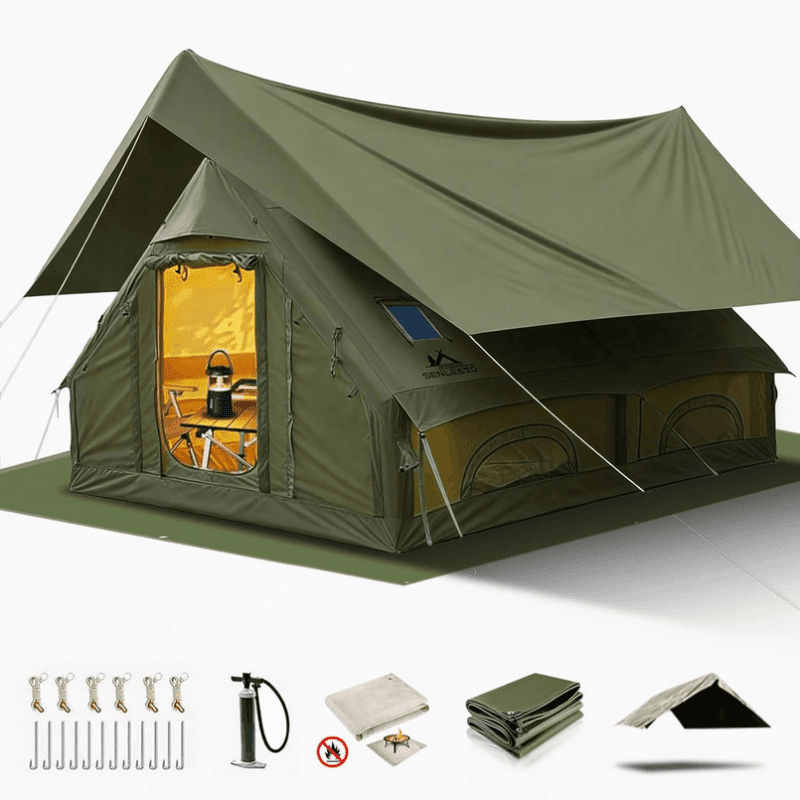
Panda Canvas Inflatable Hot Tent Review for Winter Camping:
Cold mornings and a quick camp setup can make or break the mood of a trip. We took the Panda inflatable tent out recently and realized just how much an air-beam shelter changes the whole camp routine.
The Panda inflatable tent felt sturdy from the start. Setup took way less effort than the pole tents we’ve wrangled in the past.
The canvas fabric handled damp air nicely. Still, the packed weight really jumped out as the main hassle when loading and unloading.
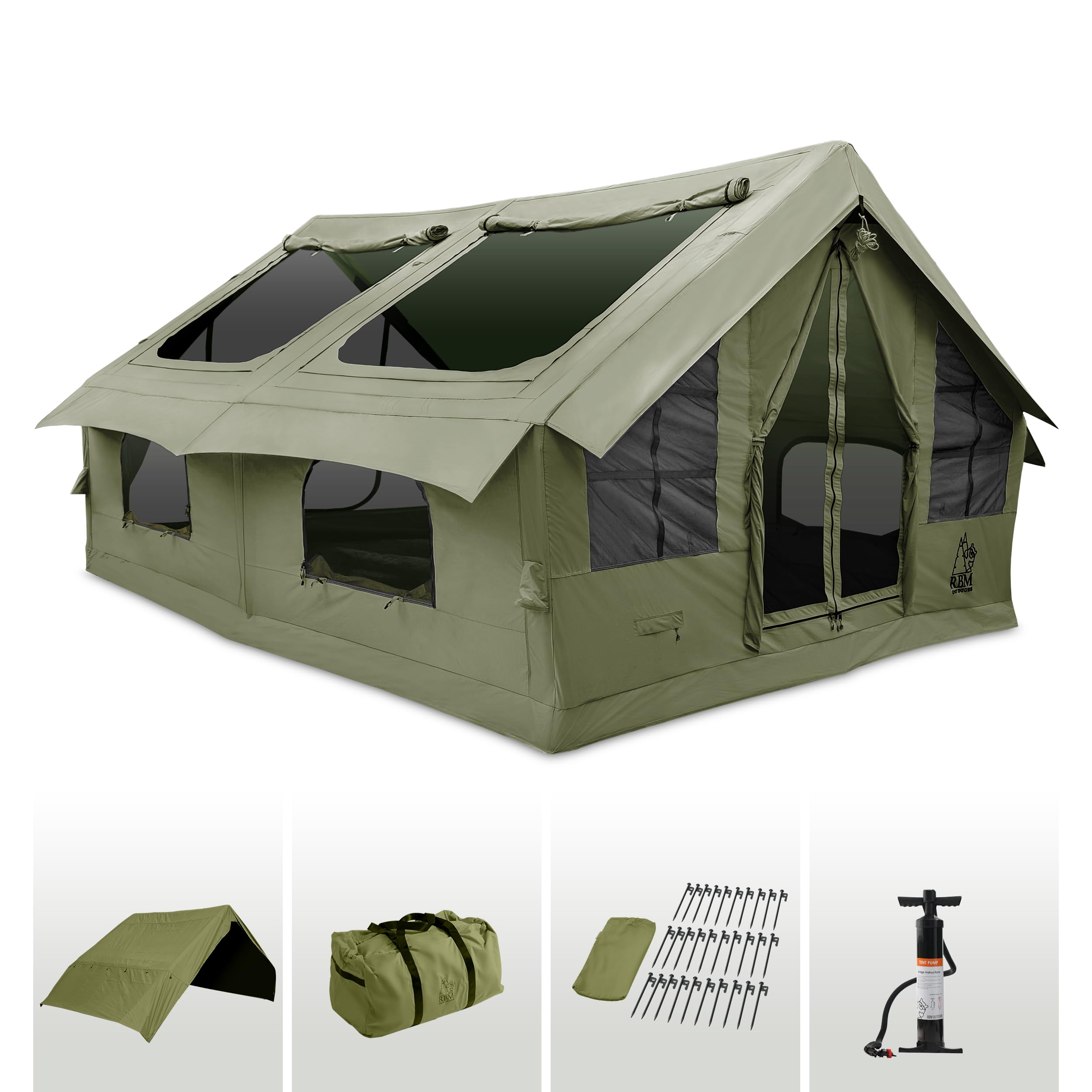
Inside, the space felt roomy enough for a small group. Airflow stayed good during the day.
On cooler nights, the stove jack made things more flexible. This tent really works best for car camping due to its size and weight.
If that sounds like your kind of thing, you can buy the Panda inflatable tent here.
Overview of Panda Inflatable Tents for Camping
After a few nights in the woods, the Panda inflatable tent felt more like a cozy shelter than a basic tent. The canvas walls instantly stood out.
They breathed better than most tents I’ve tried, and we noticed less damp air inside, even when the weather got chilly. Setup took much less effort than with pole tents.
We just inflated the air beams, staked it down, and got on with things. That part was smooth.
The stove jack adds some flexibility if you camp in the cold. For folks who never use a stove, it’s probably not a big deal.

What worked well:
- Fast setup without the headache of metal poles
- Good airflow thanks to plenty of mesh windows
- Solid feel once you’ve got it inflated
What gave us pause:
- Very heavy—definitely best for car camping
- Bulky to move when packed up
Key Features
After a handful of nights, a few things stood out right away, along with some trade-offs you can’t ignore. This tent is built for comfort and stability, but you’ll have to work a bit to move it around.
Durable Canvas Construction
The canvas body feels thick and tough when you handle it. It gives you some confidence in rough weather.
During damp mornings, we noticed less moisture inside compared to synthetic tents we’ve used before. The canvas helps hold warmth at night, which made a real difference in the cold.
But this material adds bulk. Packing and carrying the Panda takes more effort than with lighter tents.
### Rapid Inflatable Setup
Setup is refreshingly simple. We inflated the air beams, staked the corners, and the structure stood firm—no metal poles to wrangle.
This design saves time and reduces frustration, especially after a long drive. The hand pump does the job, but you feel the tent’s weight during setup, and honestly, I wouldn’t want to haul it far from the car.
What we liked
- Fast setup with fewer steps
- No poles to line up or snap
What could be better
- Heavy to move once it’s inflated
### Exceptional Ventilation and Dual Bedrooms
Airflow is a real strong point. Big openings and multiple mesh windows kept fresh air moving, even on hot days.
The two-bedroom layout gave us options. We could split up sleeping areas or stash gear without crowding the main space.
Privacy is decent, though light still leaks through the inner walls a bit.
Four-Season Protection with Stove Jack
You can use this tent with confidence in cold weather. The stove jack lets you safely run a tent stove, which keeps things comfortable on chilly nights.
The tent handled wind and rain well during our trip, especially with the rain cover. For most seasons above freezing, the Panda feels reliable and secure.
Pros and Cons
After camping with this inflatable canvas tent, some strengths and limits became obvious. It handles comfort and setup way differently than a standard pole tent.
Pros
-
Fast setup with less effort
We had it up in minutes using the hand pump. No poles to untangle, which made arrival so much easier. -
Comfortable interior feel
The canvas walls felt warmer at night and less clammy in the morning. Airflow stayed steady thanks to all the mesh windows. -
Works well in cold weather
The stove jack adds real value if you camp in the cold. Heat stayed inside better than in synthetic tents I’ve tried. -
Spacious layout
There’s plenty of room for a group, with space to move around and keep gear out of the way. -
Solid build quality
The materials feel thick and durable. After several uses, seams and air beams still looked great.
Cons
-
Heavy to transport
Carrying the packed tent takes effort. I wouldn’t want to haul it far from a vehicle. -
Pump effort without an upgrade
The hand pump works, but it takes some energy. An electric pump would make life easier. -
Needs space to pitch
The footprint is big, so finding a spot in tight or uneven areas can be tricky. -
Canvas care takes time
Drying and packing canvas takes longer than with lightweight tents, especially after rain.
This tent is best for campers who want comfort and quick setup, not those who need to travel light. It shines at base camps, car camping, or longer stays.
Customer Reviews
After a few nights with it, the feedback we saw from others matched up with our experience. Many folks mention how fast the Panda Air goes up, even on the first try.
We had the same result. Some reviewers said practicing at home first helped a lot.
What people like most
- Quick setup with the hand pump—or even easier with an electric one
- Plenty of room inside for people and gear
- Sturdy canvas that holds up over multiple trips
The main drawback? The weight. At over 70 pounds, moving it is a workout. We felt that too.
Still, several users say the weight feels fair once the tent’s up and in use.
Ease of Use for All Campers
From the first setup, the design felt friendly—even for folks new to air tents. We spread it out, hooked up the hand pump, and watched the frame stand up without any poles.
The Panda tent stayed stable as we staked it down. The layout made sense right away.
We appreciated how the doors and windows opened wide, which made moving gear in and out simple. Inside, it was easy to organize things without feeling cramped.
What worked well
- Simple inflation with clear connections
- No poles to sort or force
- Easy entry and exit, even for kids
What could be better
- The packed tent is heavy to carry
- Rolling it back up takes a bit of work
Frequently Asked Questions
After several nights in this tent, a few practical questions kept coming up. Here’s what we found while using it with a stove in real conditions.
How does the stove jack in Panda inflatable tents hold up against high temperatures?
The stove jack handled steady heat without showing stress. The canvas around the opening stayed firm and didn’t smell or soften.
Still, careful stove placement matters. We kept the pipe centered and avoided letting it touch the fabric, which seemed important for longer burns.
What are the weight and packing dimensions of a Panda inflatable tent with a stove jack?
This tent is heavy—definitely made for car camping. Lifting and moving it takes some muscle, especially when packed.
What to expect when packed:
- Large, boxy storage bag
- Takes up a good chunk of the car trunk
- Not practical for solo carry over distance
We found the packed size manageable, but it’s not small.
Are there any safety concerns to consider when using a stove within an inflatable tent?
Using a stove inside any tent needs care, and this one’s no different. Ventilation is key, so we kept vents and windows cracked open.
Key safety points we followed:
- Never leave the stove unattended
- Keep flammable gear away from the stove
- Use a proper spark arrestor
The inflatable beams stayed well away from the stove area, which helped us worry less.
How long does it take to set up and inflate a Panda tent suitable for use with a stove?
The setup felt fast once we learned the steps. Inflating the air beams took just a few minutes with the included pump.
Staking and adjusting took a bit longer than inflation. We spent more time fine-tuning placement than actually building the structure.
What is the durability and weather resistance of RBM Outdoors inflatable hot tents like?
The canvas felt thick and handled wind well on our trip. Light rain beaded off, and heavier rain didn’t bother us with the rain fly on.
Cold nights stayed comfortable with the stove running. Condensation was lower than we expected for a tent this size.
Can the Coody inflatable tent with stove jack be compared in terms of quality to Panda tents?
Both brands target the same crowd of hot-tent campers. The Panda feels solid and well-finished, but it does weigh more.
I haven't spent a ton of time with a Coody tent, so I can only say the Panda holds up for build and function. The real difference probably comes down to what size you want and how you plan to carry it.