10 Best Solar Inverters for RVers for 2026: Expert Reviews and Buying Guide
Solar power lets RV owners camp off-grid and skip noisy generators or crowded campgrounds with electrical hookups. A solar inverter sits at the heart of any RV solar setup.
This device converts direct current from your solar panels into alternating current that powers appliances, devices, and other equipment in your RV.
When picking a solar inverter for your RV, pay attention to wattage capacity. This tells you how many devices you can run at once.
Decide whether you want a pure sine wave or a modified sine wave inverter. Pure sine wave models give you cleaner power, which matters if you use sensitive electronics like laptops or medical gear.
Modified sine wave inverters cost less, but sometimes struggle with certain devices. Also, consider the inverter's size and weight, since RV space is always tight.
Look for extras like built-in charging or remote monitoring if those matter to you.
We spent weeks researching and testing ten solar inverters. Our goal was to find the ones that balance power output, reliability, and value for RV owners.
Best Solar Inverters for RVers
We tested and reviewed the top solar inverters available in 2026. Our list focuses on inverters with reliable performance, good efficiency, and features that make life easier on the road.
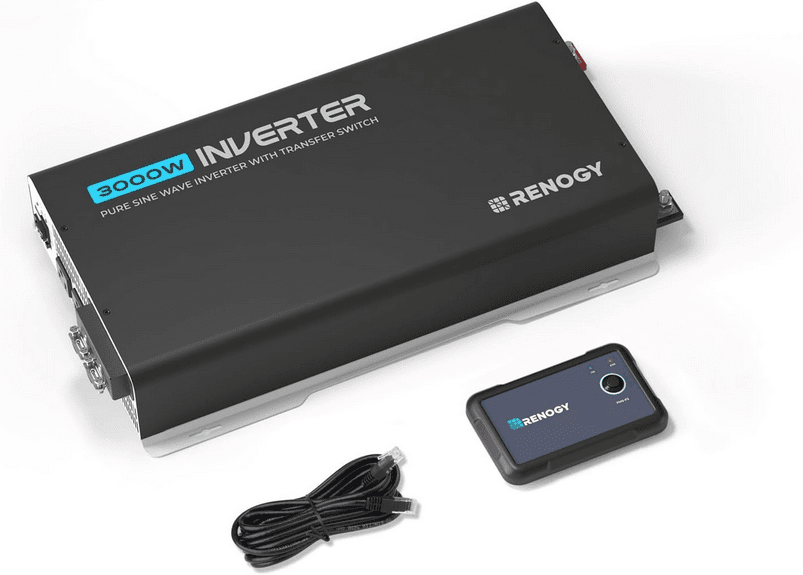
Renogy 3000W Pure Sine Wave Inverter
This inverter is a solid pick for RVers who want reliable power and easy switching between shore and battery power.
Pros
- Built-in transfer switch swaps between grid and solar power automatically
- Bluetooth and app control let us monitor everything from our phones
- Runs quietly at under 51 decibels—no camping peace ruined
Cons
- Weighs over 18 pounds, so mounting and moving it isn't exactly fun
- Some users say it shuts down if you run too many high-power devices at once
- Takes up a decent chunk of space at nearly 20 inches wide
We installed this inverter in our RV and hooked it to our battery bank without much hassle.
The automatic transfer switch helped when we plugged into shore power at campgrounds. It switched over smoothly, no need to flip switches or unplug anything.
The Bluetooth feature turned out to be more useful than expected. We checked our power usage from inside the RV, so no need to step outside just to check the unit.
The app showed us real-time data about how much power our appliances were drawing. Running our microwave and coffee maker worked fine, but the unit got warm during long use.
The cooling fans kicked in and kept temperatures safe. We ran a chest freezer for several days in hot weather and it handled the job well.
The pure sine wave output meant our sensitive electronics stayed safe. Laptop and phone chargers ran without buzzing or heating issues.
We liked the multiple protection features. It gave us peace of mind leaving it running while away from the RV.
Renogy 2000W Pure Sine Wave Inverter Charger

This inverter charger is a good fit for RVers who need solid power conversion and charging. The 51-pound weight makes installation a two-person job, though.
Pros
- Works with lithium, AGM, and gel batteries—no special adapters needed
- Four-stage charger automatically manages battery charging on shore power
- Protects against overheating and voltage problems
Cons
- Heavy at over 50 pounds, so you’ll need help to install it
- Some users report quality control issues
- Learning all the settings takes some patience if you’re new to inverter chargers
The 2000W continuous output handled our RV appliances without trouble. We powered our microwave, coffee maker, and laptop at the same time during trips.
The surge capacity of 6000W let us start up our AC unit without tripping the inverter. Pure sine wave output worked well for our sensitive electronics.
Devices charged normally, and our TV kept a clear picture. With conversion efficiency above 90%, we didn’t lose much battery power in the process.
Setting up the four-stage charging required a careful read of the manual. Once dialed in, the charger maintained our battery bank with no effort from us.
The LCD display showed us exactly what the unit was doing, which helped while learning the ropes. The automatic transfer switch between shore and battery power worked well in practice.
When we plugged into shore power, the unit switched over smoothly and didn’t interrupt our appliances. No need to flip switches every time we moved between campsites.
The weight and size make installation something you’ll want to plan for. We mounted ours near the battery bank to keep cable runs short.
The unit generates some heat during heavy loads, so we left plenty of ventilation space around it.
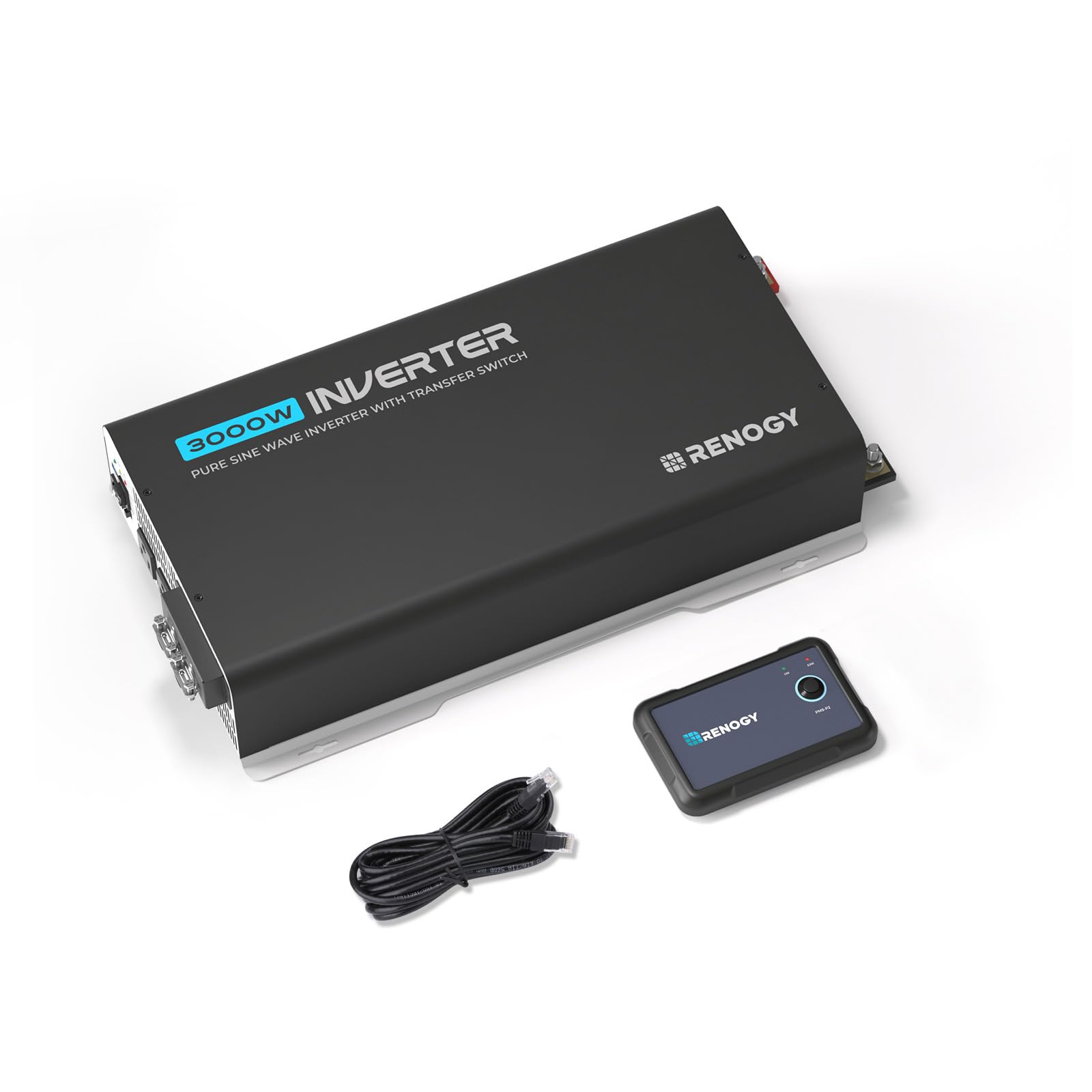
Renogy P2 3000W Pure Sine Wave Inverter
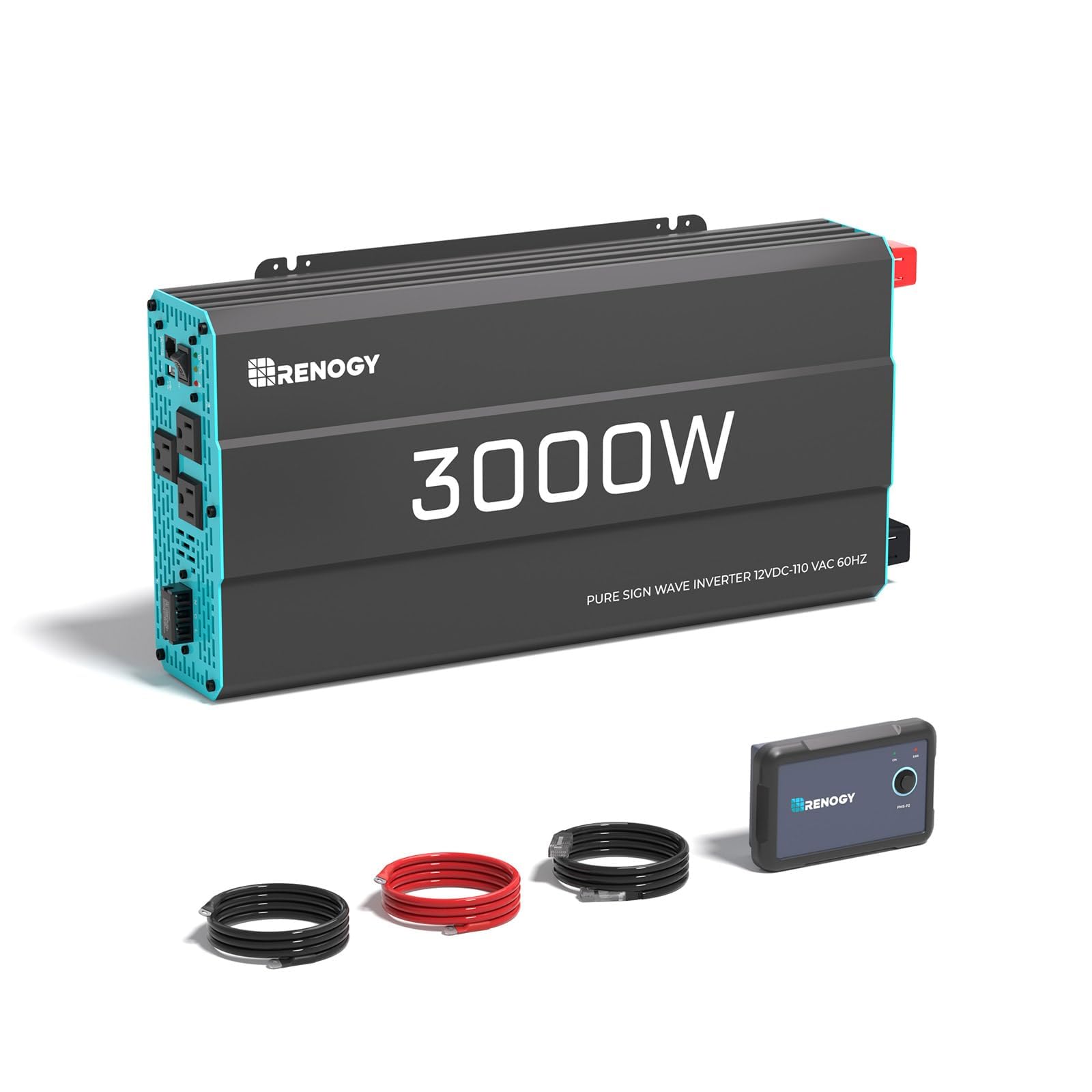
This inverter delivers steady power for RV living with plenty of capacity. Some users might run into ground fault issues, though.
Pros
- Pure sine wave keeps electronics running smoothly—no annoying buzzing
- Remote control with 16.4 feet of wire lets you operate it from anywhere in your RV
- Three AC outlets and a USB port give lots of charging options
Cons
- No Bluetooth, so monitoring isn’t as convenient as with smaller Renogy models
- Some units trigger ground fault protection in certain electrical setups
- At 12.5 pounds, installation is easier with two people
We tested this 3000-watt inverter in our RV and found it ran our microwave, laptop, and other electronics without trouble. The pure sine wave output kept everything running quietly.
No weird humming came from our devices. The metal housing feels tough and protected the unit during travel.
We liked the built-in safety features like over-temperature and over-voltage protection. Cooling fans turned on when needed but didn’t get too loud.
Installing this inverter was straightforward with the included cables. We connected it directly to our deep cycle battery using the heavy gauge wires from the box.
The wired remote control was really handy since we mounted the inverter near our battery bank. Running our 12V system worked great for off-grid camping trips.
We powered a small fridge, charged phones through the USB port, and even ran a small TV without any issues. Conversion efficiency stayed above 90%, so battery drain was minimal.
The ground fault protection can be a bit sensitive in some electrical setups. If you’re wiring this into your RV’s existing system, you might need to tweak your setup.
The lack of Bluetooth seems odd, honestly, since their smaller inverters include it.
VEVOR 4000W Pure Sine Wave Inverter

This inverter pumps out serious power for RVers who want to run a bunch of appliances—no fussing over battery types or odd compatibility.
Pros
- Five working modes let you pick your power source for whatever situation pops up
- Compatible with all the usual battery types: LiFePO4, lead-acid, and more
- Remote control with a 32-foot cable, so you can stash it wherever and still keep tabs
Cons
- Weighs over 50 pounds, so installation is definitely a two-person job
- Pretty bulky, needs a good chunk of space to mount
- Each outlet should stay under 1200 watts, even though it’s rated for 4000 watts total
We hooked this inverter up to a 24V system and it ran our fridge and RV basics without any drama. The pure sine wave output kept our sensitive electronics happy—no worries about weird surges or flickers.
One user said they ran 3500 watts through it, so this thing can handle heavy loads if you need it.
Those five working modes? Genuinely handy. We’d switch to battery priority on sunny days, then switch to grid power at night when plugged into shore power.
The energy-saving mode also helped us stretch our battery during longer campground stays.
Setup took some planning, honestly, because it’s a beast. We mounted it in the storage compartment, then ran the remote cable into the living area.
The LCD shows battery voltage and current load, which is super useful. Having that remote display saves us from crawling around in storage just to check power.
The protection features kicked in when we overloaded a circuit—shut down safely, nothing fried. Resetting was easy after unplugging the extras.
It works with all sorts of battery types, so if we upgrade our battery bank later, we won’t need a new inverter. That’s a relief.
VEVOR 6000W Pure Sine Wave Inverter
This inverter is built for larger RV setups with 48V battery systems. The loud humming and hefty weight make it a tough sell for smaller rigs.
Pros
- Five operating modes—switch between grid, battery, and more depending on your camping style
- Remote control with a 32-foot cable makes it easy to keep the display inside while the unit sits in storage
- Works with lots of battery types like LiFePO4 and AGM, no extra adapters needed
Cons
- Noticeable humming noise, even when you’re not running anything
- Weighs over 60 pounds—definitely not lightweight
- Draws about 40 watts just sitting idle, which adds up
We installed this inverter in our RV last month. Setup was pretty straightforward.
The LCD display tells us what we need: battery voltage and power draw. It runs our fridge and other appliances without any hiccups.
The five operating modes aren’t just fluff. We use battery priority for boondocking and grid priority at campgrounds.
Energy-saving mode stretches our battery life when we’re out for a while.
The humming noise is hard to ignore, especially at night when everything’s quiet. The idle power draw is annoying too—about a kilowatt-hour per day, even with nothing plugged in.
Moving this thing takes two people, no question. We bolted it into the exterior storage bay and used the long remote cable to keep tabs from inside.
The unit gets warm but hasn’t overheated, even when we’re running several appliances during summer heat.
Renogy 3000W Pure Sine Wave Inverter
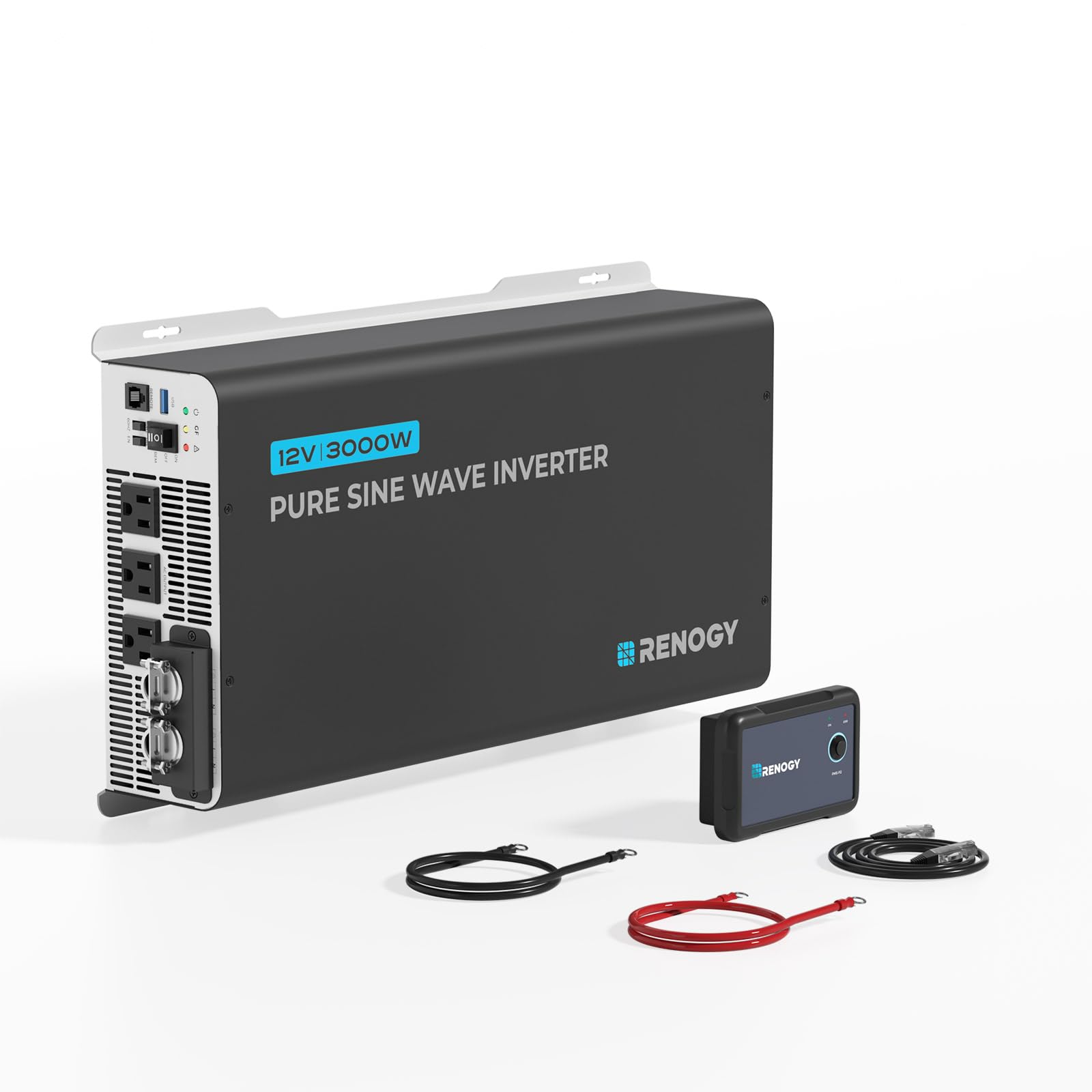
This inverter puts out strong power and comes with a built-in transfer switch. You do have to keep it running all the time if you want the transfer switch to work, though.
Pros
- Handles 3000W continuous, clean sine wave—keeps appliances happy
- Transfer switch built in, so you save money and space
- Remote display and Bluetooth monitoring let you check the system from inside
Cons
- Needs to stay on constantly for are transfer switch to work, which drains the battery when not on shore power
- Bluetooth only shows data—no control features
- When it’s off, shore power can’t pass through at all
We installed this in our RV" and it powered our residential fridge without a hitch. The pure sine wave meant no weird humming or flickering with sensitive electronics.
TV and laptop are charged up just like at home. The transfer switch seemed like a win at first—it flips between battery and shore power in 20 milliseconds, so you barely notice.
But you have to leave the inverter on for that to work. If we turned it off while parked at home, shore power wouldn’t pass through, which was kind of a pain.
The Bluetooth app just shows voltage and basic stats. We expected to control the unit remotely, but it’s just for monitoring.
The cooling fan is pretty quiet. We barely noticed it most of the time.
Install was easy enough with the remote display and 16-foot cable. Three AC outlets and a USB port gave us plenty of ways to plug in.
At 16 pounds, it’s not exactly light, so we made sure to mount it securely.
The unit handled multiple appliances at once and never overheated. Just don’t forget—you’ll need to keep it on if you want that automatic power switching.
VEVOR 5000W Pure Sine Wave Inverter
This inverter could work for your RV—if you get one with a working display. Quality control is a gamble, though.
Pros
- Five operating modes let you pick grid, battery, or solar priorities as needed
- Works with all sorts of batteries, including LiFePO4 and AGM, for flexible setups
- Remote control with a 33-foot cable lets you keep it out of the way
Cons
- Display controller often shows up with defects—black lines, unreadable screens
- Charging tops out at 70 amps, not the full 5000 watts you might expect
- Poor quality control means you might spend more time with customer service than camping
We tried this inverter, hoping for reliable power in our RV. At nearly 60 pounds, it’s a beast, but that’s normal for a 5000-watt unit.
Getting it installed was a workout. The display issues popped up as soon as we unboxed it—black lines across the LCD made it impossible to read or adjust anything.
Turns out, lots of folks have the same problem. When we finally got it running, the charging function was a letdown.
It only charges at 70 amps, or about 1680 watts on a 24V system. That’s way less than the 5000-watt name suggests.
The five modes did help us prioritize solar during the day and switch to battery at night. Energy-saving mode helped cut power waste when we weren’t running much.
Build quality isn’t terrible for the price, but those defective controllers are a headache. We had to reach out to VEVOR support and wait for a replacement, which threw off our trip schedule.
The company responded, but honestly, dealing with warranty stuff right out of the box is just not what you want.
Renogy 3000W Inverter & 40A MPPT Bundle
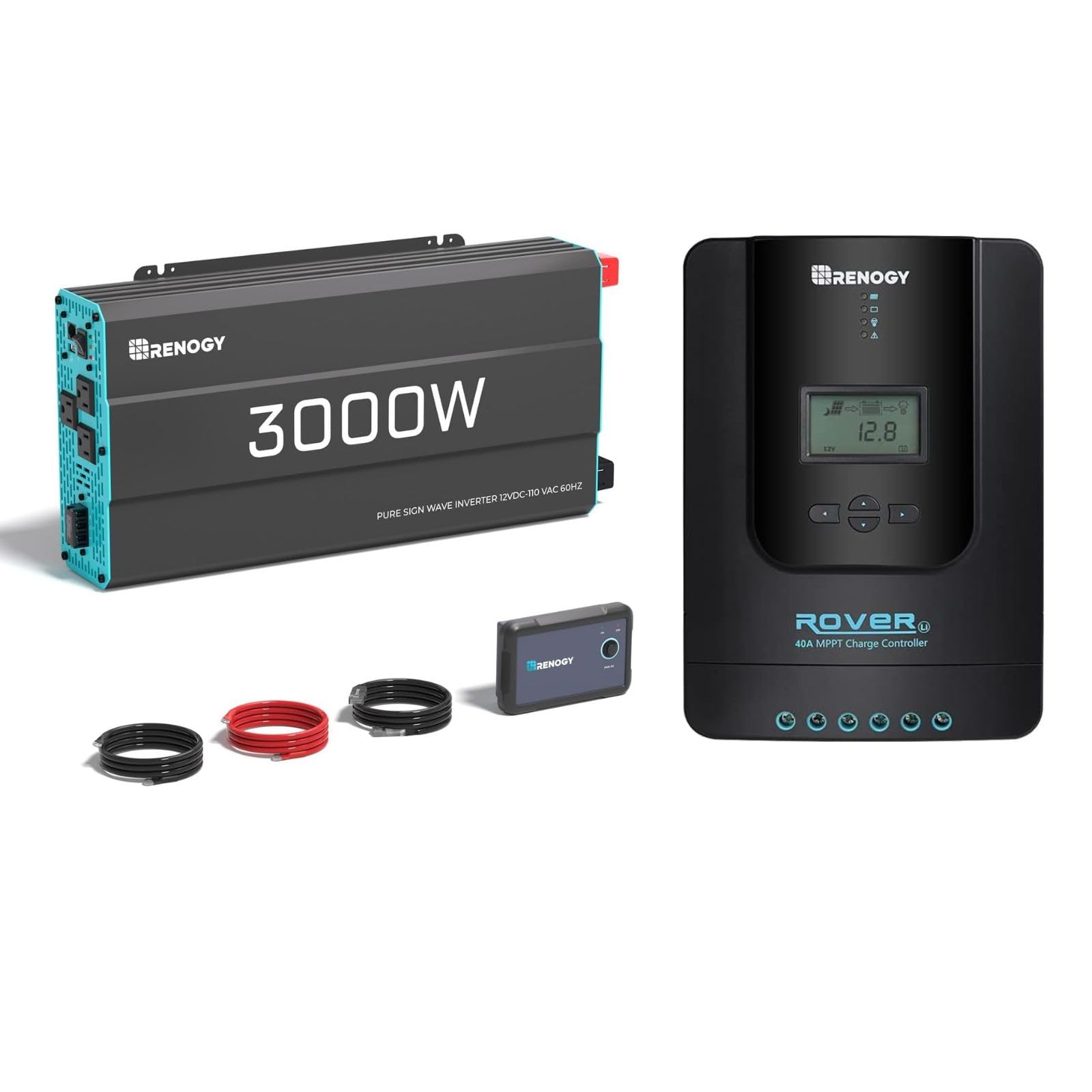
This bundle packs a punch for powering multiple appliances at once. It keeps your batteries charged fast, so it's a solid choice if you've got a big RV setup and need the juice.
Pros
- Handles power-hungry stuff like microwaves and air conditioners with ease
- Charges batteries much faster than basic controllers thanks to 40A MPPT tech
- The wired remote lets you control everything from inside your RV—super handy
Cons
- Takes up more space than smaller inverters because of its high capacity
- Costs more upfront than lower-wattage systems
- Bluetooth monitoring means you’ll need to buy an extra module
We tried the Renogy 3000W bundle in our Class A motorhome. It handled our needs easily—coffee maker, toaster, laptops, all at once, no sweat.
The pure sine wave output kept our electronics safe. We didn’t worry about frying anything sensitive.
The 40A charge controller kept our battery bank topped off, even on cloudy days. We hit full charge by early afternoon instead of dragging into the evening like before.
The LCD screen gives you all the info you need, so you’re not glued to your phone. Installation took us about four hours with the included instructions.
The wired remote is long enough to mount anywhere inside. We liked all the built-in safety features—they protect both your gear and your RV’s electrical system.
Just keep in mind, if you want Bluetooth monitoring, you’ll need to budget a bit more for that module.
Renogy 400W Premium Solar Kit

This complete kit gives RVers a reliable way to generate power. No need to hunt down parts from different places.
Pros
- Bluetooth monitoring lets you check system performance from inside—no more stepping outside in the rain
- MPPT controller charges batteries way faster than basic PWM types
- Everything’s in the box: cables, mounts, fuses, you name it
Cons
- Instructions could be clearer, especially for first-timers
- Weighs over 56 pounds, so you’ll want a buddy for roof mounting
- Works best with 12V systems, which might limit some setups
We set this up on our travel trailer and got it running in a few hours. The panels feel solid—thick aluminum frames, no flexing or bending when you move them.
Each panel came pre-drilled, and holes lined up with the Z-brackets. The MPPT controller was the real star.
We saw our batteries charge up much faster than with our old PWM controller. The temperature sensor adjusts charging automatically, which is a relief on hot days.
Using the Bluetooth module with the Renogy app made life easier. We could check our power from bed without climbing up to the roof.
The app shows real-time info about battery levels and solar input, though the interface takes a little getting used to. The wiring kit included the correct-gauge cables, so power loss was minimal.
Renogy included both inline and ANL fuses for safety. Y-branch connectors made linking the four panels pretty straightforward once we figured out the wiring—series or parallel, always a debate.
Assembly was smooth, even if the instructions were a bit too basic. We ended up searching online for wiring diagrams, which was a bit annoying but not a dealbreaker.
The kit puts out around 2 kilowatt-hours per day in good sunlight. That kept our batteries topped off, even with moderate use.
Renogy 3000W Inverter & 40A MPPT Bundle
This bundle delivers serious power for running major appliances and charging batteries fast. It's perfect for full-timers with big energy needs.
Pros
- Handles big appliances like air conditioners and power tools without a hiccup
- The 40A controller charges batteries faster than any basic model we've tried
- The remote lets you control the inverter from inside—no crawling into weird spaces
Cons
- Takes up more space than smaller combos
- Bluetooth monitoring costs extra
- Overkill for weekend warriors or tiny RVs
We set this up in a 35-foot fifth wheel and noticed the difference right away. Microwave, coffee maker, laptop chargers—all running at once, no problem.
The pure sine wave output kept everything running smoothly. No buzzing or weird noises like with the cheap inverters.
The MPPT controller made a big impression. Our 800-watt solar array filled the battery bank way faster than our old PWM controller.
The LCD screen showed exactly how much power was coming in. Setting up the wired remote took about 20 minutes.
We mounted it near our control panel, so flipping the inverter on or off was easy. The 16-foot cable gave us plenty of room to route it cleanly.
The safety features saved us when we accidentally shorted something during install. The system shut down instantly and protected our batteries.
Lightning protection is a plus, especially if you camp where storms are common. This bundle makes sense if you really need 3000 watts—think air conditioning, induction cooktops, or running tools.
For smaller rigs, honestly, you’ll save money with a less powerful setup.
Buying Guide
Power Output Requirements
Start by figuring out your RV's power needs. Check the wattage on every appliance and device you plan to use at the same time.
Add everything up to get the minimum inverter size you’ll need. Most folks need between 1,000 and 3,000 watts for basic use.
Bigger RVs with multiple air conditioners might need 4,000 watts or more. It’s always better to overestimate a bit than run short.
Pure Sine Wave vs Modified Sine Wave
Let’s clear up the difference here. Pure sine wave inverters make smooth, clean power—just like what you get at home.
Modified sine-wave inverters are cheaper but produce a choppy version of the power. Pure sine wave costs more but works with everything.
Modified sine wave can mess up sensitive stuff like laptops or medical gear. It’s probably not worth the risk for most RVers.
Key Features to Consider
| Feature | Why It Matters |
|---|---|
| Surge Capacity | Handles startup spikes from things like motors and compressors |
| Efficiency Rating | Better efficiency means less battery drain and less heat |
| Input Voltage Range | Needs to match your RV’s battery system (12V, 24V, or 48V) |
| Display Screen | Shows real-time usage and system status |
| Remote Monitoring | Lets you check performance from your phone |
| Cooling System | Keeps things from overheating if you’re running the inverter a lot |
Build Quality and Warranties
Check the warranty before you buy—most good inverters come with 2-5 years. Aluminum cases help with heat, so look for that.
Make sure you get built-in safety features like overload, short circuit, and thermal protection. You don’t want to find out you’re missing those the hard way.
Frequently Asked Questions
RV solar inverters in 2026 come with higher efficiency and smart monitoring right out of the box. Top brands now offer units that need almost no maintenance and work seamlessly with batteries and solar panels.
What are the key features to look for in a high-quality RV solar inverter for 2026?
Pure sine wave output is the big one—don’t skip it. It keeps your sensitive electronics safe from weird interference or damage.
Look for efficiency ratings above 95%. That means less power waste and longer battery life when you’re camping off-grid.
Smart monitoring (WiFi or Bluetooth) is pretty much standard now. You can track power usage, battery levels, and system status from your phone.
Surge capacity matters for starting big appliances, like air conditioners or microwaves. Make sure your inverter can handle at least double its normal output for short bursts.
How do solar inverters for RVers integrate with other renewable energy systems?
Modern RV inverters hook right up to lithium and AGM battery banks with built-in charge controllers. A lot of units now combine the inverter and controller to save space.
Most 2026 models play nice with different solar panel setups. You can wire panels in series or parallel, depending on your roof space and needs.
More inverters offer generator integration for hybrid setups. They’ll automatically switch between solar, battery, and generator power.
Some advanced models even connect to portable solar panels and wind generators. That’s handy if your roof panels aren’t pulling in enough power.
Which brands are leading the market in RV solar inverter technology this year?
Victron Energy still leads with their MultiPlus and Phoenix lines. They’ve got reliable performance and lots of monitoring features.
Renogy has expanded its lineup with more affordable options for budget-minded RVers. Their inverters deliver good value without skipping essentials.
Go Power and Xantrex are favorites among full-timers. Both make models tailored for mobile living and back them with solid warranties.
AIMS Power is gaining ground with well-priced pure sine wave inverters. We’ve seen more RVers picking them for basic and mid-range setups.
How does the efficiency of 2026 solar inverters compare to previous years?
Today's inverters hit 96-98% efficiency. Five years ago, most models only managed about 90-93%.
This means you squeeze more usable power from your solar panels and batteries than before. Not bad, right?
Standby power consumption has dropped a lot, too. Many 2026 models sip less than 10 watts on standby, while older units used 20-30 watts.
Heat management? Way better now. Improved cooling systems help inverters keep peak efficiency, even when it's over 100 degrees inside your RV.
What are the expected maintenance requirements for the latest RV solar inverters?
Modern RV solar inverters require little to no maintenance. Usually, just glance over them now and then to check connections and make sure ventilation isn't blocked.
If your inverter has cooling fans, give them a quick clean every 3-6 months. Dust buildup can mess with cooling and might cut the lifespan short.
It's smart to check all wire connections once a year. Traveling shakes things up, and terminals can work loose over time.
Smart inverters now expect the occasional software update. Just grab firmware updates through the manufacturer's app when you see one pop up.
Can you provide price comparisons for top-tier RV solar inverters expected to be available in 2026?
Pure sine wave inverters rated at 1000-2000 watts usually run between $200 and $600. If you stick with budget brands, you’ll find some starting near $200, but if you want all the bells and whistles, premium models climb to $400-600.
Mid-range inverters, those in the 2000-3000 watt range, often cost $500-1200. Honestly, the $600-800 zone seems to offer the best mix of quality and warranty without breaking the bank.
High-capacity inverter-charger combos, rated at 3000 watts or more, can jump to $1200-3000. These packs usually come with built-in battery chargers and transfer switches, which is handy if you want a streamlined setup.
Professional installation tacks on another $200-500. Plenty of RVers just tackle simpler installs themselves, following YouTube videos or online walkthroughs—sometimes it’s worth the DIY effort.
DISCLAIMER
This document is provided for general information purposes only and should not be relied upon as providing legal advice, technical, or specific operational guidance to the reader, whether as to the practices described in the document or the applicable legal requirements and regulations. Best Camping Deals expressly disclaims any responsibility for liability arising from or related to the use or misuse of any information in this document.