What To Do If Lost While Hiking: A Complete Survival Guide
Getting lost while hiking can happen to even the most experienced outdoor enthusiasts. One moment you're enjoying nature's beauty, and the next, nothing looks familiar. The key to survival isn't just knowing the wilderness—it's knowing exactly what to do if lost while hiking. This guide provides practical, potentially life-saving steps to help you navigate this challenging situation and find your way back to safety.
Immediate Actions When You Realize You're Lost

The moment you suspect you're lost is critical. Your first reaction might be to panic or rush forward, but these instincts can make your situation worse. Instead, remember the STOP method—a proven approach that has helped countless lost hikers find their way back.
The STOP Method: Your First Response
- S - Stop: Immediately stop walking. Continuing in uncertainty only increases the distance from your last known location. Take a deep breath and calm yourself.
- T - Think: Clear your mind and assess your situation. When did you last know where you were? What landmarks did you notice? How long have you been walking since then?
- O - Observe: Look around carefully. Check for trails, listen for sounds of civilization, and note the position of the sun. Use all your senses to gather information about your surroundings.
- P - Plan: Based on your observations, make a careful plan. Decide whether to try finding your way back or staying put for rescue.
This methodical approach prevents the common mistake of wandering aimlessly, which can lead you further from safety and make it harder for rescuers to find you. Remember, panic is your enemy—it clouds judgment and wastes valuable energy you'll need for survival.
Essential Survival Priorities When Lost

Once you've implemented the STOP method and decided on your next steps, you need to focus on survival priorities. Whether you're attempting to find your way back or waiting for rescue, these essentials will keep you alive and well.
Shelter: Your First Priority
Exposure to the elements can become dangerous quickly, especially as temperatures drop at night. Creating shelter should be your first priority.
- Look for natural shelters like rock overhangs, dense evergreen trees, or fallen logs
- Use a tarp, emergency blanket, or poncho if you have one in your pack
- Build a simple lean-to with branches and cover it with leaves or pine boughs
- Stay off the ground by creating a bed of leaves or pine needles
- Position your shelter away from hazards like dead trees or flash flood areas
Water: Staying Hydrated
You can survive for weeks without food, but only days without water. Finding and purifying water is essential.
- Conserve the water you have by taking small sips
- Look for running water sources like streams and springs
- Collect morning dew from plants using a cloth
- Always purify water using filters, tablets, or by boiling for at least one minute
- Avoid drinking unpurified water unless it's a life-or-death situation
Fire: Warmth and Signaling

Fire provides warmth, boosts morale, purifies water, and serves as a signal for rescuers.
- Create a fire pit surrounded by rocks in a safe, clear area
- Gather three types of materials: tinder (dry leaves, paper), kindling (small sticks), and fuel (larger branches)
- Use waterproof matches, lighters, or a fire starter if available
- For signaling, add green vegetation to create smoke during the day
- Maintain three fires in a triangle pattern as an international distress signal
Navigation Techniques Without Modern Tools

Even without a GPS or phone, you can navigate using natural elements. These traditional techniques have guided people for centuries.
Using the Sun for Direction
- Northern Hemisphere: The sun rises in the east and sets in the west, with south being the direction where the sun is at midday
- Shadow Stick Method: Place a stick upright in the ground. Mark the tip of its shadow. Wait 15 minutes and mark the new shadow tip. A line drawn between these points runs roughly east to west
- Watch Method: On an analog watch, point the hour hand at the sun. South is halfway between the hour hand and 12 o'clock
Navigating by Stars
At night, stars can be reliable navigation tools:
- Northern Hemisphere: Find the North Star (Polaris) by locating the Big Dipper and following the pointer stars
- Southern Hemisphere: Use the Southern Cross to locate south
- The stars rotate around these points, providing consistent directional reference
Natural Indicators
Nature offers subtle clues about direction, though these are not always reliable:
- Moss often (but not always) grows more abundantly on the north side of trees in the Northern Hemisphere
- Tree growth may be denser on the southern side where there's more sunlight
- Spider webs frequently appear on the sheltered side of trees, away from prevailing winds
- Annual growth rings on tree stumps may be wider on the southern side in the Northern Hemisphere
Psychological Tips to Maintain Calm

The psychological aspect of being lost is often the most challenging. Maintaining a positive mindset can be as important as physical survival skills.
Managing Fear and Panic
- Control your breathing: Take slow, deep breaths to reduce anxiety and clear your mind
- Focus on the present: Address immediate needs rather than worrying about "what ifs"
- Break down tasks: Tackle small, achievable goals to build confidence and maintain morale
- Positive self-talk: Remind yourself of your capabilities and that people are likely looking for you
- Rest adequately: Fatigue impairs judgment, so ensure you get enough rest
"Survival is 90% psychology, 10% equipment and training."
Remember that most lost hikers are found within 72 hours. Your job is to stay alive and as comfortable as possible until help arrives or until you can safely find your way back.
What NOT To Do When Lost While Hiking
Avoiding these common mistakes can be just as important as knowing the right actions to take when lost while hiking.
- Don't panic and run: Running wastes energy, increases risk of injury, and takes you further from your last known location
- Don't wander aimlessly: Without a clear plan, random movement typically leads to walking in circles
- Don't separate from your group: If hiking with others, stay together—more people means more resources and better chances of being spotted.
- Don't forget to signal: Many lost hikers are never found because they didn't make themselves visible or audible to rescuers.
- Don't push yourself to exhaustion: Conserve energy by resting regularly and avoiding difficult terrain.
- Don't eat unknown plants or berries: Unless you're 100% certain of identification, the risk of poisoning outweighs the nutritional benefit.
- Don't cross dangerous terrain: Avoid steep slopes, fast-moving water, or unstable ground that could lead to injur.y
- Don't assume your phone will work: Battery life and signal are limited in remote areas—conserve your phone for emergencies.
Effective Ways to Signal for Help

Knowing how to signal for help effectively can dramatically increase your chances of rescue if you get lost while hiking.
Visual Signals
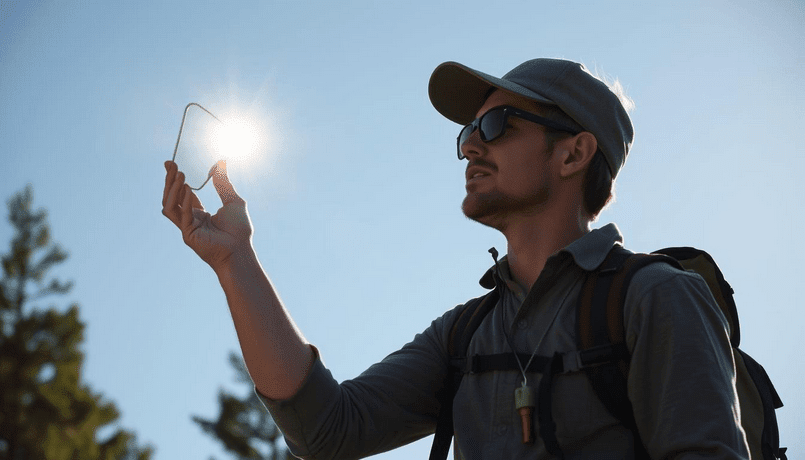
- Signal mirror: A small mirror can reflect sunlight and be seen for miles. Aim the reflection at aircraft or high points where people might be
- Bright clothing: Spread colorful items in an open area or hang them from trees
- Signal fire: Add green leaves to create visible smoke during daylight
- Ground signals: Create large symbols visible from the air—an "X" or "SOS" made with rocks, branches, or trampled snow
- Flashlight or headlamp: At night, use the SOS pattern (three short flashes, three long flashes, three short flashes)
Audio Signals
- Whistle: Three sharp blasts are the international distress signal. A whistle carries further than the human voice and requires less energy.
- Shouting: If you must use your voice, cup your hands around your mouth and shout "HELP!" in three successive calls, then listen
- Improvised noise: Banging rocks or metal objects together can create distinctive sounds that carry through the forest
The international distress signal is three of anything: three whistle blasts, three gunshots, three fires in a triangle, or three flashes of light.
Preparation Tips to Prevent Getting Lost

The best way to handle getting lost is to prevent it from happening in the first place. Proper preparation can make all the difference.
Essential Gear for Every Hike
- Navigation tools: Map, compass, and GPS device (with extra batteries)
- Communication: Fully charged phone (kept in airplane mode to conserve battery) and whistle
- Light: Headlamp or flashlight with extra batteries
- First aid supplies: Basic kit with personal medications
- Shelter: Emergency blanket or lightweight tarp
- Fire: Waterproof matches, lighter, and fire starter
- Knife or multi-tool: For preparing kindling, cutting cordage, etc.
- Extra food and water: Always pack more than you think you'll need
- Extra clothing: Including rain gear and insulating layers
- Signal mirror: Small but potentially life-saving
Planning Your Hike

- Research your route: Study maps, recent trail conditions, and weather forecasts.
- Leave a detailed plan: Tell someone exactly where you're going, your planned route, and when you expect to return.
- Set check-in times: Arrange specific times to contact your emergency person
- Know your limits: Choose trails that match your experience and fitness level.
- Start early: Allow plenty of time to reach your destination before dark
- Learn basic navigation: Practice using a map and compass before you need these skills in an emergency
Modern Technology for Safety
- Personal Locator Beacons (PLBs): These devices send your location to emergency services when activated
- Satellite Messengers: Allow two-way communication even without cell service
- Hiking Apps: Many allow offline map use and GPS tracking
- Battery Backup: Portable chargers can extend the life of electronic devices
Remember: Technology can fail. Always carry traditional navigation tools and know how to use them as backup.
Be Prepared, Stay Safe

Getting lost while hiking can happen to anyone, regardless of experience level. The difference between a dangerous situation and a minor inconvenience often comes down to preparation and knowing what to do if lost while hiking.
Remember the STOP method: prioritize your basic survival needs, use natural navigation techniques, maintain a positive mindset, and signal for help effectively. Most importantly, prepare thoroughly before every hike to minimize the risk of getting lost.
With the right knowledge and preparation, you can enjoy the wilderness with confidence, knowing you have the skills to handle unexpected situations safely.
Stay Safe On Every Hiking Adventure
Download our free Wilderness Survival Checklist to keep in your backpack. This printable guide includes all the essential steps covered in this article, plus a gear checklist and emergency contact card.
Download Free Survival Checklist
DISCLAIMER
This document is provided for general information purposes only and should not be relied upon as providing legal advice, technical, or specific operational guidance to the reader, whether as to the practices described in the document or the applicable legal requirements and regulations. Best Camping Deals expressly disclaims any responsibility for liability arising from or related to the use or misuse of any information in this document.