Best Tent Camping in The Grand Canyon
There's something truly magical about waking up to the golden sunrise illuminating the vast expanse of the Grand Canyon. Tent camping within this natural wonder offers an experience that hotels and day trips simply can't match. The starlit skies, the profound silence broken only by distant wildlife, and the intimate connection with one of Earth's most spectacular landscapes create memories that last a lifetime.
Whether you're an experienced outdoor enthusiast or planning your first camping adventure, this guide will walk you through everything you need to know about the best tent camping options in the Grand Canyon. From the distinct experiences of the North and South Rims to reservation strategies and essential preparation tips, we've got you covered for an unforgettable Grand Canyon camping experience.

North Rim vs. South Rim: Choosing Your Camping Experience
Before diving into specific campgrounds, it's important to understand the fundamental differences between camping at the North and South Rims of the Grand Canyon. Your choice will significantly impact your overall experience, from weather conditions to crowd levels and available amenities.
South Rim Camping

- Open year-round
- More developed facilities and amenities
- Easier access from major cities (Flagstaff, Phoenix)
- Lower elevation (7,000 ft) with milder winters
- More crowded, especially during peak season
- Wider range of services and activities nearby
North Rim Camping

- Open seasonally (mid-May to mid-October)
- Less crowded, more secluded experience
- Higher elevation (8,000 ft) with cooler temperatures
- Lush forests with abundant shade
- Fewer services but more wilderness feel
- Spectacular views from a different perspective
Important Note: Despite being only 10 miles apart as the crow flies, driving between the North and South Rims requires a 4-5 hour journey around the canyon. Plan your camping location carefully based on your overall Grand Canyon itinerary.
Weather considerations play a crucial role in your rim selection. The South Rim averages 10-15°F warmer than the North Rim due to elevation differences. Summer temperatures at the South Rim typically range from 50-85°F, while the North Rim enjoys cooler 40-75°F temperatures. Winter camping is only available at the South Rim, as the North Rim facilities close due to heavy snowfall.
Ready to explore the Grand Canyon?
Check current conditions and plan your visit with official National Park Service resources.
Visit NPS WebsiteBest South Rim Tent Campgrounds
The South Rim offers the most accessible and developed camping options in the Grand Canyon. With year-round availability and proximity to services, these campgrounds are particularly popular with first-time visitors and families.

1. Mather Campground
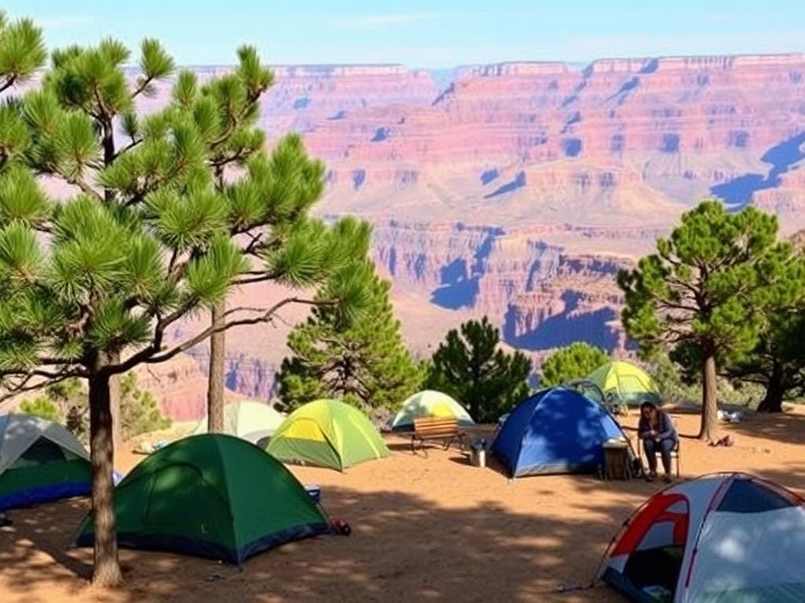
Located in Grand Canyon Village, Mather Campground is the most popular tent camping destination on the South Rim. Its central location provides easy access to visitor centers, shuttle services, and canyon viewpoints.
Key Features:
- 327 individual campsites
- Flush toilets and drinking water available
- Each site includes a fire ring, cooking grate, and picnic table
- No hookups or showers (coin-operated showers available nearby at Camper Services)
- Maximum 6 people, 3 tents, and 2 vehicles per site
- Generator hours: 7-9 AM, 5-7 PM
Availability & Reservations:
- Open year-round
- Reservations required March through November (up to 6 months in advance)
- First-come, first-served December through February
- $18-50 per night depending on site type
- Often fills completely during summer months
- Located within walking distance of the canyon rim
"Mather Campground offers the perfect balance of convenience and natural beauty. The sites are well-spaced with plenty of pine trees providing shade and a sense of privacy, while still being just a short walk from the canyon rim."

2. Desert View Campground
Located 26 miles east of Grand Canyon Village near the East Entrance, Desert View Campground offers a more secluded experience while still providing access to one of the most spectacular viewpoints in the park.
Key Features:
- 49 individual campsites
- Flush toilets and drinking water available
- Each site includes a fire ring, cooking grate, and picnic table
- No hookups or showers
- Maximum 6 people, 3 tents, and 2 vehicles per site
- Maximum vehicle length: 30 feet
Availability & Reservations:
- Open seasonally (mid-April through mid-October)
- Reservations required (up to 6 months in advance)
- $18 per night
- Located near Desert View Watchtower
- General store and gas station nearby
- Less crowded than Mather Campground
Insider Tip: Desert View offers some of the best sunrise views in the entire park. Wake up early and take the short walk to Desert View Point to witness the canyon walls illuminated by the first light of day.

3. Ten-X Campground (Kaibab National Forest)
Located just 4 miles south of the Grand Canyon's South Entrance in Kaibab National Forest, Ten-X Campground offers an excellent alternative when in-park campgrounds are full.
Key Features:
- 70 individual campsites (expanding to nearly 200)
- Vault toilets and drinking water available
- Each site includes a fire ring and picnic table
- No hookups or showers
- Maximum 6 people and 2 vehicles per site
- Sites accommodate tents and RVs up to 35 feet
Availability & Reservations:
- Open seasonally (May through September)
- Reservations available (up to 6 months in advance)
- Some sites available first-come, first-served
- $20 per night
- Located in beautiful ponderosa pine forest
- Often available when park campgrounds are full
"Ten-X is a hidden gem. The sites are spacious and well-maintained, and we saw elk wandering through the campground in the early morning. It's just a short drive to the South Entrance, making it perfect for daily visits to the canyon."
Best North Rim Tent Campgrounds
The North Rim offers a completely different camping experience with higher elevation, cooler temperatures, and significantly fewer visitors. These campgrounds are ideal for those seeking a more secluded, wilderness-oriented experience.

1. North Rim Campground
The only developed campground on the North Rim of the Grand Canyon, this campground offers a peaceful retreat with cooler temperatures and spectacular views.
Key Features:
- 90 individual campsites (78 for tents/RVs, 12 tent-only)
- Flush toilets and drinking water available
- Each site includes a fire ring, cooking grate, and picnic table
- No hookups or showers (coin-operated showers at North Rim Lodge)
- Maximum 6 people, 3 tents, and 2 vehicles per site
- Some sites offer partial canyon views
Availability & Reservations:
- Open seasonally (mid-May to mid-October)
- Reservations required (up to 6 months in advance)
- $18-25 per night depending on site type
- Located within walking distance of the canyon rim
- General store and restaurant at North Rim Lodge
- Fills quickly despite remote location
Insider Tip: Sites 11-15 and 38-41 are closest to the rim and offer partial canyon views. If these aren't available, the tent-only sites (44-55) are set in a beautiful wooded area with more privacy.

2. Tuweep Campground
For the ultimate wilderness experience, Tuweep Campground (also known as Toroweap) offers primitive camping on the North Rim with spectacular views of the canyon from a 3,000-foot vertical drop.
Key Features:
- 10 individual campsites (9 small, 1 group site)
- Composting toilets (no water available)
- Each site includes a fire ring and picnic table
- No services of any kind
- High-clearance 4WD vehicles recommended
- Located just 1 mile from Toroweap Overlook
Availability & Reservations:
- Open year-round (weather permitting)
- Advance permit required from Backcountry Information Center
- $10 permit fee plus $8 per person per night
- Limited to 7 nights per visit
- Extremely remote location (60+ miles from paved roads)
- No cell service or emergency services nearby
Important: Tuweep is one of the most remote developed areas in the continental United States. There is no water available, roads may become impassable in wet weather, and help is hours away in case of emergency. Come fully prepared with all necessary supplies.

3. DeMotte Campground (Kaibab National Forest)
Located just 7 miles north of the North Rim entrance in Kaibab National Forest, DeMotte Campground offers a convenient alternative when the North Rim Campground is full.
Key Features:
- 38 individual campsites
- Vault toilets and drinking water available
- Each site includes a fire ring and picnic table
- No hookups or showers
- Maximum 6 people and 2 vehicles per site
- Sites accommodate tents and small RVs
Availability & Reservations:
- Open seasonally (mid-May to mid-October)
- First-come, first-served only
- $20 per night
- Located in beautiful mixed conifer forest
- Often available when North Rim Campground is full
- Elevation: 8,700 feet (cool even in summer)
"DeMotte was a fantastic find after discovering North Rim Campground was full. The sites are spacious and surrounded by beautiful forest. We saw deer wandering through camp in the early morning, and it was just a short drive to all the North Rim attractions."
Backcountry Camping at the Bottom of the Canyon
For the ultimate Grand Canyon experience, consider backcountry camping at the bottom of the canyon. This challenging but rewarding adventure allows you to experience the inner canyon's unique environment and spectacular scenery.

Bright Angel Campground
Located adjacent to Phantom Ranch at the bottom of the canyon, Bright Angel Campground sits along Bright Angel Creek near its confluence with the Colorado River.
Key Features:
- 31 small group sites and 2 large group sites
- Flush toilets and drinking water available
- Each site includes a food storage box and ammo can
- No fires allowed (camp stoves only)
- Ranger station and emergency phone nearby
- Access to Phantom Ranch Canteen (seasonal hours)
Access & Reservations:
- Accessible only by hiking, mule ride, or rafting
- Main access trails: Bright Angel (9.5 miles), South Kaibab (7.1 miles), North Kaibab (14 miles)
- Backcountry permit required ($10 plus $8 per person per night)
- Permits available 4 months in advance through lottery system
- Extremely competitive - apply as early as possible
- Temperature at bottom can exceed 100°F in summer
Safety Warning: Hiking to the bottom of the canyon and back in a single day is not recommended under any circumstances. The strenuous nature of the trails, extreme temperature variations, and elevation change make this dangerous even for experienced hikers.
Havasupai Gardens Campground (Formerly Indian Garden)
Located 4.8 miles below the South Rim along the Bright Angel Trail, this oasis campground offers a great option for those who want to experience inner canyon camping without going all the way to the bottom.
Key Features:
- 15 small group sites and 2 large group sites
- Composting toilets and drinking water available
- Each site includes a food storage box and ammo can
- No fires allowed (camp stoves only)
- Ranger station and emergency phone nearby
- Shaded sites with cottonwood trees
Access & Reservations:
- Accessible only by hiking Bright Angel Trail (4.8 miles)
- Backcountry permit required ($10 plus $8 per person per night)
- Permits available 4 months in advance through lottery system
- Popular stopping point for rim-to-river-to-rim hikes
- Good option for first-time backcountry campers
- Access to Plateau Point (1.5 mile side trail)
Insider Tip: If staying at Havasupai Gardens, don't miss the 1.5-mile side trip to Plateau Point for one of the best views of the Colorado River in the entire park. This is especially spectacular at sunset.
Reservation Process and Important Deadlines
Securing a campsite at the Grand Canyon requires planning ahead, especially during peak season (March through October). Understanding the reservation systems and timelines is crucial for a successful camping trip.
Developed Campgrounds
- Reservation Window: Up to 6 months in advance
- Reservation System: Recreation.gov
- Booking Opens: 7:00 AM MT on the first day of the booking window
- Peak Season: March through October (book as early as possible)
- Holiday Periods: Book immediately when window opens
- Cancellation Policy: Most sites refundable up to 2 days before arrival
Pro Tip: Set a calendar reminder for exactly 6 months before your planned arrival date. Log in to Recreation.gov a few minutes before 7:00 AM MT and be ready to book immediately when the window opens.
Backcountry Permits
- Application Period: Opens on the 1st of the month, 4 months prior to start month
- Example: For a May trip, apply on January 1st
- Application Method: Online at https://www.nps.gov/grca/planyourvisit/backcountry-permit.htm
- Processing: Random lottery for all applications received by 5 PM MT on the 20th
- Notification: Within 3 weeks after application period closes
- Success Rate: Highly competitive (less than 30% for popular areas)
Important: Backcountry permits are extremely competitive. Apply for multiple date ranges and be flexible with your itinerary to increase chances of success.
Ready to secure your Grand Canyon camping spot?
Don't miss out on this incredible experience. Start the reservation process today!
Find Available CampsitesAlternative Options When Campgrounds Are Full
If you've missed the reservation window or all campgrounds are full, don't worry! There are several alternatives that still allow you to experience tent camping near the Grand Canyon.

Dispersed Camping in National Forests
Both the North and South Rims are bordered by national forests that allow free dispersed camping with minimal regulations.
South Rim Options:
- Forest Road 302: Located about 2 miles south of Tusayan
- Forest Road 328: About 5 miles from the South Entrance
- Long Jim Loop: Just 1.4 miles from the South Entrance
North Rim Options:
- Forest Road 611: About 14 miles from the North Rim entrance
- Forest Road 270: About 12 miles from the North Rim entrance
- Saddle Mountain Overlook: About 26 miles from the North Rim entrance
Dispersed Camping Rules:
- Camp at least 1 mile from developed areas and at least 200 feet from water sources
- Use existing fire rings when possible
- No services available (bring all water, pack out all trash)
- Maximum stay is typically 14 days
- Check current fire restrictions before your trip

Private Campgrounds
Several private campgrounds operate near both rims, offering more amenities but less of a wilderness experience.
South Rim Area:
- Grand Canyon Camper Village: Located in Tusayan, just 1 mile from the South Entrance
- Williams KOA: About 60 miles south in Williams, AZ
- Grand Canyon Railway RV Park: Also in Williams, with shuttle service to the canyon
North Rim Area:
- Kaibab Camper Village: Located 44 miles from the North Rim entrance
- Jacob Lake Campground: About 44 miles from the North Rim entrance
Benefits of Private Campgrounds: Showers, laundry facilities, Wi-Fi, camp stores, and often swimming pools. Many offer shuttle services to the park.

Booking Platforms for Private Land Camping
Several platforms now connect campers with private landowners who offer camping on their properties near the Grand Canyon.
Popular Platforms:
- Hipcamp: The largest selection of private land camping options
- Tentrr: Often includes pre-set up canvas tents and basic amenities
- Campspace: International platform with unique private land options
- Harvest Hosts: Stay at wineries, farms, and attractions (RV required)
Benefits:
- Often available when public campgrounds are full
- Unique locations with fewer neighbors
- Many offer amenities like fire pits, picnic tables, and outhouses
- Support local landowners
- Prices typically range from $20-50 per night
- Many sites are pet-friendly
"We found an amazing Hipcamp site just 15 minutes from the South Entrance when all the park campgrounds were booked. We had the entire place to ourselves with incredible stargazing and our host even provided firewood and local tips for visiting the canyon."
Essential Tips for Grand Canyon Tent Camping
Proper preparation is key to a safe and enjoyable tent camping experience at the Grand Canyon. The unique environment presents specific challenges that require careful planning.
Weather Considerations

- Temperature variations can exceed 30°F between day and night
- Summer rim temperatures: 50-85°F (South), 40-75°F (North)
- Inner canyon summer temperatures often exceed 100°F
- Afternoon thunderstorms common July-September
- Winter brings snow and ice to both rims (North Rim closes)
- UV exposure is intense year-round due to elevation
Pack for all conditions: Even in summer, bring layers including a warm jacket for cool nights and rain gear for sudden storms.
Wildlife Safety

- Store all food, trash, and scented items securely
- Use provided food storage lockers or ammo cans
- Never feed wildlife (including squirrels and ravens)
- Keep 100+ feet distance from larger animals (elk, deer)
- Check for scorpions before putting on shoes
- Be aware of rattlesnakes on trails (uncommon but present)
Important: Squirrels and ravens at Grand Canyon campgrounds are aggressive food thieves. Never leave food unattended, even for a moment.
Leave No Trace

- Plan ahead and prepare for all conditions
- Camp only in designated sites
- Dispose of waste properly (pack it in, pack it out)
- Leave natural objects as you find them
- Minimize campfire impacts (use established fire rings)
- Respect wildlife and other visitors
Water Conservation: Water is precious in the desert environment. Use biodegradable soap and dispose of dishwater at least 200 feet from water sources.
Recommended Gear for Grand Canyon Camping
The unique environment of the Grand Canyon requires specific gear considerations beyond standard camping equipment.
Essential Gear:
- Quality Tent: With full rain fly and sturdy stakes for wind
- Sleeping Bag: Rated 20°F cooler than expected temperatures
- Sleeping Pad: Insulated for ground comfort and warmth
- Headlamp/Flashlight: With extra batteries
- Water Storage: Minimum 1 gallon per person per day
- Water Treatment: Filter or purification tablets
- Sun Protection: Sunscreen, hat, sunglasses, lightweight long sleeves
- First Aid Kit: Include blister treatment and pain relievers
Grand Canyon Specifics:
- Trekking Poles: Essential for steep trails if backcountry camping
- Electrolyte Supplements: To replace minerals lost through sweating
- Bandana/Buff: Wet it for cooling in hot conditions
- Lightweight Camp Chair: For comfort at developed campgrounds
- Compact Binoculars: For wildlife viewing and distant canyon features
- Sturdy Trash Bags: For packing out all waste
- Camp Shoes: For comfort after hiking
- Insect Repellent: Especially near water sources
Pro Tip: For backcountry camping, prioritize lightweight gear but don't skimp on water capacity. The dry desert air and physical exertion require more water than you might expect.
Final Recommendations for Different Types of Campers
The Grand Canyon offers camping experiences for every type of outdoor enthusiast. Here are our final recommendations based on your camping style and preferences:
For First-Time Visitors

Best Choice: Mather Campground (South Rim)
Mather offers the perfect introduction to Grand Canyon camping with convenient access to visitor centers, shuttle services, and iconic viewpoints. The developed facilities make for a comfortable experience while still providing the authentic national park camping atmosphere.
Alternative: Ten-X Campground in Kaibab National Forest provides a good backup option when Mather is full.
For Wilderness Seekers

Best Choice: Tuweep Campground (North Rim)
For those seeking solitude and a true wilderness experience, Tuweep offers unparalleled remoteness and spectacular views. The challenging access and primitive facilities ensure smaller crowds and a more authentic connection with the canyon landscape.
Alternative: Dispersed camping in Kaibab National Forest provides similar solitude with easier access.
For Adventure Enthusiasts

Best Choice: Bright Angel Campground (Canyon Bottom)
Nothing compares to the experience of camping at the bottom of the Grand Canyon. The challenging hike required to reach Bright Angel Campground adds to the sense of accomplishment, and the unique perspective of looking up at the canyon walls is unforgettable.
Alternative: Havasupai Gardens Campground offers a similar experience with a less demanding hike.
Regardless of which camping option you choose, the Grand Canyon offers an unparalleled opportunity to connect with one of the world's most spectacular natural wonders. The extra effort required to camp rather than simply visit for the day rewards you with magical moments that day-trippers miss: starlit skies undiminished by light pollution, peaceful mornings before the crowds arrive, and the special camaraderie that develops among those who choose to fully immerse themselves in this magnificent landscape.
Ready for an unforgettable Grand Canyon camping adventure?
Start planning your trip today and experience the magic of waking up in one of the world's most spectacular landscapes.
Plan Your Grand Canyon Camping TripFrequently Asked Questions
When is the best time of year for tent camping at the Grand Canyon?
The best times for tent camping at the Grand Canyon are late spring (April-May) and early fall (September-October) when temperatures are moderate and crowds are smaller than summer. Summer (June-August) brings larger crowds and hot temperatures, especially at lower elevations. Winter camping is available at the South Rim but requires preparation for cold and potentially snowy conditions. The North Rim is only open from mid-May to mid-October due to heavy winter snowfall.
How far in advance should I make camping reservations?
For developed campgrounds like Mather and North Rim, make reservations exactly 6 months in advance of your arrival date when the booking window opens (7:00 AM MT). For backcountry permits, apply on the 1st day of the month, 4 months before your trip month. During peak season (March-October), campgrounds and backcountry permits often book completely within hours or days of becoming available.
Are campfires allowed at Grand Canyon campgrounds?
Campfires are allowed in designated fire rings at developed campgrounds (Mather, Desert View, North Rim) when fire restrictions are not in place. During high fire danger periods, the park may implement fire restrictions or bans. Campfires are never permitted in the backcountry below the rim (Bright Angel, Havasupai Gardens, etc.) where only camp stoves are allowed. Always check current fire restrictions before your trip.
Is it safe to camp with children at the Grand Canyon?
Yes, camping with children at the Grand Canyon's developed campgrounds is safe and can be a wonderful family experience. Mather and Desert View campgrounds on the South Rim are particularly family-friendly with their accessible facilities. Keep children away from canyon edges, supervise them at all times, and educate them about wildlife safety. For families with young children, backcountry camping is generally not recommended due to the strenuous hiking required and extreme conditions possible in the inner canyon.
Are there showers available at Grand Canyon campgrounds?
Showers are not available directly at most Grand Canyon campgrounds, but campers at Mather Campground can use the coin-operated showers at Camper Services near the campground entrance ($2.50 for 8 minutes). North Rim campers can pay to use showers at the North Rim Lodge. Backcountry campgrounds (Bright Angel, Havasupai Gardens) do not have shower facilities. Desert View Campground also does not have showers. Private campgrounds outside the park typically offer shower facilities.